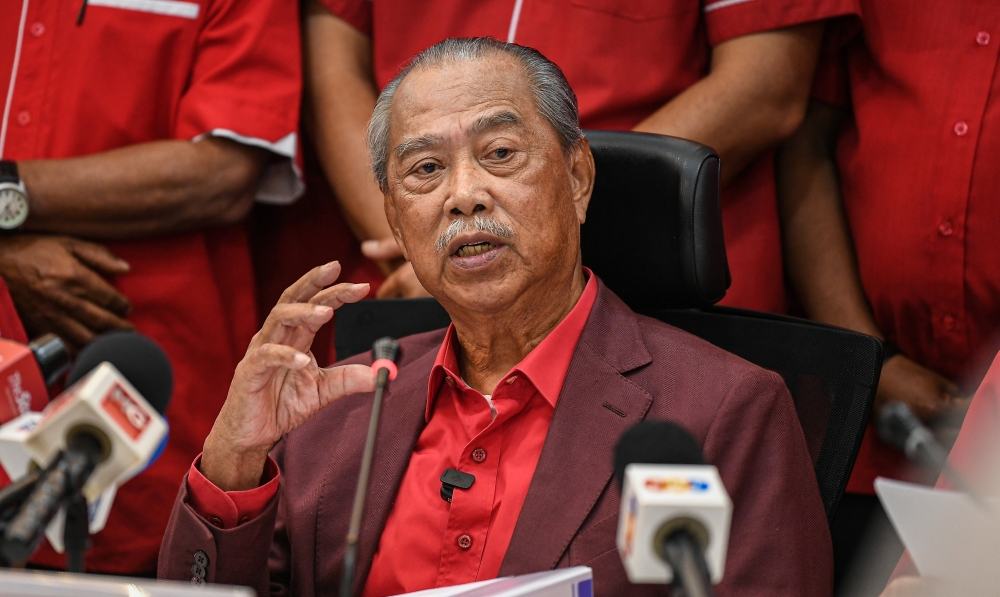
Parti Pribumi Bersatu Malaysia has announced it will contest the upcoming Negeri Sembilan state election under its own party emblem rather than adopting the Perikatan Nasional coalition symbol, a move that underscores deepening tensions within the opposition alliance. Party president Muhyiddin Yassin made the declaration amid what observers describe as a critical juncture for the PN's unity and electoral strategy.
The decision to field candidates wearing Bersatu's individual logo represents a tactical and symbolic break from conventional coalition conduct, where member parties typically present a unified front during joint electoral contests. By reverting to party branding, Bersatu appears to be prioritising its own organisational identity and potential vote-garnering capacity at the state level, rather than submitting to collective PN presentation strategies. This departure signals that internal disagreements within the coalition have reached a point where individual member interests are now superseding coalition-wide considerations.
For Malaysian political observers, such fractures within opposition coalitions carry substantial implications. The Perikatan Nasional, assembled as a counterbalance to the federal Pakatan Harapan government, has long struggled with internal cohesion. Member parties—including Bersatu, PAS, Gagasan Sejahtera, and others—frequently harbour competing regional ambitions, ideological divergences, and personal rivalries among leadership. When a major coalition component like Bersatu moves toward independent branding at state elections, it suggests confidence in standalone viability but also raises questions about the bloc's broader electoral effectiveness.
Negeri Sembilan holds particular significance for Malaysian electoral politics. As a pivotal swing state with a mixed urban-rural demographic, results there often foreshadow national trends. The state has seen shifting political loyalties in recent election cycles, and both government and opposition coalitions view it as a territory requiring strategic investment. Bersatu's decision to contest separately may reflect calculations that the party's own appeal in Negeri Sembilan constituencies exceeds what a diluted PN brand might achieve, particularly among voters fatigued by coalition politics or seeking clearer party differentiation.
Muhyiddin's manoeuvre also carries implications for PAS, Bersatu's principal coalition partner within PN. The Islamic party has historically sought to dominate opposition messaging and has shown willingness to contest seats independently in various states. If Bersatu now adopts solo branding, PAS may face pressure to respond similarly, potentially unravelling the unified PN identity across multiple state elections. Such fragmentation could ultimately diminish the opposition's competitive position relative to the coalition government, which typically maintains more disciplined electoral coordination across its component parties.
The broader context involves Muhyiddin's own political trajectory and authority within Bersatu. As the party's founding president and former Prime Minister, Muhyiddin retains considerable influence, but his leadership has periodically faced internal challenges. This decision to rebrand at state level may partly serve internal party management—demonstrating decisive action and protecting Bersatu's electoral interests against coalition partners who might otherwise marginalise the party's candidates or messaging in pursuit of their own ambitions.
Such moves also reflect voter sentiment regarding coalition politics in Malaysia. Public opinion surveys have increasingly indicated that urban and swing-state voters express fatigue with multi-party alliances that often appear to prioritise behind-the-scenes power-sharing negotiations over consistent policy platforms. By returning to individual party identity, Bersatu may be attempting to reconnect with constituencies that view coalition politics as obscuring genuine policy alternatives and electoral accountability. This approach, however, carries reciprocal risks—voters might interpret fragmented opposition branding as weakness and organisational disunity.
The timing of this announcement matters significantly. State elections in Malaysia frequently occur at intervals during the five-year federal cycle, serving as mid-term assessments of government performance and opposition viability. If Bersatu performs well in Negeri Sembilan under its own colours, the outcome could embolden similar moves by other PN members during subsequent state contests. Conversely, should Bersatu's independent branding strategy underperform or dilute opposition vote-splitting, it might prompt coalition-wide reconsideration of unified electoral frameworks.
For the Pakatan Harapan government, Bersatu's move presents a mixed picture. Coalition fragmentation within PN could theoretically advantage PAH by allowing opposition votes to splinter across competing banners. However, if PN's constituent parties retain sufficient individual support, the net effect might simply redistribute opposition seats without meaningfully altering the electoral balance. Furthermore, PAH itself comprises multiple parties with occasionally conflicting regional interests, so Bersatu's example could establish uncomfortable precedents for PAH's own internal management during future elections.
Muhyiddin's decision also warrants scrutiny regarding potential negotiations or understandings with other stakeholders. In Malaysian politics, such seemingly unilateral party decisions often emerge following behind-the-scenes discussions with allies, potential coalition partners, or even adversaries. The Negeri Sembilan announcement might therefore signal broader shifts in opposition political calculations that extend beyond PN's formal structures, potentially indicating exploratory conversations with independent candidates, regional parties, or other opposition elements.
Moving forward, this episode illustrates the persistent challenge facing Malaysian opposition coalitions: balancing collective electoral competitiveness against individual party autonomy and territorial interests. Whether Bersatu's Negeri Sembilan strategy ultimately strengthens or weakens the PN coalition will depend heavily on both the electoral results and how other coalition members respond. The state election thus becomes not merely a contest for local governance, but a test case for the viability of opposition coalition politics in Malaysia's evolving electoral landscape.

