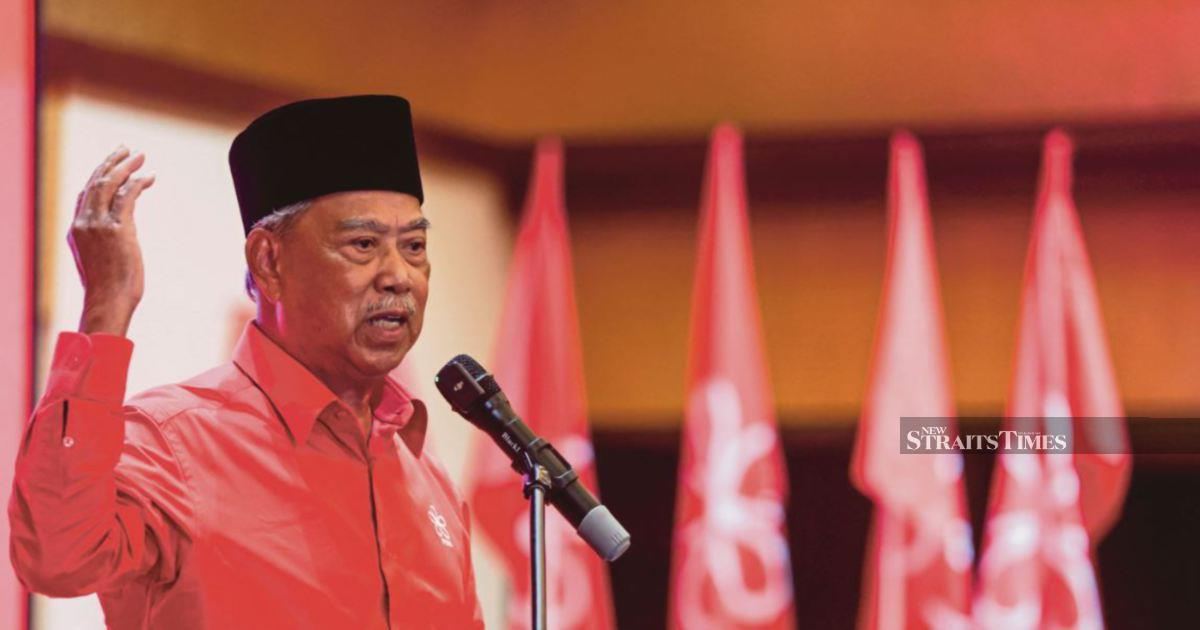
Bersatu has charted an independent course in the forthcoming Negri Sembilan election by committing to field candidates across 24 of the state's 36 state assembly seats, a move that will inevitably pit the party directly against two of its fellow Perikatan Nasional coalition members in a series of three-cornered fights. The announcement marks a significant recalibration in how the nominally united opposition coalition is approaching elections at the state level, revealing underlying tensions within the broader Perikatan alliance despite their continued formal coordination at the federal level.
The decision to contest such a substantial portion of available seats—amounting to two-thirds of the legislative assembly—underscores Bersatu's determination to establish itself as a principal political force in Negri Sembilan rather than ceding ground to larger or more established allies. In eight constituencies, Bersatu's candidates will encounter direct opposition from both PAS and Wawasan Rakyat, the latter representing the strategic faction within Bersatu that has been gaining prominence. This triangular configuration in multiple seats introduces considerable unpredictability into the electoral arithmetic, as vote-splitting between the three Perikatan component parties could materially affect outcomes in tightly contested constituencies.
The emergence of such intra-coalition competition reflects the complex dynamics that have long characterised Malaysian opposition politics, where parties operating under the same umbrella nonetheless maintain distinct organisational structures, membership bases, and leadership aspirations. Bersatu, which under Muhyiddin Yassin's leadership has positioned itself as a Malay-centric alternative to the better-established UMNO, appears determined to translate its federal-level significance into substantive state-level representation. The party's decision to contest heavily in Negri Sembilan suggests confidence in its ground organisation and appeal among voters in the state, though it simultaneously increases the risk of dividing the non-government vote across multiple candidates.
Wawasan Rakyat, despite being a relatively younger political entity, has been carving out a distinctive space within the opposition landscape by positioning itself as an alternative to established parties. Its prospective contests against Bersatu in eight seats represent an important test of whether it can consolidate voter support and establish credibility beyond its present organisational base. The positioning of these two groups against one another, alongside PAS's traditional Islamist messaging, suggests that Negri Sembilan voters will confront genuinely differentiated political choices across much of the state in this election.
PAS, as the third component of this potential three-cornered configuration, brings longstanding grassroots networks and an established voter base in many Negri Sembilan communities. However, the party's participation in Perikatan Nasional has sometimes constrained its messaging flexibility, particularly in constituencies where secular economic issues predominate over religious or identity-based politics. The prospect of facing Bersatu and Wawasan challenges simultaneously in multiple seats could force PAS to sharpen its differentiation from coalition partners or risk being squeezed between better-resourced organisations.
The structural implications of this arrangement extend beyond the immediate electoral contest to the broader question of coalition durability and governance stability. Should the three Perikatan parties collectively secure sufficient seats to form government in Negri Sembilan, they would face the complex challenge of negotiating power-sharing arrangements in a more fragmented coalition than might otherwise prevail. Conversely, if vote-splitting between Bersatu, PAS, and Wawasan Rakyat allows the government coalition or other opposition groups to capture seats that might otherwise have fallen to Perikatan, the entire strategic calculus of opposition politics in Malaysia could shift materially.
For Malaysian political observers, the Negri Sembilan election serves as an important barometer of how cohesion within Perikatan Nasional can be maintained while component parties pursue distinct organisational and electoral strategies. The federation's multi-party system has historically struggled with balancing coalition discipline against party autonomy, and this election will test whether contemporary arrangements can accommodate both. The outcome in Negri Sembilan may well influence how other state elections and the eventual federal election are contested, particularly regarding the optimal configuration of opposition groupings.
The practical question of campaign messaging also merits consideration. With Bersatu, PAS, and Wawasan Rakyat all competing in the same constituencies, each party must articulate its distinctive programme and value proposition to voters without unnecessarily alienating the others' supporters or undermining the broader coalition narrative. This delicate balance becomes more challenging in Malay-majority constituencies where the parties draw from overlapping demographic bases and ideological frameworks. Clarity around policy differences will become essential for voter navigation through an unusually fragmented field.
The election thus represents not merely a contest for control of Negri Sembilan's state assembly but also a test case for the sustainability of opposition coalition politics in an increasingly multipolar Malaysian political landscape. Whether Bersatu's assertive approach to seat allocation proves successful or whether it generates lasting resentment within Perikatan will likely influence coalition calculus for years to come. For regional observers monitoring Malaysia's political trajectory, Negri Sembilan offers valuable insights into how opposition parties are adapting to contemporary competitive pressures while attempting to maintain broader alliance frameworks.

