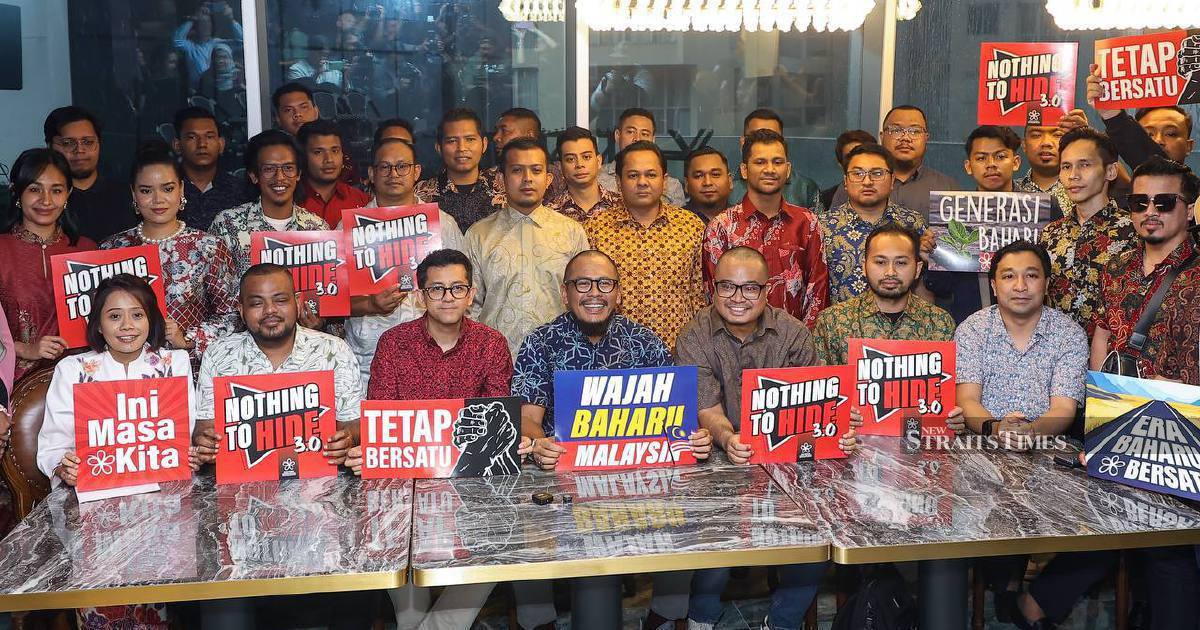
The leadership of Bersatu is projecting confidence that the Perikatan Nasional coalition can stabilise its internal dynamics following a period of elevated friction with PAS, with senior party figures drawing reassurance from the prospect of restored working relations between the two allies. Kota Siputeh assemblyman Mohd Ashraf Mustaqim Abdul Munir has deployed a domestic metaphor to characterise the nature of the dispute, suggesting that momentary disagreements within established political partnerships need not portend fundamental breakdown in the same way that surface conflict within a marriage does not necessarily threaten the institution itself.
The comparison reflects a broader assessment among Bersatu strategists that the tensions that have accumulated between the party and its larger PN partner can be managed through established political channels and renewed dialogue. Rather than viewing recent friction as indicative of irreparable damage to the coalition structure, Bersatu officials appear to be framing these moments as inevitable features of any sustained political alliance, particularly one comprising parties with distinct organisational cultures and electoral bases. This characterisation carries particular significance given the stakes involved in maintaining coalition cohesion within Malaysia's increasingly fragmented political landscape.
PAS and Bersatu have long occupied distinct positions within the broader Malay-Muslim political ecosystem, with PAS drawing heavily on its grassroots religious credentials and Bersatu emerging from a breakaway segment of UMNO with a different generational composition and strategic orientation. The alliance was formalised through the Perikatan Nasional framework, which has served as the organisational vehicle for Malay-centric governance in several states and provided an alternative to traditional UMNO dominance. However, differences in party philosophy, electoral strategy, and resource allocation have periodically tested the coalition's cohesion, with public disagreements surfacing in recent months.
The specific nature of recent tensions between the two parties has not been entirely transparent to external observers, though various friction points have emerged through media reporting and occasional public statements from party officials. These have included disputes over candidate selection in electoral contests, disagreements over policy priorities, and broader questions about the distribution of power and resources within the PN structure. Such disputes are not unusual within coalition arrangements, though their public visibility can occasionally create perceptions of instability that may concern voters or complicate governance arrangements.
Mohd Ashraf's optimistic assessment suggests that leadership in both parties recognises the necessity of maintaining their partnership, at least in the medium term. The PAS-Bersatu relationship carries strategic importance that extends beyond their individual party interests, as the Perikatan Nasional framework represents one of the primary alternative political arrangements to the Pakatan Harapan-UMNO-dominated governance structures that have characterised recent Malaysian politics. Breakdown of this coalition would have cascading effects across multiple state administrations and would alter the balance of power at federal level.
The resilience of such political partnerships often depends less on the absence of disagreement and more on the willingness of senior leaders to compartmentalise disputes and maintain working relationships despite conflicts. In the context of the PAS-Bersatu dynamic, this requires both parties to acknowledge that their electoral and policy interests are sufficiently aligned to justify continued collaboration, even when specific decisions generate friction. The metaphor of a married couple quarrelling while remaining committed to the shared household captures this reality with reasonable accuracy, suggesting that disagreement need not translate into dissolution.
From a broader Malaysian political perspective, the stability of the Perikatan Nasional alliance carries implications for electoral prospects, governance effectiveness, and the longer-term trajectory of Malaysian coalition politics. Regional observers have generally viewed PN as a significant stabilising force within Malay-Muslim political organising, even as its internal dynamics remain sometimes contentious. Should the PAS-Bersatu relationship deteriorate beyond the current tension, it could potentially trigger a broader realignment of Malay political forces that would reverberate across state and federal politics.
For Southeast Asian observers watching Malaysian political developments, the capacity of PAS and Bersatu to manage their partnership despite genuine policy and strategic differences offers insights into coalition management within plural systems. The resilience of PN to date suggests that Malaysian political actors have developed mechanisms for containing internal disputes within broader alliance frameworks, preventing disputes from automatically triggering coalition dissolution. This adaptive capacity may become increasingly important as Malaysian politics continues to fragment into multiple competing blocs.
The public positioning adopted by Bersatu leadership through Mohd Ashraf's comments appears designed both to reassure internal party members and to signal to external stakeholders that recent media coverage of tensions does not reflect a fundamental threat to the PN structure. By framing disagreements as natural features of any sustained partnership rather than as harbingers of collapse, Bersatu officials are seeking to contextualise friction within narrative frameworks that normalise conflict resolution and renewal of commitment. This rhetorical strategy serves important functions in maintaining both internal party morale and external political credibility during periods of heightened scrutiny.
Moving forward, the continued effectiveness of this approach will likely depend on whether PAS and Bersatu can translate improved rhetoric into substantive resolution of the underlying policy and resource disputes that have generated recent friction. The test of their alliance will come through their capacity to navigate forthcoming electoral contests and governance challenges while maintaining public unity and organisational coherence. The domestic metaphor deployed by Bersatu leadership, while offering reassurance about coalition stability, ultimately depends on continued commitment from both parties to prioritise partnership preservation over factional advantage.

