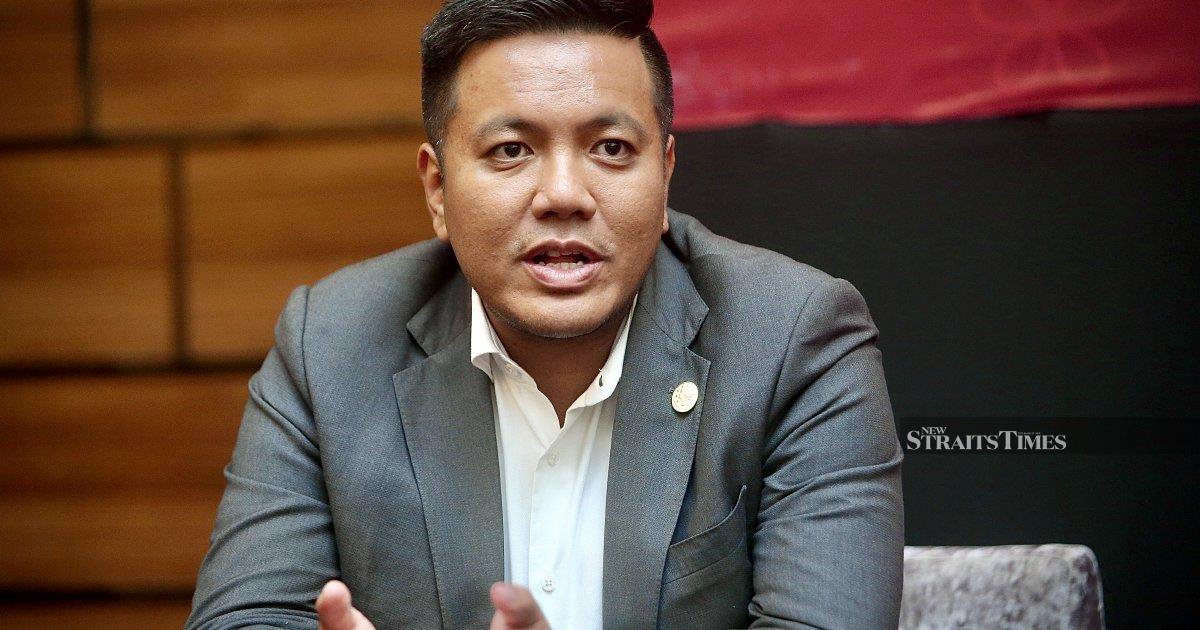
The opposition Bersatu party has put former Tabung Haji chairman Datuk Seri Abdul Azeez Abdul Rahim on the spot, demanding that he publicly disclose whether he has received any formal communication from the Malaysian Anti-Corruption Commission regarding the findings that emerged from the Royal Commission of Inquiry examining Tabung Haji's operations. The call represents an escalation in political scrutiny surrounding the high-profile investigation into Malaysia's pilgrim financial institution, which has been the subject of intense public interest following the RCI's damaging revelations.
The timing of Bersatu's intervention reflects broader political dynamics at play in Malaysia's current parliamentary landscape. As a party positioned in the opposition, Bersatu's public demand for transparency serves multiple purposes: it signals commitment to accountability in governance, maintains pressure on the government regarding the RCI's conclusions, and implicitly questions whether any follow-up enforcement action has been inadequately pursued or publicly communicated. The strategic nature of the statement underscores how investigations into major national institutions have become focal points for inter-party political contestation.
Tabung Haji's operational difficulties and governance challenges have attracted considerable attention from both regulatory authorities and lawmakers over several years. The Royal Commission of Inquiry was specifically established to examine the fund's circumstances comprehensively, scrutinising decision-making processes, financial management practices, and institutional accountability. The RCI's eventual findings apparently contained material that warranted consideration by enforcement agencies, triggering questions about what actions regulatory bodies might subsequently pursue and whether key individuals would face formal investigations.
Abdul Azeez's tenure as Tabung Haji chairman placed him in a central position regarding the institution's strategic direction and operational governance during a consequential period. Any findings by the RCI touching on leadership decisions, governance frameworks, or operational oversight would necessarily implicate individuals who held senior positions during the relevant timeframe. This context explains why Bersatu's demand focuses specifically on whether MACC has taken steps to investigate his conduct or decisions, and why public clarification regarding such contact would carry significance for ongoing accountability discussions.
The Malaysian Anti-Corruption Commission operates under statutory authority to investigate suspected corruption offences, including those involving public institutions and their officials. When a body like the RCI produces findings that may suggest corrupt conduct, standard enforcement procedure typically involves MACC reviewing the material to determine whether investigation is warranted. The commission's potential silence or lack of public action regarding RCI findings can itself become a matter of political and public scrutiny, particularly when media coverage and political actors begin questioning the adequacy of enforcement responses.
Bersatu's demand for clarification from Abdul Azeez rather than directly calling on MACC to release information suggests a strategic approach: by placing the onus on the former chairman to explain his status, the party creates space for either confirmation of MACC contact, which itself signals investigation, or denial, which might prompt further questioning about whether MACC has undertaken its enforcement responsibilities. This dynamic illustrates how political pressure through public disclosure demands can influence the trajectory of accountability mechanisms.
The silence or absence of public announcement regarding MACC contact with key individuals implicated in RCI findings represents a notable gap in transparency. Citizens and political observers naturally expect that investigations with potential public implications should proceed with reasonable public awareness, at minimum regarding whether formal investigative steps are underway. When former officials of significant national institutions like Tabung Haji are potentially implicated in inquiries, the public interest in knowing whether enforcement authorities are engaged becomes particularly acute.
For Malaysian and Southeast Asian observers, the Tabung Haji situation carries broader implications for institutional governance and the efficacy of accountability mechanisms. Tabung Haji's centrality to Muslim pilgrimage finance and its substantial asset base make its governance quality a matter of genuine public concern. The RCI process itself demonstrates institutional capacity to examine governance challenges, but the critical question becomes what enforcement agencies do with findings once they emerge. Public uncertainty about enforcement follow-up can erode confidence in the entire accountability ecosystem.
The political dimensions of accountability in Malaysia are particularly evident in situations like this, where opposition parties leverage investigative findings to maintain pressure on government institutions and former officials. While such political pressure can sometimes accelerate enforcement action, it can also create perceptions that accountability is selective or driven by partisan considerations rather than principle. Bersatu's intervention walks this line, simultaneously advancing legitimate oversight questions while engaging in political positioning.
Abdul Azeez's response to this public demand—or lack thereof—will itself signal important information about the political and legal landscape surrounding the RCI findings. A forthcoming clarification confirming MACC engagement would suggest active investigation, while silence might suggest confidence that no enforcement action is forthcoming, or alternatively, a strategic decision to avoid commenting on potential investigations. Either path carries interpretive weight in Malaysian political culture, where such disclosures become factual statements about governance and accountability.
Moving forward, pressure will likely intensify on both MACC and Tabung Haji's current leadership to demonstrate that RCI findings are being appropriately addressed through enforcement mechanisms. Opposition parties will continue leveraging the issue to demonstrate their oversight role, while the government will need to balance thorough investigation with avoiding perceptions of politically motivated prosecution. The public interest remains focused on whether Malaysia's accountability institutions can effectively translate investigative findings into meaningful enforcement action.

