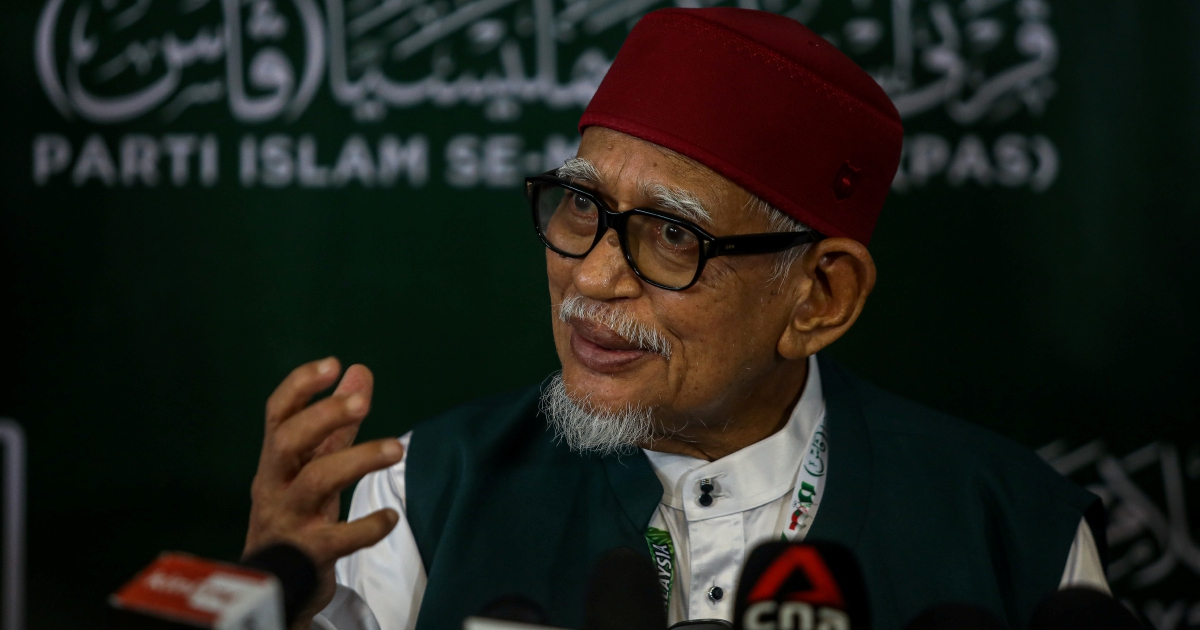
Bersatu's tenure in Perikatan Nasional came to an automatic end following President Tan Sri Muhyiddin Yassin's public declaration to establish a new political coalition, according to a statement made in Marang by PAS president Datuk Seri Hadi Awang. The development marks a significant fracturing of the opposition coalition that had previously positioned itself as an alternative political force in Malaysia's complex parliamentary landscape.
Hadi Awang's announcement underscores the deepening divisions within what was intended to be a unified opposition block. Perikatan Nasional, which comprises PAS, Bersatu, and several smaller parties, had struggled to maintain cohesion amid competing visions for the coalition's direction and leadership structure. Muhyiddin's unilateral decision to pursue an entirely separate political grouping effectively nullified the party's standing within the existing alliance without requiring formal procedural withdrawal.
The automatic nature of Bersatu's exit reflects the constitutional provisions governing coalition membership in Malaysian political practice. When a component party takes actions fundamentally incompatible with the coalition's collective interests—such as announcing the formation of a rival political entity—the partnership is deemed dissolved without additional administrative steps. This mechanism prevents parties from simultaneously maintaining coalition membership while pursuing parallel political arrangements, a scenario that would undermine coalition coherence and decision-making authority.
Muhyiddin's initiative to establish an alternative coalition represents a calculated political manoeuvre to consolidate influence independent of PAS's dominance within Perikatan Nasional. The former Prime Minister has long harboured ambitions to position Bersatu as a leading force in Malaysian politics, but his influence within the existing coalition remained constrained by PAS's larger membership and Hadi Awang's control of strategic decision-making. By announcing a new coalition structure, Muhyiddin signals his intention to restructure the political landscape according to his preferred configuration.
For Malaysian observers tracking opposition politics, this development carries substantial implications for the 2024-2025 political calendar. The fragmentation of Perikatan Nasional weakens the organisational capacity of opposition forces at a critical juncture when unified coordination could enhance their effectiveness in parliamentary debate and election preparation. The dissolution of the coalition removes a institutional framework that, despite internal tensions, had provided opposition parties with collective mechanisms for policy coordination and resource sharing.
The timing of Muhyiddin's announcement suggests strategic calculation regarding the evolving political environment. With various coalition permutations constantly in flux and rumours of government instability circulating, opposition parties face persistent pressure to reposition themselves advantageously. Muhyiddin's decision to initiate coalition restructuring reflects his assessment that the existing arrangement no longer serves Bersatu's interests and that alternative partnerships might offer greater strategic advantage. This reflects broader patterns in Malaysian politics where coalition configurations regularly shift as party leaders respond to changing political circumstances.
PAS's position as the surviving core of Perikatan Nasional presents its own complications. The party retains control over the formal coalition infrastructure but faces the challenge of rebuilding credibility and organisational coherence following Bersatu's departure. For Hadi Awang and the PAS leadership, the immediate priority involves either reconstituting the coalition with remaining members or forging new political arrangements that enhance PAS's negotiating position within opposition politics. The party's substantial electoral presence and grassroots organisation provide some foundation for recovery, but the loss of Bersatu's parliamentary representation reduces the coalition's overall legislative capacity.
Bersatu's withdrawal also reflects deeper structural vulnerabilities within Malaysian opposition coalitions generally. Unlike governing coalitions, which benefit from control over state resources and bureaucratic machinery, opposition alliances must rely primarily on ideological alignment and mutual interest. When these foundations prove insufficient to overcome leadership competition and strategic disagreements, coalitions become unstable. Perikatan Nasional's experience illustrates this chronic challenge facing Malaysian opposition forces seeking to maintain unity while accommodating diverse party ambitions and organisational cultures.
For Southeast Asian observers examining Malaysia's political trajectory, the Perikatan Nasional collapse demonstrates the persistent difficulty of sustaining multi-party coalitions in electoral democracies with fragmented party systems. Malaysia's relatively decentralised opposition landscape—contrasting with more consolidated coalition structures in some neighbouring jurisdictions—creates inherent pressures toward coalition fragmentation when leadership disputes arise. Muhyiddin and Hadi's competing visions for opposition strategy and coalition structure exemplify this endemic tension.
Looking forward, the political consequences of this rupture will likely manifest across multiple dimensions. Parliament will witness reduced opposition coordination on legislative matters. Electoral prospects for both Bersatu and PAS face complications as they must now rebuild independent campaign infrastructure and voter coalitions. The broader opposition movement confronts the necessity of establishing new coordination frameworks, potentially involving negotiations with PKR and other groups to create more viable alternative political arrangements.
Muhyiddin's initiative to construct a new coalition signals his conviction that Malaysian voters and parliamentary mathematics favour a restructured opposition configuration. Whether this political gambit succeeds depends partly on which existing parties agree to join Bersatu in the new venture and whether the resulting coalition achieves sufficient parliamentary representation and electoral appeal. The immediate political landscape now enters a transitional phase characterised by uncertainty and negotiation as various opposition actors recalibrate their positions.

