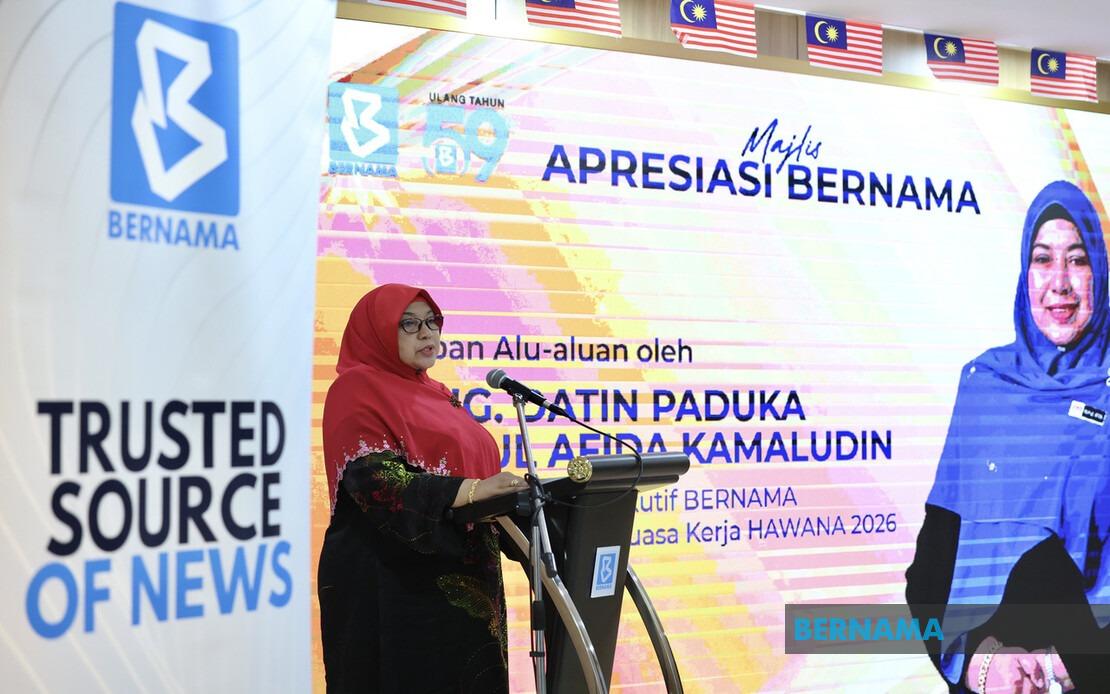
Malaysia's national news agency is stepping up its commitment to nurturing patriotic sentiment across the country as the nation approaches its annual National Day celebrations. The Malaysian National News Agency (Bernama), operating under the Ministry of Communications, has positioned itself as a central instrument in amplifying messages of national pride and civic consciousness during the crucial period leading up to the festivities. Through a combination of internal staff engagement programmes and broader public communication strategies, the agency aims to translate governmental initiatives into compelling narratives that resonate with Malaysians at both community and household levels.
Datin Paduka Nur-ul Afida Kamaludin, the chief executive officer overseeing Bernama's operations, articulated the agency's expanded remit during remarks at an internal appreciation ceremony held at the organisation's Wisma Bernama headquarters. She underscored that as a government news agency operating within the Communications Ministry framework, Bernama bears institutional responsibility not merely for reporting news but for actively championing ministry programmes and translating policy directives into accessible information for public consumption. This dual mandate—serving both as a news disseminator and as a communication arm of government—positions the agency at the intersection of media function and state messaging during national commemorative periods.
The agency's approach to fostering patriotism extends beyond conventional news reporting into symbolic and behavioural campaigns designed to make nationalism tangible at the household level. A cornerstone initiative involves encouraging both staff members and the general public to display the Jalur Gemilang, Malaysia's national flag, at their residences and workplaces. This campaign, articulated under the slogan 'Satu Rumah, Satu Jalur Gemilang' (One Home, One Glorious Flag), transforms abstract patriotic sentiment into concrete visual markers of national commitment. The strategy reflects a broader understanding that sustained nationalism requires regular visible reinforcement within everyday spaces, moving beyond ceremonial occasions to embed national symbols within domestic and professional environments.
Bernama itself has led by example, deploying extensive decorations of the national flag throughout its headquarters following the formal launch of National Month by the Prime Minister in Ipoh. This institutional demonstration serves multiple purposes: it validates the campaign messaging to external stakeholders, establishes organisational credibility in promoting the initiative, and creates an internal environment where staff members can viscerally experience the patriotic messaging they are tasked with communicating to the broader public. The symbolic coherence between what Bernama preaches internally and what it disseminates externally strengthens the authenticity of its communication function.
A particularly significant moment during the appreciation ceremony involved Nur-ul Afida physically handing over Jalur Gemilang flags to representatives of Bernama's primary operational departments. This ceremonial gesture, beyond its symbolic weight, served to decentralise the patriotic initiative across the agency's structure, ensuring that engagement with the flag campaign permeated multiple institutional divisions rather than remaining confined to senior management. By distributing flags to departmental representatives, the agency created multiple points of activation for the initiative, effectively mobilising its entire workforce as ambassadors of the National Month messaging.
The timing of these efforts reflects strategic consideration of how patriotic messaging cycles require sustained reinforcement during designated periods. National Month, the designated timeframe preceding National Day celebrations, represents an annual opportunity for state institutions to recalibrate public sentiment and reinforce shared national identity. For Bernama, this period demands heightened output of patriotic content, coordinated internal celebrations, and symbolic public commitments that collectively amplify the resonance of national consciousness across diverse audience segments. The agency recognises that leaving such messaging to chance or passive consumption would forfeit opportunities to actively shape the affective dimensions of national commemoration.
The integration of cultural elements, including the introduction of a National Day theme song composed by singer Faizal Tahir, demonstrates an understanding that patriotic messaging achieves greater penetration when conveyed through multiple sensory and emotional channels. Music, as a vehicle for national sentiment, carries particular potency in Malaysian contexts where diverse cultural traditions can be synthesised within a unifying sonic framework. By launching this composition within an internal ceremony and positioning it for wider public dissemination, Bernama leverages artistic expression to deepen emotional engagement with national themes.
Operational considerations also shaped the design of these initiatives. Nur-ul Afida acknowledged the logistical challenges of assembling the entirety of Bernama's workforce at headquarters, prompting the agency to consolidate multiple programmes into a unified event rather than stage separate celebrations. This pragmatic bundling approach—combining appreciation ceremonies, flag distribution, theme song introduction, and campaign activation into a single gathering—maximises attendance and messaging efficiency while acknowledging the constraints of modern workplace coordination. The result is a concentrated moment of institutional collective participation that generates momentum for subsequent decentralised implementation across departmental units.
For Malaysian and Southeast Asian observers, Bernama's intensified patriotic messaging initiative warrants consideration as a case study in how state institutions navigate the perpetual tension between journalistic independence and governmental communication function. The agency's explicit positioning as both news organisation and ministry communication tool raises enduring questions about editorial boundaries, audience expectations, and the credibility dimensions of state-sponsored messaging. In regional contexts where public trust in media institutions remains volatile, the visibility of such campaigns may paradoxically influence how audiences process information emanating from Bernama, potentially shaping perceptions of organisational impartiality.
The broader implications extend to how patriotic sentiment functions as a governmental tool for social cohesion during periods of potential political turbulence or electoral cycles. National Day celebrations, occurring annually in August, serve as regularised opportunities for the state to reassert national unity narratives and recalibrate public consciousness around shared symbols and historical commemoration. By positioning Bernama as the central institutional vehicle for this messaging, the government ensures that patriotic narratives achieve maximum penetration through the nation's primary news distribution networks, reaching audiences across demographic, geographic, and linguistic boundaries.
Looking forward, the effectiveness of Bernama's patriotic initiatives will depend substantially on whether the agency can maintain public perception of credibility while simultaneously functioning as an active promoter of governmental campaigns. The challenge lies in sustaining audience confidence in the agency's capacity to report news with integrity even as it visibly champions national causes. Malaysian and regional media observers will likely monitor whether this intensified patriotic messaging influences editorial decisions regarding coverage of politically sensitive topics, particularly those touching on questions of national identity or governmental performance during the crucial months preceding major national commemorations.

