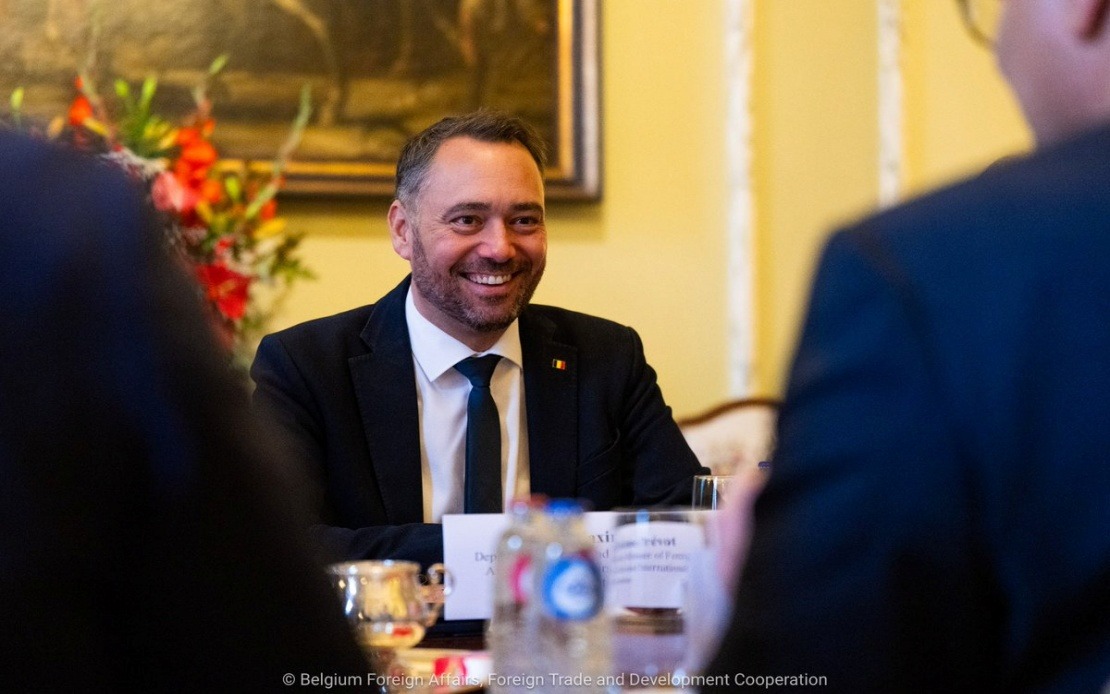
Belgium's Deputy Prime Minister Maxime Prévot will begin a two-day working visit to Malaysia this week, bringing with him a substantive agenda centred on expanding strategic cooperation in green energy transitions and emerging technology sectors. The visit, scheduled to commence on Thursday July 3, represents Prévot's inaugural trip to the country since assuming his portfolio of Foreign, European Affairs and Development Cooperation in February 2025. The Belgian diplomat's itinerary underscores the European Union's growing interest in positioning itself as a meaningful partner for Malaysia's energy transformation ambitions, even as geopolitical competition for influence in Southeast Asia intensifies among major trading blocs.
The cornerstone of Prévot's Malaysian engagement will be a formal meeting with Deputy Prime Minister Datuk Seri Fadillah Yusof on July 2, who simultaneously holds the Energy Transition and Water Transformation Ministry portfolio. This institutional alignment is strategically significant, as it places discussions at the intersection of Malaysia's clean energy roadmap and Belgium's own commitment to the European Green Deal. Both nations are expected to review the existing bilateral relationship architecture and chart new pathways for collaboration, with particular emphasis on renewable energy infrastructure, the sourcing and processing of rare earth elements, and integration of Malaysia's growing halal product ecosystem into European supply chains. The conversation will inevitably touch upon Malaysia-EU relations writ large, reflecting both Brussels' interest in deepening Southeast Asian partnerships and Kuala Lumpur's efforts to maintain balanced ties with developed economies.
Beyond formal diplomatic channels, Prévot has been scheduled to address the 39th Asia-Pacific Roundtable, an annual forum organised by the Institute of Strategic and International Studies (ISIS) Malaysia that draws senior policymakers and strategic thinkers from across the region. His ministerial address at this high-profile gathering will provide Belgium with a platform to articulate European perspectives on regional security, economic integration, and sustainability challenges facing the Indo-Pacific. Additionally, Prévot will be received by Sultan of Perak Sultan Nazrin Muizzuddin Shah, a courtesy reflecting the ceremonial dimensions of ministerial visits and the importance Malaysia accords to engagement with senior European officials.
The renewable energy dimension of this visit carries particular weight for Malaysia's domestic agenda. The country has committed to achieving carbon neutrality by 2050 and has set interim targets for expanding renewable energy generation capacity. Belgium, despite its small geographic footprint, has emerged as a sophisticated player in offshore wind technology and renewable hydrogen development, sectors where Malaysia is actively seeking technical partnerships and investment. European expertise in grid modernisation, battery storage systems, and circular economy manufacturing aligns closely with Malaysia's strategic priorities as it transitions away from fossil fuel dependency.
Rare earth elements represent another crucial frontier for bilateral engagement. These materials, essential for electronics, renewable energy systems, and defence applications, are characterised by significant supply chain concentration risks centred on a handful of producing nations. Belgium, as a major refining and processing hub within the European Union, has strategic interest in diversifying supply sources and securing stable relationships with reliable producers. Malaysia, which possesses proven rare earth reserves and has existing processing capabilities, stands to benefit considerably from European demand and investment in this sector, particularly as Europe seeks to reduce dependence on Chinese supply chains.
The halal industry dimension reflects Malaysia's distinctive economic positioning. As the world's largest halal certification authority and home to a thriving halal manufacturing and services sector, Malaysia has systematically built competitive advantage in this niche market. European consumers, particularly in regions with substantial Muslim populations, represent a significant growth market for halal-certified products ranging from food and pharmaceuticals to cosmetics and personal care items. Belgium's position as a major European port and logistics hub, combined with its role as a gateway to the broader EU market, makes it an attractive partner for Malaysian halal exporters seeking European market access.
Bilateral economic engagement between Malaysia and Belgium already demonstrates substantial depth. Trade figures for 2025 reflect considerable commercial momentum, with total bilateral commerce reaching RM9.74 billion—comprising RM6.85 billion in Malaysian exports to Belgium and RM2.89 billion in reverse flows. These numbers indicate that Belgium ranks among Malaysia's significant European trading partners, though the relationship remains less prominent than ties with larger EU economies. The underlying trade patterns suggest Malaysian export competitiveness in manufactured goods, chemicals, and primary materials, while Belgian exports likely centre on specialised machinery, pharmaceutical products, and advanced manufactured items.
Investment flows further underscore the economic substance of Malaysia-Belgium relations. As of 2025, Belgium-connected projects with formal Malaysian government approval totalled 67 initiatives representing combined investments of RM5.1 billion and promising generation of approximately 4,605 employment opportunities. This investment pipeline, though modest compared to flows from larger developed nations, reflects European corporate confidence in Malaysia's market fundamentals, regulatory stability, and position as a regional economic hub. The composition of these investments likely spans manufacturing, chemicals processing, renewable energy infrastructure, and technology sectors.
For Malaysia, this visit arrives at a strategically opportune moment. The country is actively repositioning itself as a sustainable economic actor and seeking to attract green technology investment and expertise from developed economies. Competition for Malaysian partnership is intensifying among numerous actors—China, Japan, the United States, and others are all proposing energy transition models and investment frameworks. Belgium's relatively smaller profile compared to these major powers actually provides certain advantages: European engagement carries less geopolitical baggage in Malaysian calculations and Brussels' approach emphasises technical cooperation and market-based mechanisms rather than strategic competition narratives.
The European Union's broader engagement strategy in Southeast Asia also contextualises this visit. The EU has increasingly emphasised the Indo-Pacific as a critical region for future economic and security interests, motivating intensified diplomatic presence and partnership proposals. Belgium's ministerial visit forms part of this larger European pivot toward the region. For Malaysia's government, engagement with European partners offers valuable portfolio diversification in an era of great power competition and validates the country's commitment to climate action and sustainable development goals—commitments increasingly important for attracting institutional investors and accessing certain export markets.
Looking forward, the trajectory of Malaysia-Belgium cooperation will likely deepen incrementally across these identified sectors. Renewable energy cooperation may yield specific joint ventures or technology transfer agreements, particularly in offshore wind or floating solar applications suited to Malaysia's geography. Rare earth element collaboration could crystallise in processing partnerships or supply agreements that benefit both economies. The halal sector may see expanded certification pathways and market development initiatives supporting Malaysian exporters' European penetration. Regular high-level visits and working-level dialogues will consolidate institutional relationships and ensure these partnerships remain mutually beneficial as both nations navigate the energy transition and economic restructuring that will define the coming decades.

