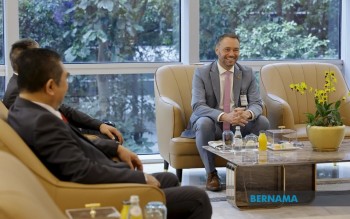
Belgium's Deputy Prime Minister and Minister of Foreign Affairs Maxime Prévot has underscored his government's commitment to concluding the Malaysia-European Union Free Trade Agreement, describing the accord as instrumental in unlocking fresh commercial opportunities and bolstering economic expansion for both regions. Speaking during an official visit to Malaysia, Prévot characterised the MEUFTA as a priority negotiating objective for both Brussels and Belgium, signalling the strategic importance Brussels places on deepening its commercial footprint in Southeast Asia through an enhanced framework with one of the region's largest economies.
The FTA represents a significant milestone in Malaysia-EU relations, as it would substantially broaden the scope for bilateral commerce and investment flows. According to Prévot, the agreement will facilitate deeper market access, enable enterprises from both sides to expand their operations, and create conditions for sustained job creation across multiple sectors. Beyond immediate commercial gains, the accord is anticipated to strengthen the macroeconomic foundations of both parties by fostering competitive industries and encouraging technological exchange—dynamics that could reverberate throughout the wider Southeast Asian region given Malaysia's role as a major trading hub.
The timeline for concluding negotiations appears achievable, with officials estimating completion within the coming months or by 2026. This accelerated schedule reflects the political will of both sides to move beyond preliminary discussions and lock in binding commitments. For Malaysia, such a deal would cement deeper ties with a major trading bloc at a critical juncture as Southeast Asia navigates complex geopolitical shifts and seeks to diversify its economic partnerships beyond traditional relationships.
Belgium's eagerness to advance the MEUFTA stems partly from its distinctive economic profile as a highly export-dependent nation. Despite its modest population of 11.77 million people, Belgium has developed a robust, outward-focused economy where exports constitute approximately 85 per cent of its gross domestic product. This structural reliance on external markets makes trade agreements like the MEUFTA particularly valuable for Belgian manufacturers, financial services providers, and logistics operators seeking to expand beyond Europe's saturated markets. Malaysia, with its strategic location, large regional markets, and sophisticated business environment, naturally attracts Belgian investors seeking to establish regional hubs.
PreVot's visit to Malaysia marks his first journey to the country since assuming his ministerial portfolio in February 2024, underscoring the significance placed on bilateral engagement. During his two-day working visit, he is scheduled to meet with Malaysia's Deputy Prime Minister Datuk Seri Fadillah Yusof, whose dual portfolio encompassing Energy Transition and Water Transformation reflects Malaysia's own strategic priorities. The bilateral agenda extends beyond trade mechanics, with both sides preparing to explore substantive cooperation across renewable energy development, rare earth elements processing and supply chains, and halal industry standards and expansion—sectors where complementarities between Malaysian capabilities and Belgian expertise could generate mutual benefits.
The discussion of renewable energy cooperation carries particular resonance given global decarbonisation imperatives and Malaysia's ambitions to increase clean energy capacity. Belgium possesses advanced technologies and policy experience in wind and solar sectors, areas where knowledge transfer could accelerate Malaysia's energy transition trajectory. Similarly, rare earth elements represent a strategic sector where Malaysia's endowments and processing capabilities position it as critical to global green technology supply chains, creating scope for Belgian industrial participation and investment.
Existing commercial ties between Malaysia and Belgium demonstrate the relationship's substantive foundation. Bilateral trade reached RM9.74 billion in 2025, with Malaysian exports accounting for RM6.85 billion of this total—reflecting Malaysia's comparative advantage in resource-intensive and manufactured products. Belgian imports to Malaysia totalled RM2.89 billion, predominantly comprising advanced industrial equipment, chemicals, and specialised services. This asymmetry in trade composition illustrates the complementary nature of the two economies, where Malaysian producers rely on Belgian technology and capital goods while Belgian companies benefit from access to Malaysian raw materials and lower labour costs.
Belgian investment activity in Malaysia further demonstrates confidence in the bilateral relationship's growth trajectory. As of 2025, a total of 67 projects involving Belgian participation had received regulatory approval in Malaysia, representing cumulative investments of RM5.1 billion and anticipated job creation of 4,605 positions. These figures underscore Belgium's concrete commitment to the Malaysian economy beyond mere trade rhetoric, with direct investment indicating long-term strategic positioning in the region. The investment pipeline suggests further expansion is anticipated, particularly if the MEUFTA removes tariff barriers and simplifies regulatory procedures for Belgian enterprises.
For Malaysian policymakers, the MEUFTA negotiations occur against a backdrop of broadening trade partnerships with multiple blocs. The agreement would complement Malaysia's existing frameworks with other major trading partners and reinforce Kuala Lumpur's positioning as a neutral, pragmatic actor in global commerce. Rather than forcing binary choices between economic blocs, Malaysia's strategy of pursuing agreements with the European Union, China, India, and ASEAN partners reflects a sophisticated approach to maximising economic opportunities while maintaining strategic autonomy.
The halal industry dimension of bilateral discussions merits particular attention, as it represents a unique Malaysian strength with growing global market penetration. Belgium, as a gateway to European markets and home to significant Muslim diaspora communities, represents a strategic partner for Malaysian halal producers seeking European distribution channels and certification pathways. Enhanced cooperation could position Malaysia as the preferred halal standards setter for the European market, further differentiating Malaysian products in competitive international segments.
Regional and international developments constitute the final element of Prévot's agenda with Malaysian counterparts, reflecting the broader geopolitical context in which bilateral relations unfold. Both nations face common challenges related to supply chain resilience, cyber security, climate adaptation, and maintaining open trading systems amid rising protectionism. These shared concerns create diplomatic space for deeper institutional coordination beyond commercial arrangements, potentially encompassing security cooperation and multilateral agenda-setting.
The trajectory of MEUFTA negotiations will likely accelerate following this high-level engagement, as Prévot's visit signals Brussels' serious commitment to finalisation. For Malaysian businesses, the anticipated agreement promises reduced tariff schedules on automotive products, electronics, petrochemicals, and agricultural goods. Similarly, Belgian exporters anticipate improved access to Malaysia's services markets, particularly in financial services, logistics, and professional consulting. The cumulative effect should translate into measurable trade growth and investment inflows benefiting both economies while establishing a template for Belgium's broader engagement strategy across Southeast Asia.

