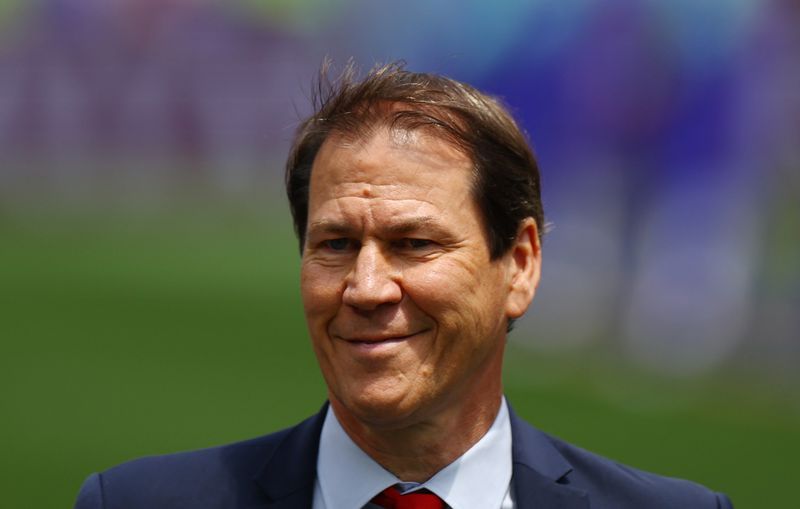
Belgium's football association and coach Rudi Garcia will part ways on July 31 after both parties agreed not to extend their working relationship beyond the expiring contract. The announcement came on Monday, marking the conclusion of a tumultuous 18-month tenure that encompassed both genuine achievement and sustained criticism from the Belgian media and public.
Garcia's World Cup campaign presented a study in contradictions. The Belgian Red Devils reached the quarter-finals in Qatar, a respectable outcome that saw the French coach steer his squad past potential embarrassment in the group stage. Yet the journey proved fractious and unconvincing throughout, undermining what should have been a straightforward narrative of progression. Opening matches against Egypt and Iran yielded only draws, performances that triggered immediate and scathing scrutiny from Belgian football commentators. The situation deteriorated so considerably that Garcia felt compelled to hold a formal media conference to defend and explain his tactical approach—an unusual step that underscored the severity of the institutional and public discord.
The manner of Belgium's advance from the group stage, while ultimately successful with a 5-1 demolition of New Zealand, could not erase the earlier doubts. What followed in the knockout rounds revealed both the team's resilience and the precarious nature of their tournament. Against Senegal in the last 32, Belgium engineered a remarkable recovery from two goals down in the closing minutes. The turnaround owed substantially to fortune rather than tactical brilliance—a goalkeeping error gifted the Europeans a lifeline, while a controversial VAR penalty in extra time sealed a 3-2 victory that could easily have concluded differently under different officiating circumstances.
The subsequent encounter with the United States provided the clearest evidence of Belgium's capabilities when circumstances aligned. A commanding 4-1 victory showcased the squad's technical quality and strategic acumen, earning Garcia rare praise for his personnel selections and in-game management. However, this redemptive performance merely postponed the inevitable reckoning. Spain's superior execution in the quarter-final ended Belgium's tournament ambitions, and Garcia's immediate substitution of goalkeeper Thibaut Courtois during that defeat intensified speculation that his dismissal was imminent.
The official conclusion, however, emphasised mutual agreement rather than unilateral termination. Vincent Mannaert, the Belgian federation's sports director, released a statement acknowledging Garcia's contributions to stabilising team cohesion during a challenging period. The federation faced substantial sporting and financial pressures when Garcia assumed the role, conditions that complicated his initial mandate. Mannaert credited the coach with orchestrating a generational transition whilst achieving a respectable World Cup showing—a characterisation that attempted to frame the experience positively despite the evident tensions.
Garcia's own statement adopted a measured tone, expressing gratitude toward the players whilst offering understated commentary on his tenure. The 62-year-old maintained that he had initiated a generational shift with purpose and satisfaction, though his departure suggested that both he and the federation recognised the relationship had reached its natural terminus. The diplomatic language employed by both sides obscured the underlying reality: a coaching project that had become untenable through a combination of tactical disagreements, media pressure, and performance inconsistencies.
Belgium faces an immediate challenge in identifying Garcia's successor. Mannaert will oversee the recruitment process as the nation prepares for Nations League commitments beginning in late September, with fixtures against Italy in Rome and subsequently France at home. These matches will set the competitive tone for whoever assumes control, with expectations that a fresh managerial appointment can stabilise the squad's trajectory and restore the confidence that Belgian football once commanded at the international level.
Garcia's departure reflects a broader pattern across international football. The recent World Cup cycle produced unprecedented coaching turnover, with numerous nations shedding their tournament managers during or immediately following the competition. Croatia, the Czech Republic, France, Germany, Ghana, Haiti, Jordan, Mexico, the Netherlands, Portugal, Scotland, Senegal, Tunisia, and Uruguay all experienced managerial changes. This widespread instability suggests that contemporary World Cup standards and pressures have intensified the expectations placed upon coaches, making extended tenures increasingly difficult to sustain.
For Malaysian and Southeast Asian observers, the Belgium situation illustrates the volatile nature of elite football management. Even accomplished coaches with substantial European pedigree find themselves vulnerable to sudden dismissal when immediate results disappoint, regardless of longer-term strategic considerations. The episode demonstrates that institutional football structures worldwide now prioritise short-term performance metrics and media satisfaction over patient development, a reality that regional football associations and coaching staffs would be wise to understand when evaluating recruitment and retention strategies.

