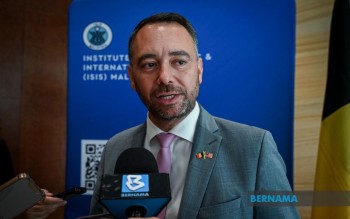
Belgium is positioning itself as a strategic partner for Malaysia's renewable energy ambitions, with its Deputy Prime Minister and Foreign Affairs Minister Maxime Prévot highlighting offshore wind power as a priority area for bilateral cooperation during his inaugural visit to the country. Prévot made the overture while attending the 39th Asia-Pacific Roundtable in Kuala Lumpur, underscoring how both nations stand to benefit from shared expertise as they navigate the complex transition away from fossil fuels. The timing reflects broader European efforts to deepen ties with Southeast Asia and position the continent as a reliable partner in the region's long-term energy security.
The Belgian minister outlined an extensive agenda for cooperation that extends well beyond energy into several high-value sectors. Semiconductors, logistics networks, clinical trials, biotechnology research and development, and pharmaceutical manufacturing emerged from discussions as complementary areas where partnership could generate mutual benefits. This multi-sectoral approach suggests that energy collaboration, while significant, forms part of a more comprehensive economic engagement strategy. For Malaysia, which has been actively courting foreign investment across technology and manufacturing, such a diversified partnership framework offers opportunities to attract quality foreign direct investment while strengthening institutional capabilities in emerging industries.
Belgium's credentials in offshore energy are particularly noteworthy given the country's geographical constraints. Despite possessing only 60 kilometres of coastline—a fraction of Malaysia's extensive maritime borders—Belgium has engineered remarkable success with offshore wind infrastructure. The nation currently operates offshore wind farms producing two gigawatts of electrical capacity, a feat that demonstrates how technical innovation and political commitment can overcome natural limitations. This accomplishment carries direct relevance for Malaysian policymakers considering how to maximise renewable energy generation despite environmental and spatial challenges in various regions.
Looking forward, Belgium intends to substantially expand its offshore wind capacity to between six and seven gigawatts within the coming years, a development that would generate electrical output equivalent to five to seven conventional nuclear power plants. This expansion programme underscores how renewable energy infrastructure can provide baseload power while supporting decarbonisation objectives. For Malaysia, which continues to rely heavily on natural gas and coal for electricity generation, understanding Belgium's pathway to scaling renewable capacity offers valuable lessons in transitioning large populations away from carbon-intensive energy sources without compromising grid stability or economic competitiveness.
The European Union has signalled its willingness to invest substantially in Southeast Asia's energy infrastructure through the Global Gateway Strategy, with plans to mobilise €10 billion to support the ASEAN Power Grid and accelerate regional energy transition. This commitment represents a significant shift in EU strategy toward Asia, reflecting recognition that climate goals and energy security cannot be achieved without substantial participation from Southeast Asian economies. For Malaysia and other ASEAN members, European investment at this scale—channelled through appropriate governance mechanisms—could provide the capital necessary to implement ambitious renewable energy targets outlined in national energy policies.
President Prévot emphasised that EU backing for the ASEAN Power Grid reflects a strategic commitment to sustainable development that benefits local populations over the long term while strengthening regional interconnectedness and crisis resilience. This framing differs from transactional approaches to energy investment, instead positioning European support as foundational to building an integrated regional energy market capable of withstanding future supply shocks. Such integration becomes increasingly valuable as geopolitical tensions threaten traditional energy corridors and as demand volatility complicates energy planning across the region.
The initiative also highlights how coordinated European and ASEAN strategies could generate sustainable economic growth while reinforcing regional stability. Deeper cooperation in clean energy sectors specifically could accelerate the pace of green transition across Southeast Asia, creating competitive advantages in sectors such as renewable equipment manufacturing, battery technology, and green hydrogen production. Malaysia, with its existing industrial base and technological capabilities, stands positioned to capture substantial value from this transition if strategic investments are directed thoughtfully.
President Prévot's visit marks his first journey to Malaysia since assuming ministerial office in February 2025, signalling that the new Belgian government views Southeast Asia as a priority engagement area. This diplomatic attention, combined with concrete proposals for sectoral cooperation, suggests that Belgium intends to move beyond generic statements of partnership toward substantive collaboration in areas where mutual advantage is clearest. For Malaysia's government, such visits from European counterparts offer opportunities to crystallise commitments into framework agreements and implementation roadmaps.
Bilateral trade between Malaysia and Belgium reached RM9.74 billion during 2025, with Malaysian exports comprising RM6.85 billion of this total while imports accounted for RM2.89 billion. The trade balance favours Malaysian exports, reflecting the country's strength in commodities and manufacturing products sought by European markets. As of 2025, Belgian investors had secured approval for 67 projects involving RM5.1 billion in committed capital and generating 4,605 employment opportunities. These figures demonstrate that despite Belgium's small size, it maintains meaningful economic engagement with Malaysia and represents a committed long-term investor in the Malaysian economy.
Expanding offshore energy cooperation could substantially increase these investment flows. Belgian expertise in offshore wind technology transfer, equipment supply, and engineering services creates multiple channels through which capital and knowledge can flow into Malaysia. Joint ventures in renewable energy development could serve as platforms for technology adaptation to tropical maritime conditions, positioning Malaysian firms to export expertise to other Southeast Asian neighbours facing similar environmental constraints. Such opportunities could drive employment growth in high-skilled sectors while advancing national climate commitments.
The convergence of European climate commitments with Southeast Asian energy development needs creates a compelling context for deepened bilateral partnerships. Belgium's track record of successful offshore development, combined with EU financing mechanisms and Malaysia's geographic advantages and policy frameworks, suggests fertile ground for collaboration. Success in this domain could establish replicable models for energy cooperation across ASEAN, demonstrating how developed and developing economies can partner effectively on the green transition.
Moving forward, Malaysian policymakers should view European interest in offshore energy cooperation not merely as a source of foreign investment but as an opportunity to access proven technologies and build institutional capabilities that could benefit the nation for decades. The speed and effectiveness with which such partnerships translate into operational offshore wind capacity will significantly influence Malaysia's ability to achieve its renewable energy targets while maintaining economic competitiveness in an increasingly energy-conscious global marketplace.

