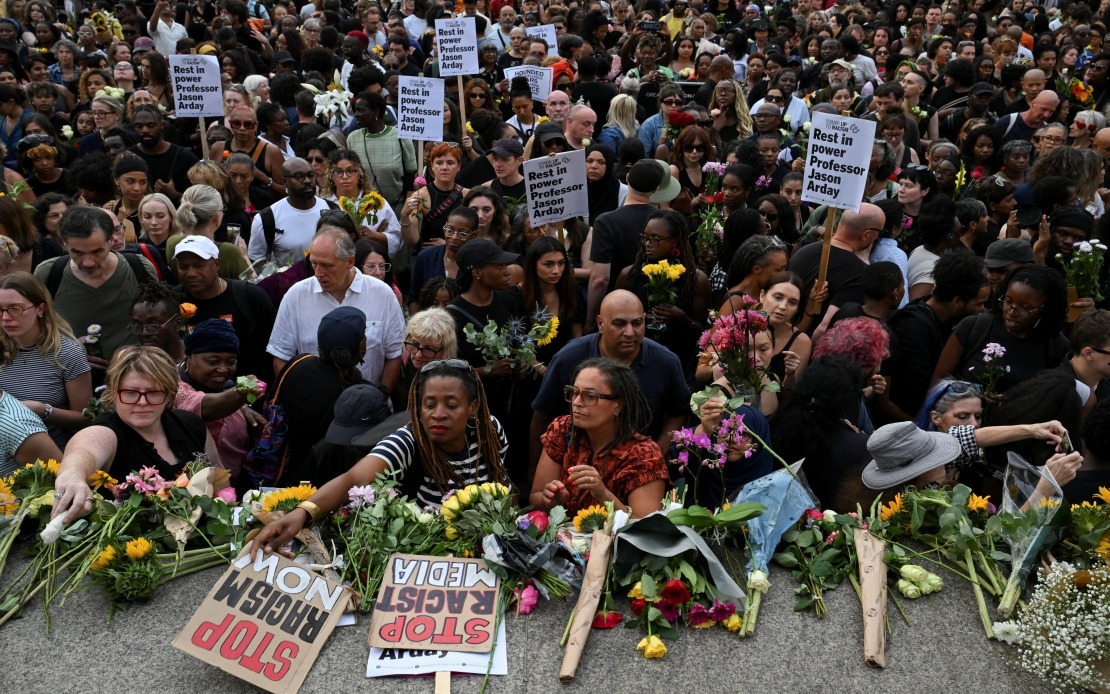
Ghent University in Belgium has suspended postdoctoral researcher Nathan Cofnas amid a growing controversy surrounding plagiarism allegations he levelled against the late Jason Arday, a prominent Cambridge academic who died in August. The suspension marks an escalation in a dispute that has raised difficult questions about academic accountability, institutional responsibility, and the treatment of scholars in higher education.
Cofnas, who works within Ghent University's department of philosophy and moral sciences, had publicly accused Arday of plagiarism in the weeks leading up to the Cambridge professor's death on August 14. The allegations triggered intense scrutiny of Arday's academic record and contributed to substantial pressure that ultimately led to his resignation from Cambridge on August 5. University officials at Ghent have now taken action against Cofnas, citing concerns about his conduct and public statements made during the dispute.
Arday's rise through academia had been meteoric and symbolically significant. In 2023, at just 41 years old, he became Cambridge's youngest Black professor when appointed to the chair of sociology of education. His appointment generated considerable media attention and was celebrated as a landmark moment for diversity in British higher education. Born to Ghanaian immigrant parents and raised in a working-class family in south London, Arday had overcome substantial personal obstacles, having been nonverbal until age 11 and not learning to read or write until age 18. He remained vocal about his autism and learning difficulties, making his academic achievements appear all the more remarkable to observers.
The allegations against Arday emerged in July, creating a rapidly expanding crisis around his academic credentials and personal narrative. Beyond plagiarism accusations, questions surfaced regarding elements of his published work and aspects of his personal story that had featured prominently in media profiles. The scrutiny intensified dramatically over subsequent weeks, creating what Arday himself later characterised as damaging narratives surrounding his person. Despite maintaining that his August resignation should not be interpreted as an admission of wrongdoing, the decision effectively ended his Cambridge career at a particularly vulnerable moment.
Cofnas himself has become an increasingly controversial figure within academic circles, holding views that have sparked widespread condemnation. In 2024, he lost a research fellowship at Emmanuel College, Cambridge, following publication of a blog post advancing claims that Black people possess lower average intelligence than white people and suggesting that genuine meritocratic hiring at institutions like Harvard would result in almost no Black professors. These statements, which align with discredited scientific racism, positioned Cofnas as an advocate of what he terms "race realism"—a framing that most mainstream scientists and ethicists categorically reject.
Ghent University's response to Cofnas's suspension reflects the institution's attempt to navigate competing institutional obligations. In a joint statement, rector Petra De Sutter and vice-rector Herwig Reynaert acknowledged the university's commitment to academic freedom and open debate, even when ideas prove controversial. However, they explicitly stated that such freedom carries corresponding responsibilities and may legitimately be restricted to protect the rights of others. This formulation suggests the university views Cofnas's conduct as having crossed from permissible intellectual disagreement into territory that threatens individual dignity and institutional values.
The university announced it was treating Cofnas's recent public statements "very seriously" without specifying the precise nature of disciplinary measures beyond the suspension itself. Officials indicated they would not elaborate on potential future actions, preferring to preserve flexibility as investigation and decision-making processes unfold. This measured approach contrasts with the urgency that surrounded Arday's departure but reflects institutional caution about pre-judging outcomes in formal investigations.
Arday's death on August 14, merely nine days after his resignation, profoundly altered the context surrounding these disputes. Police classified his death as unexpected but not suspicious, treating it as a sudden fatality rather than investigating criminal circumstances. The timing and circumstances of his passing—occurring so shortly after the public crisis that had engulfed his career—prompted Ghent University to issue a statement suggesting that his death "should prompt reflection." This language hinted that the institution recognised the intensity of the controversies may have contributed to circumstances surrounding his death, though officials stopped short of making explicit claims about causation.
The incident illustrates broader challenges confronting contemporary academia in Southeast Asia and globally. Universities must balance genuine commitments to freedom of intellectual inquiry against responsibilities to protect individuals from harassment and harm. The cases of both Arday and Cofnas demonstrate how disputes over research integrity and academic propriety can become entangled with questions of identity politics, institutional reputation, and personal well-being. For Malaysian readers and regional academics, the Ghent-Cambridge controversy serves as a cautionary tale about the fragility of academic institutions when proper safeguards for researchers and proper procedures for addressing concerns break down.
The suspension also raises questions about how universities should handle complaints about plagiarism and research integrity. While mechanisms for investigating academic misconduct are necessary, the process through which such complaints proceed—particularly when they receive substantial public attention—can create reputational damage that extends far beyond the investigation itself. The case suggests that institutions need to develop more robust protocols for managing sensitive allegations to protect both accusers and accused while investigations proceed.
For the broader academic community in the region, this episode underscores the importance of institutional cultures that support both rigorous scholarship and the welfare of researchers. Universities must create environments where integrity concerns can be raised and addressed through proper channels without triggering public controversies that overwhelm individuals or institutions. The loss of Arday and the suspension of Cofnas represent genuine institutional failures on multiple fronts—failures that might have been prevented through more measured, confidential, and supportive approaches to conflict resolution in academia.

