Chinese property developers face an acute financial squeeze after Beijing unveiled sweeping regulatory changes that fundamentally reshape how new residential projects are funded. Share prices across the sector collapsed on Monday as investors absorbed the implications of rules that will sever developers' traditional lifeline of presale revenues, forcing them to rely instead on their own capital and bank loans to construct housing. The crackdown underscores the government's determination to engineer a structural transformation of an industry that has spiralled into crisis, though the remedy risks intensifying short-term pain across the market.
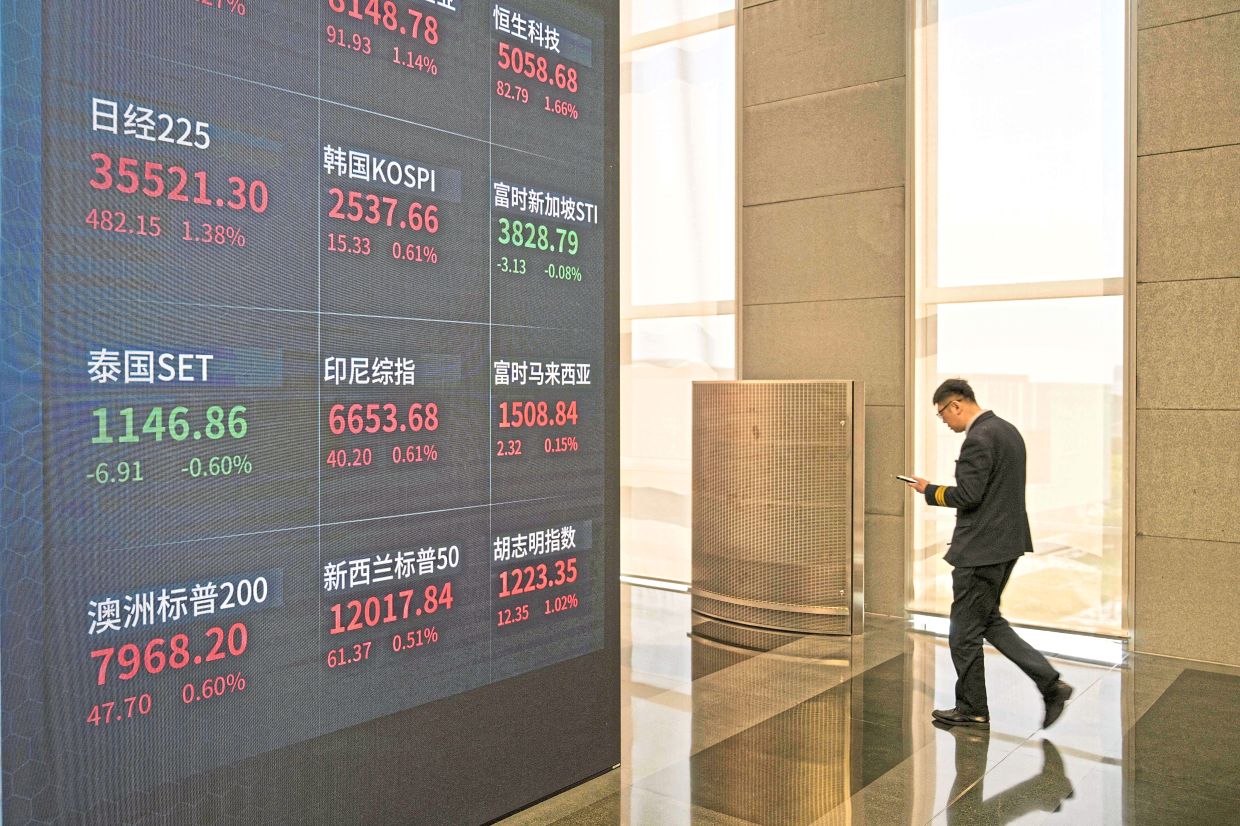
Property stocks registered sharp declines immediately upon the announcement of the new regulations. The CSI300 Real Estate Index dropped 4.6% by mid-afternoon trading in Shanghai, while Hong Kong-listed Chinese developer shares fell 6.5%, with the Hang Seng's Hong Kong developers index losing nearly 5%. The selloff extended across the board, hitting both state-owned giants and privately-held operators perceived as financially robust. State-backed firms including China Jinmao, Yuexiu Property, and Greentown China each lost more than 14%, whilst larger state-owned players like China Resources Land and China Overseas Land & Investment declined in excess of 9%. Even financially stronger private developers such as Longfor Group and Seazen, traditionally viewed as relatively stable, retreated 7.2% and 5.5% respectively.
The regulatory overhaul targets the presale mechanism that has underpinned China's property business model for decades. Under the traditional arrangement, developers collect cash from buyers purchasing apartments before construction is completed, using these funds to finance ongoing building work. This system has enabled rapid expansion and aggressive turnover strategies but has also exposed millions of Chinese households to delivery risks and construction delays when developers encounter financial difficulties. Presales still dominate the market, accounting for 68% of new home sales by floor space in 2025, yet the model's vulnerabilities have become impossible for regulators to ignore after years of high-profile project failures and homebuyer anger.
The new framework introduced by China's central bank and financial regulator reverses this arrangement entirely. Residential mortgages will now be issued only after housing projects achieve completion rather than during construction phases. Simultaneously, fresh guidelines direct local governments to promote sales of finished units, minimising the theoretical risk that developers will default before delivering completed homes. These mechanisms collectively eliminate the early mortgage funding stream that has historically allowed developers to recycle buyer money into new construction. Instead, builders must now finance building operations through their own cash reserves or via development loans from financial institutions, a fundamentally more capital-intensive and constrained funding model.
The magnitude of this shift is staggering for an industry already under severe stress. According to official data cited by developers consulted by Reuters, presales and mortgage financing together account for approximately 40% of development capital. Under the new rules, this entire revenue stream vanishes during construction phases, forcing companies to absorb the funding burden internally. One company executive, speaking anonymously because unauthorised to address media, estimated that this change would render 40% of conventional cash flow unavailable for business operations, effectively reducing near-term investment capacity by a corresponding margin. For an industry already grappling with declining sales and margin compression, the loss of such a substantial funding component threatens widespread liquidity crises.
State-owned developers enjoy structural advantages that may allow them to weather this transition, though even these players face genuine challenges. Government-backed firms can access bank loans at preferential rates of 2% to 3%, significantly cheaper than the 5% to 6% financing typically available to private counterparts. Their state sponsorship also provides implicit backing that may facilitate additional financing arrangements unavailable to commercially-driven competitors. Yet even these advantages have limits. Developers across the sector lack cash to purchase land or fund new investments in markets where existing inventory remains difficult to sell. Adding the presale funding constraint will compress the capital available for land acquisition and new project launches precisely when the industry needs to demonstrate renewal and innovation.
China's property sector contraction has now extended into its sixth consecutive year, transforming what began as a correction into a structural crisis with profound macroeconomic implications. The sector represents a substantial portion of China's economy, a critical wealth store for tens of millions of households, and historically a major engine driving exports through demand for construction materials and equipment. Recent data reveals the depth of the malaise. Government land sales revenue plummeted 30.8% year-on-year to 1.1731 trillion yuan (US$174.56 billion) over the first seven months of 2026, while nationwide property development investment declined 19.2% to 4.3 trillion yuan. These figures indicate that neither price recovery nor regulatory interventions have yet restored developer confidence in market viability.
Prices in major cities offer another discouraging indicator. New-home prices in first-tier cities such as Beijing and Shanghai have stalled, with recoveries from prior lows proving unsustainable. More troubling still, second-hand home prices in smaller, inland cities have plummeted approximately 25% from their 2020 peak. This suggests that property weakness has spread far beyond frothy coastal markets into inland areas where household incomes offer less buffer against price declines. The divergence also raises questions about presale reform's demand-side efficacy—whilst extending maximum mortgage terms from 30 to 40 years may free cash for consumption, analysts widely anticipate that such measures will prove insufficient to meaningfully revive housing demand amongst cautious buyers.
The regulatory intervention will accelerate industry consolidation by eliminating marginal competitors unable to sustain operations under the new financing constraints. Everbright Securities observed that the measures have substantially raised the bar for developer financing capability and management sophistication, creating an environment where most smaller players will prove incapable of maintaining profitability. These companies will face forced exits or absorption by larger peers. Meanwhile, state-owned developers have progressively dominated markets where private firms have defaulted, creating a bifurcated industry dominated by government-backed operators. The irony is that even these supposedly well-capitalised entities now confront funding pressures that will require careful navigation and bank cooperation.
For Malaysian and Southeast Asian observers, China's property restructuring carries significant implications. The region's economies depend substantially on Chinese demand for commodities, manufacturing capacity, and tourism. A prolonged property crisis that reduces Chinese construction spending and household wealth will ripple through regional export sectors. Additionally, the funding crisis may indirectly affect regional credit markets if Chinese financial institutions become more selective in lending internationally. Malaysian property developers with exposure to Chinese financing sources or materials suppliers may experience indirect headwinds. More broadly, the regulatory experiment underway in Beijing offers cautionary lessons about attempting to rapidly reprogram industrial funding mechanisms without triggering destabilising credit contractions.
The presale funding overhaul represents perhaps Beijing's most aggressive attempt to directly reshape property sector incentives since the sector's peak. Rather than simply dampening speculation or constraining leverage, these rules fundamentally alter the cash flow mechanics underpinning the entire development model. Whether this transformation stabilises confidence or instead accelerates deterioration remains uncertain. The immediate market response—violent selling across all developer categories—suggests investors fear near-term liquidity stress outweighs potential long-term benefits. The coming months will reveal whether government support mechanisms can prevent consolidation from deteriorating into a credit event, or whether Beijing's latest intervention inadvertently triggers the comprehensive sector restructuring it ostensibly seeks to manage.

