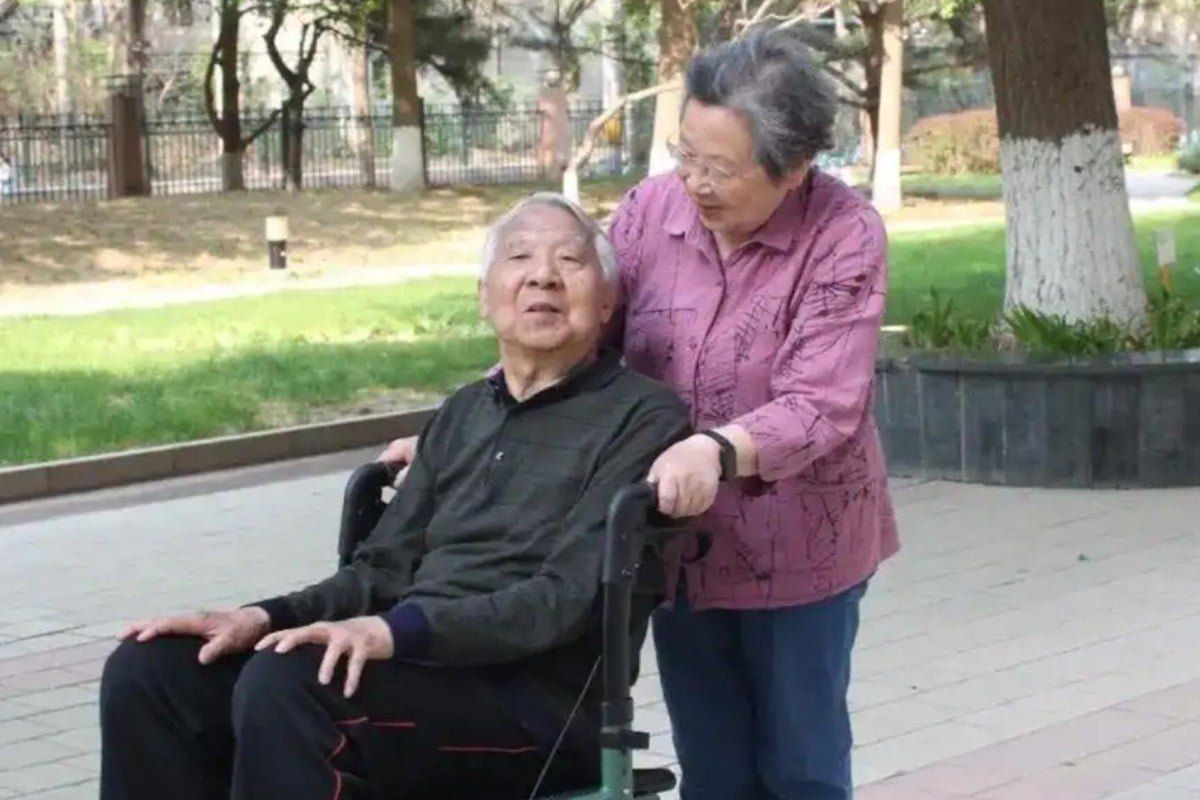
Wen Bo, a 90-year-old resident of Beijing, has become an unexpected voice in discussions about elderly care across China, winning the admiration of millions through her steadfast commitment to maintaining her husband's sense of self as he battles Alzheimer's disease. Her story emerges at a critical moment when China and the broader Asian region grapple with rapidly ageing populations and the corresponding demand for compassionate, person-centred caregiving models that extend beyond the purely medical.
The couple's relationship stretches back more than six decades. They first encountered each other as secondary school classmates before embarking on a lengthy courtship conducted across distances. Their marriage in 1960 marked the beginning of a life together that unfolded through decades of shared activities—swimming, walking, and periodic journeys throughout China and beyond. They successfully raised two sons while maintaining an active engagement with life that seemed to defy the slow-motion narrative often associated with later years.
Their trajectory shifted dramatically in 2023 when Wen's husband began experiencing memory lapses and incontinence. Medical evaluation confirmed what Wen had suspected: Alzheimer's disease, a diagnosis that forced both of them to confront an uncertain future. Rather than placing him in an institution or expecting their adult sons—each occupied with their own families and professional obligations—to shoulder the caregiving burden, Wen made a deliberate choice to become his primary carer. This decision, while demanding, reflected her conviction that maintaining their partnership remained possible despite the disease's progression.
Their household arrangement demonstrates pragmatism balanced with commitment. A domestic helper manages cooking and household operations, freeing Wen to focus on the cognitive and emotional aspects of care that she considers irreplaceable. Their children visit as their schedules permit, but the daily responsibility falls to Wen, who approaches the role with intentionality rather than resignation. As her husband's condition deteriorated—his memory of medications became unreliable, his physical mobility declined, and his interest in grandchildren evaporated—Wen recognized that conventional approaches might inadequately address his deeper needs.
Wen immersed herself in understanding Alzheimer's through systematic study of books and online materials, transforming herself into an informal expert on cognitive rehabilitation. Each day she structures activities designed to exercise his mental faculties: mathematical problems, puzzles, and painting sessions interspersed with physical exercises. This regimen appears to have yielded measurable benefits. Her husband's cognitive decline has proceeded at a noticeably slower tempo than typical disease trajectories, and he retains sufficient capability to operate his electric wheelchair independently. Occasionally, he even reverses their roles, reminding Wen to rest when he observes her fatigue.
Wen has chosen to document this caregiving journey through diary entries shared on RedNote, a Chinese social media platform. What began as personal reflection has resonated explosively with millions of users seeking guidance, reassurance, or simply witness to a love story persisting through neurological devastation. In one recent post dated August 23, she recounted her husband completing an arithmetic examination, his performance slower than in previous attempts but still yielding only a single error—a small victory worthy of celebration and documentation. Her accounts possess a granular authenticity that generic advice about eldercare cannot replicate.
Wen's approach to her husband's disease reveals a philosophy extending far beyond symptom management. She worries constantly that her husband might forget her name entirely, so each evening before sleep she reminds him to call for her assistance whenever needed. Her insistence on this point carries profound weight: "He has to remember my name. I am his wife. I should be the last person he forgets." This assertion reflects her understanding that maintaining relational identity—the knowledge of who cares for you and why—constitutes a form of dignity that neurodegenerative disease threatens to obliterate. She deliberately involves him in simple household tasks, patiently allowing him to complete them at whatever pace his compromised faculties permit, reinforcing his sense of utility and contribution.
Underlying Wen's caregiving philosophy stands a conviction that Alzheimer's disease, while certainly disabling, need not define a person's entire existence. "Self-respect, a sense of existence, and the feeling of being needed are essential for individuals with Alzheimer's disease," she has stated in interviews, articulating a vision that prioritizes psychological and emotional wellbeing alongside physical health. This perspective challenges prevailing attitudes in many societies, including parts of Southeast Asia, where dementia often triggers social withdrawal and the relegation of affected individuals to the margins of family and community life.
Wen's narrative carries particular significance given China's demographic transformation. The nation's population aged 60 and older exceeded 320 million by the end of the previous year, representing more than one-fifth of the total population—a proportion that rivals or exceeds that of many developed nations. This demographic shift has created unprecedented demand for eldercare solutions, straining families and institutions while generating public anxiety about whether adequate support systems will materialize. Wen's example circulates within this context of collective uncertainty.
The response from younger Chinese users reveals how profoundly her story addresses their anxieties about ageing. One observer remarked that Wen's posts "always bring me comfort" by demonstrating "what an ideal later life could look like: being with the person you love while living independently." Another noted that her documentation has alleviated fears about parental care in the future, providing practical guidance alongside emotional reassurance. These comments suggest that Wen's influence extends beyond inspiration into the realm of practical education—she is showing others how to think about and approach caregiving challenges they will inevitably encounter.
Southeast Asian countries experiencing similar demographic ageing pressures—including Thailand, Vietnam, and eventually Malaysia as birth rates continue declining—may find particular relevance in Wen's model. Her approach emphasizes cognitive engagement, preservation of autonomy within realistic limits, and the integration of professional household assistance with family-centred care, creating a hybrid system that might prove more sustainable and humane than either pure institutionalization or wholly family-dependent models. The question of how to age with dignity while maintaining meaningful connection to loved ones transcends national boundaries; Wen Bo has articulated one compelling answer.
Looking forward, Wen has acknowledged that hospice care might become necessary if her husband's condition deteriorates significantly. This pragmatic acceptance of potential limits demonstrates mature realism alongside her commitment to maximizing quality of life in the present. Her willingness to consider different care modalities as circumstances evolve suggests that dignity need not demand martyrdom, and that accepting help when needed constitutes a rational rather than shameful choice. Her husband's story, in other words, is not fixed but evolving—a narrative in progress that will continue to unfold and potentially continue to teach.

