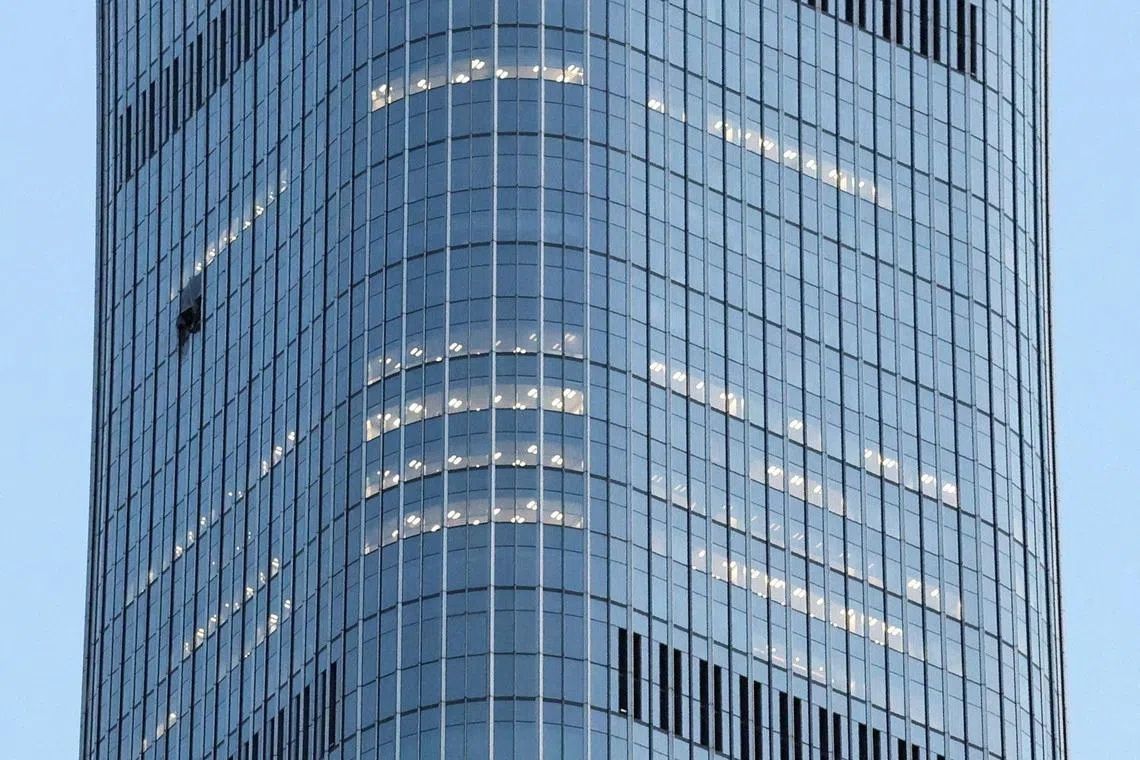
On a Friday afternoon in late June, a two-seat propeller aircraft penetrated the heavily fortified airspace of China's capital and struck CITIC Tower, the nation's tallest building, in a security incident that raised troubling questions about aviation oversight and perimeter protection around one of the world's most guarded cities. The 66-year-old pilot, surnamed Liu, died in the crash, while 13 people were injured as the plane tore through windows on an upper floor of the 528-metre structure before crashing to the ground. Chinese officials moved swiftly to frame the incident as an isolated tragedy rooted in the pilot's personal struggles rather than a systemic failure, releasing a statement describing his psychological state and dismissing the event as driven solely by individual circumstances.
According to the Chaoyang district government's formal account, Liu had grappled with longstanding mental health challenges including chronic insomnia and anxiety. His diary entries, authorities revealed, repeatedly contained references to ending his life, painting a portrait of a man in psychological distress. The 66-year-old lived alone in Beijing following a divorce and worked as a freelancer, factors that officials cited to support their narrative of isolated personal crisis rather than negligence in aviation management. The government statement concluded that the crash was "an incident endangering public safety caused by personal reasons," effectively attributing the breach of airspace above a sensitive financial district to the pilot's individual psychology rather than broader security weaknesses.
The timing and location of the crash amplified concerns about China's vaunted security apparatus. CITIC Tower stands in Beijing's Central Business District, approximately seven kilometres from Zhongnanhai, the compound housing China's top Communist Party and government leaders. The incident occurred just days before the ruling Communist Party was scheduled to commemorate its 105th anniversary at the Great Hall of the People near Tiananmen Square, heightening sensitivity around any breach of security in the capital's core administrative and commercial zones. The proximity of the crash to such strategically important locations added to public alarm, even as authorities worked to contain information and suppress discussion online.
Liu obtained his sport pilot licence in 2021 and upgraded to a private pilot licence in 2024, meaning he had formal credentials and training despite his mental health conditions. On the day of the incident, he departed from a general aviation airport in Pinggu district, a suburban area, and conducted both supervised and solo flights. The authorities' account confirmed that during his final solo flight, Liu deviated from his designated flight area and lost radio contact with the airport. The registered aircraft, identified as B-12PP, was the small, general aviation plane he was operating when it struck the tower. His ability to obtain these licences raises questions about medical screening procedures, since acquiring a private pilot licence in China legally requires a physical medical examination and various certifications.
The security breach itself remains difficult to reconcile with China's stringent aviation controls. The nation maintains some of the world's most restrictive airspace regulations, with all flights, including general aviation operations, requiring advance approval from flight authorities. Non-airline operators must submit detailed flight plans to control centres before 3 p.m. the day before any flight. Chinese civil aviation law generally prohibits aircraft from flying over urban areas, restrictions that should have prevented a small plane from approaching CITIC Tower and the surrounding commercial district. The fact that Liu's aircraft not only entered restricted airspace but also crossed sectors designated for commercial traffic serving Beijing Capital Airport, one of the city's two major airports, suggests gaps in monitoring and enforcement that officials have not adequately explained.
Chinese state authorities moved rapidly to suppress public discussion of the crash and its implications. Within hours of the incident, photos and videos circulated on Chinese social media were removed, while police stationed at the scene prevented journalists and observers from photographing the damaged tower. Discussion of the crash on social platforms has since been systematically scrubbed, limiting public access to independent information and eyewitness accounts. Reuters reported that such aviation incidents are rare in China precisely because of the stringent controls, but the rarity itself made the breach noteworthy and sparked speculation across Beijing's business district about what had occurred and how such a breach was possible.
Internet users, before their posts were deleted, questioned whether the government's explanation adequately addressed the security lapses involved. While officials had attributed the crash to Liu's documented mental health struggles and suicidal ideation, observers noted that this personal narrative did not fully account for how a small aircraft had managed to deviate from approved flight paths, lose radio contact, and penetrate airspace over a protected zone adjacent to a permanent no-fly area. The suppression of discussion prevented detailed public examination of aviation safety procedures, checkpoint protocols, and radar monitoring systems that might have failed or detected but failed to intercept the aircraft. The gap between the government's explanation and public curiosity reflected broader tensions in how Beijing addresses potential security vulnerabilities.
For Southeast Asian readers and aviation observers across the region, the Beijing incident carries implications for understanding how major Asian powers approach general aviation regulation and airspace security. China's highly centralized control model, which typically excels at enforcing restrictions, encountered a test case in which an individual operator exploited regulatory gaps or monitoring failures to compromise security in the heart of the capital. The incident demonstrates that even nations with sophisticated surveillance and control systems face challenges in balancing operational efficiency with comprehensive monitoring. It also underscores how mental health crises among licensed pilots can pose systemic risks that existing medical and psychological screening procedures may fail to detect or prevent.
The pilot licensing system, which allowed Liu to obtain credentials after experiencing documented mental health problems, raises questions applicable across the region about how aviation authorities assess fitness-to-operate standards. In many Asian countries, including Malaysia, regulators must balance accessibility to general aviation with rigorous health and safety assessments. China's incident suggests that formal certification procedures, even when technically sound, can fail to identify high-risk individuals or may not be applied with sufficient consistency. The crash also highlights how rapidly news and information are controlled in authoritarian contexts, complicating independent analysis of what structural or procedural failures may have occurred alongside individual psychological factors. For Malaysian and regional aviation authorities, the Beijing case provides a cautionary example of how even tightly regulated systems can experience breaches when individual factors and systemic gaps align.

