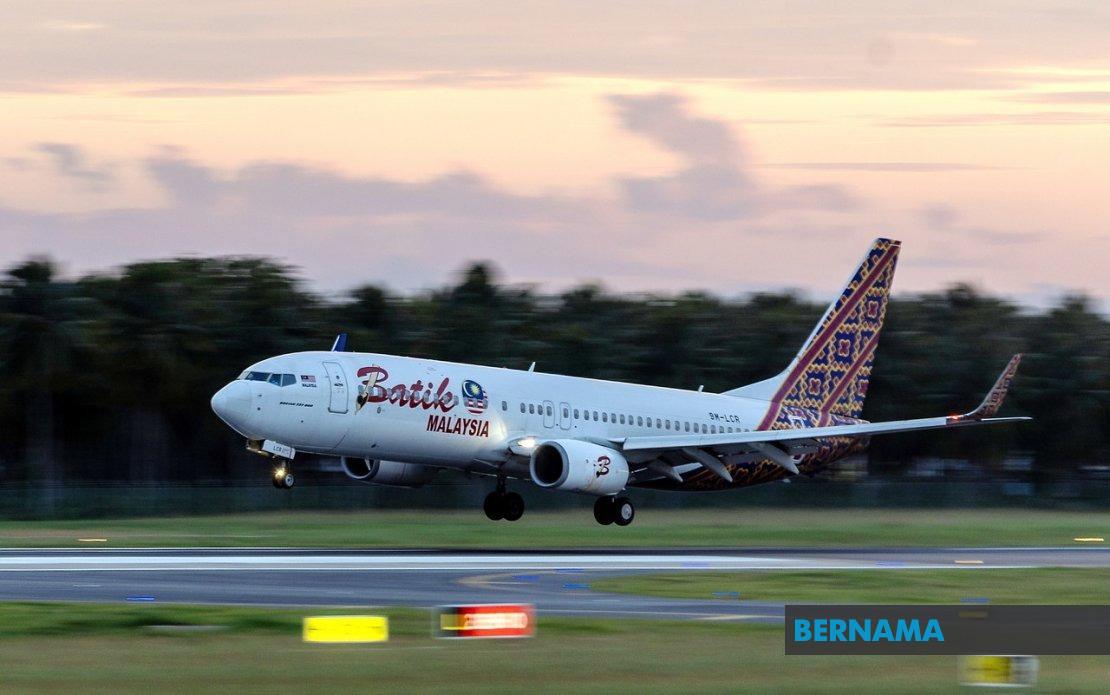
Batik Air is set to double its flight frequency on the Bintulu-Kuala Lumpur corridor from July 20, introducing a second daily service in response to mounting pressure from the government and the travelling public. Tourism, Arts and Culture Minister Datuk Seri Tiong King Sing announced the expansion on Friday, framing the move as a direct result of sustained advocacy to address widespread frustration over limited flight slots and rapidly climbing ticket prices on this strategic route connecting Peninsular Malaysia with Sarawak's eastern coast.
The decision follows intensive negotiations between Tiong's office and the airline, which had previously scaled back services on the route and triggered public outcry. While the minister initially lobbied for three daily departures, the carrier has committed to implementing one additional flight as an immediate measure, with the potential to expand further should passenger volumes justify the investment. This pragmatic compromise reflects the complex balancing act between government pressure to improve connectivity and the commercial realities facing airlines operating regional routes with more modest demand than trunk services.
Bintulu, a city of roughly 160,000 people in central Sarawak and a significant hub for oil and gas operations, petrochemicals, and timber industries, has experienced sustained economic growth that has fundamentally altered travel patterns. The expansion in passenger demand reflects not only business-related flights but also increased mobility for education, healthcare, and tourism purposes. As Sarawak's economy continues to diversify and integrate more closely with the rest of Malaysia, air connectivity has become increasingly critical to regional competitiveness and social mobility.
Under the new schedule, flights departing Kuala Lumpur will leave at 10 am and 2.30 pm daily, while return services from Bintulu will depart at 1.10 pm and 5.40 pm. These timings appear designed to accommodate both morning business travel and afternoon slots, offering passengers meaningful flexibility absent from the previous single daily rotation. The staggered schedule should facilitate smoother connections for passengers combining Bintulu with onward regional travel, potentially making the route more attractive for business travellers who previously faced rigid scheduling constraints.
Tiong emphasised throughout his announcement that affordability represents a paramount concern alongside frequency. He urged Batik Air to maintain ticket prices at reasonable levels commensurate with market conditions, arguing that excessive fares undermine the public benefit of increased capacity. This reflects a broader tension in Malaysian aviation policy: the government's desire to subsidise or regulate domestic air travel clashes with commercial imperatives that drive carriers toward revenue maximisation, particularly on routes with inelastic demand from business and essential travel segments. His advocacy for price stability reveals recognition that mere frequency expansion means little if fares remain prohibitively high for ordinary residents.
The minister framed the additional flight as a temporary measure pending further evaluation. If passenger traffic continues expanding beyond current levels, Batik Air has indicated willingness to assess the commercial viability of a third daily service. This staged approach allows both the airline and the government to monitor actual demand recovery and passenger behaviour following the July 20 launch, providing data to inform future capacity decisions. For Bintulu residents and businesses, the announcement offers genuine relief but also signals that further growth requires sustained travel volume justifying additional investment.
Batik Air's cooperation in this expansion must be understood within the broader context of Malaysia's domestic aviation landscape. Regional carriers depend heavily on government goodwill for slot allocation, maintenance of subsidised routes, and renewal of operating licences. When ministers publicly advocate for service improvements, airlines typically respond constructively, recognising both the political dimensions of their operating environment and the genuine risks of reputational damage from public criticism. The negotiated outcome represents a workable compromise between Tiong's initial ambitions and Batik Air's commercial constraints.
The expansion also carries implications for Malaysian regional development policy. Sarawak's integration into the national economy depends substantially on efficient transport links, both for resource export industries and for talent retention in professional sectors. Young Sarawakians pursuing higher education or professional careers in Kuala Lumpur require affordable, reliable air travel to maintain connections with home. Families seeking medical treatment in federal territory hospitals need accessible flights. Improved air connectivity therefore functions as infrastructure supporting human capital retention and regional economic participation.
Tiong's emphasis on close coordination between government, airlines, and aviation authorities underscores the reality that transportation policy cannot be delegated entirely to market forces on regional routes. Private carriers naturally prioritise high-margin trunk routes connecting major metropolitan centres. Government intervention becomes necessary to maintain essential connectivity to economically important secondary cities like Bintulu, where population size alone may not justify service levels that broader national interests require. This reality shapes aviation policy across Southeast Asia, where governments commonly engage in dialogue with carriers regarding route decisions affecting regional equity and economic development.
The stability of flight operations emerged as another key concern in Tiong's communications with the airline. Passengers travelling for business or essential purposes cannot tolerate frequent cancellations or last-minute schedule changes that create cascading disruptions to their plans. The minister's insistence on reliable operations alongside frequency expansion reflects lessons learned from previous service disruptions that undermined public confidence in the route. Consistency in scheduling may ultimately matter as much as the number of available flights for building sustainable passenger traffic.
Looking forward, the success of this expansion will depend on factors beyond Batik Air's direct control. Economic conditions, fuel prices, and demand trends across Sarawak's primary industries will influence whether passenger volumes justify further capacity additions. If business travel rebounds following this expansion and consumer sentiment improves regarding affordability, Tiong's prediction of potential three-times-daily service within a reasonable timeframe becomes realistic. Conversely, if ticket prices remain elevated or demand disappoints, the additional flight may represent a temporary accommodation rather than a sustainable expansion.
For Malaysian travellers and Bintulu's business community, the July 20 commencement of twice-daily service marks a meaningful improvement over the constrained situation of recent months. The expansion addresses legitimate public grievances and restores confidence in government responsiveness to constituent concerns. Whether this improvement translates into sustained economic benefits and travel accessibility will become apparent within months as pricing patterns stabilise and passenger volumes reach equilibrium. The expansion demonstrates that sustained advocacy combined with intelligent negotiation can produce tangible results in Malaysia's aviation sector.

