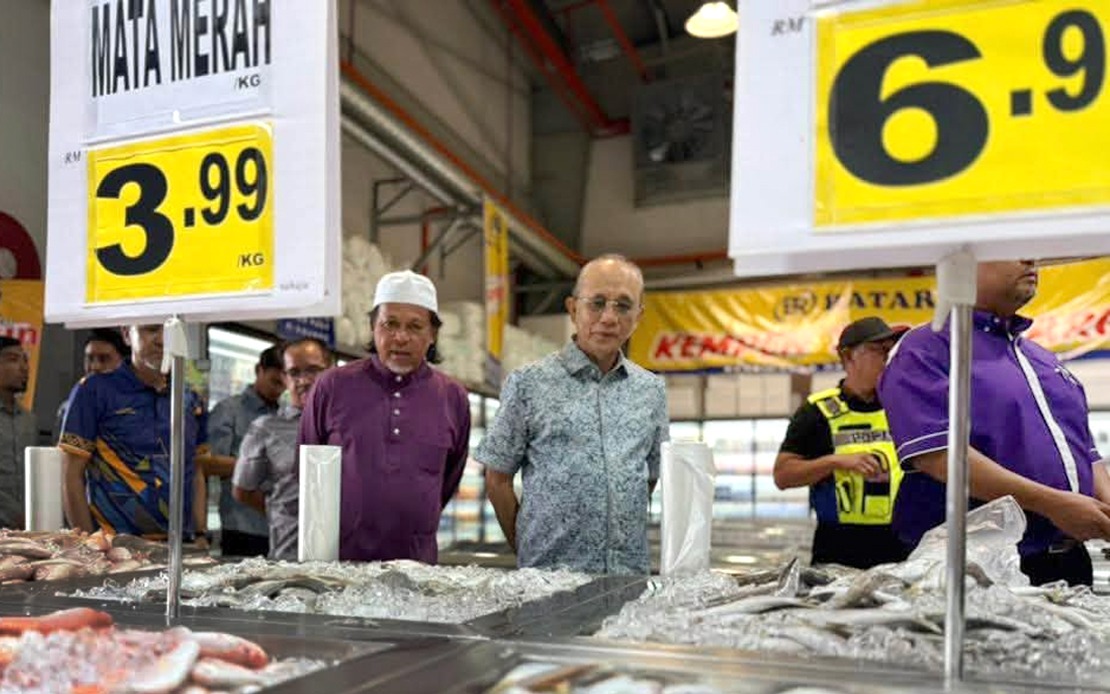
Bataras Supermarket has launched a three-month promotional campaign offering Sabahans substantial discounts on fresh groceries, with price reductions ranging from five to 30 per cent on 30 different product lines. The initiative, which runs until October 31, encompasses all 58 Bataras Supermarket outlets throughout the state, positioning the campaign as a direct response to the persistent challenge of household affordability that continues to weigh on Malaysian consumers.
The Ministry of Domestic Trade and Cost of Living (KPDN) announced the campaign at the Papar branch, where Pantai Manis state assemblyman Datuk Pengiran Saifuddin Pengiran Tahir officially opened the promotion. Government officials framed the retailer's action as part of a broader whole-of-nation strategy aimed at tackling the cost-of-living crisis, which has emerged as a significant concern not only within Malaysia but globally. By encouraging private sector participation, the ministry seeks to distribute responsibility for consumer welfare across multiple stakeholders rather than relying solely on government intervention.
The fresh produce offerings represent a deliberate focus on essential household staples—items that feature prominently in weekly shopping baskets across Sabah. Rather than concentrating discounts on peripheral luxury goods, the campaign targets vegetables, fruits, and other perishables that form the backbone of daily nutrition and family meal planning. This strategic approach demonstrates an understanding that cost-of-living pressures hit hardest when they affect fundamental necessities, allowing households to redirect budgeted funds toward other essential services like utilities, education, or healthcare.
For consumers in Papar, Kota Kinabalu, and other Sabah towns, the promotion offers tangible savings that accumulate meaningfully across multiple shopping trips. A household purchasing fresh items weekly could potentially save substantial sums over the three-month period, particularly if members of the family adjust their purchasing habits to take advantage of the most heavily discounted lines. The five to 30 per cent variance across different products suggests that certain high-demand items may carry steeper cuts, incentivizing consumers to choose these products over costlier alternatives.
Bataras Sdn Bhd, the operator behind the campaign, has positioned itself as a responsive corporate citizen willing to absorb margin pressure to support community welfare. The company, which commenced operations in 1998, has grown to operate 58 branches across Sabah, establishing itself as a significant retail presence in the state. This scale allows the retailer to negotiate favourable terms with suppliers and distribute the cost of promotional pricing across a substantial customer base, making the initiative economically sustainable rather than a one-off gesture.
The timing of the campaign—extending into the final quarter of the year—carries particular significance. October and beyond often see increased household spending as families prepare for year-end festivities, school expenses, and seasonal purchasing. By maintaining discounted prices through this period, Bataras creates an opportunity for households to build purchasing power when demand typically surges, potentially offsetting what might otherwise be a financially stressful period for many families.
From a policy perspective, the KPDN's endorsement of this initiative reflects an evolving approach to cost-of-living management that emphasizes public-private partnership rather than pure government subsidy. Officials explicitly called for other retailers to emulate Bataras's example, suggesting that competition and corporate social responsibility could play meaningful roles in market-driven price moderation. This approach avoids direct government expenditure while leveraging the profit motives and brand-building objectives of commercial enterprises.
However, the campaign also raises broader questions about retail market dynamics in Sabah. The reliance on individual corporate initiatives highlights gaps that might otherwise be addressed through more systematic policy mechanisms such as supply chain optimization, import duty restructuring, or agricultural subsidies. While Bataras's gesture provides immediate relief, sustainable solutions to cost pressures often require addressing underlying structural factors that determine pricing power across the supply chain.
For Malaysian shoppers beyond Sabah, the Bataras initiative serves as a reference point for advocacy and expectation-setting. Success in implementing widespread discounts without operational collapse suggests that other major retailers operating in Peninsula Malaysia, Sarawak, or Federal Territories could similarly accommodate price reductions on essentials. Consumer awareness of such campaigns in other regions may generate pressure on retailers nationally to demonstrate comparable commitment to affordability.
The campaign also reflects evolving consumer awareness about shopping choices. Sabahans now have concrete information about which retailer is prioritizing their household budgets during a specific window, potentially shifting shopping patterns and customer loyalty. This competitive element—where corporate reputation becomes tied to cost-of-living responsiveness—can create positive incentives for other market participants to announce their own promotional initiatives.
Looking ahead, the success of this campaign will be measured not only in foot traffic and sales volumes but in whether it establishes expectations for ongoing price moderation on essentials. If Sabah consumers come to expect such discounts as routine rather than exceptional, retailers may face sustained pressure to maintain competitive pricing. Conversely, if the campaign concludes without follow-up initiatives, it may underscore the temporary nature of corporate largesse and the need for more permanent government-level interventions.
The Ministry's hope that this campaign will be expanded and emulated by additional industry players represents both optimism and acknowledgment that no single retailer can solve systemic affordability challenges. True progress on cost-of-living issues will require sustained commitment from multiple retailers, government policy reform, and potentially consumer behavior adaptation. Until that broader ecosystem shifts, campaigns like Bataras's offer meaningful but partial solutions to a complex problem.

