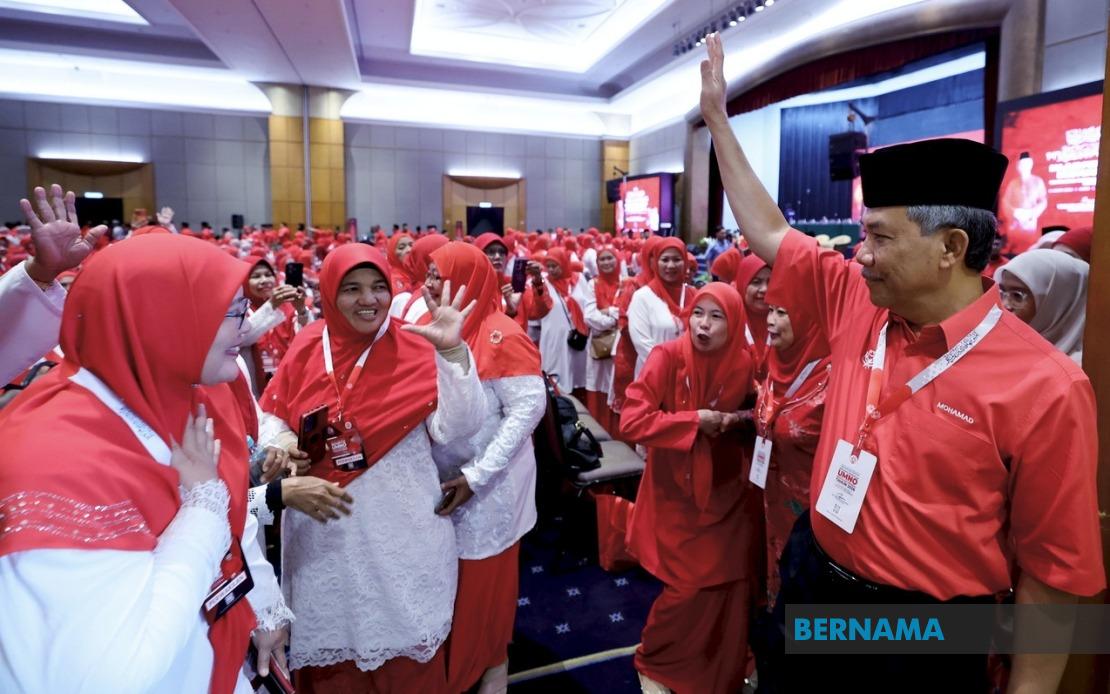
Barisan Nasional is preparing to fundamentally restructure how it allocates constituencies for the upcoming Negeri Sembilan state election, marking a significant departure from the rigid seat-sharing conventions that have governed coalition politics in the state for decades. Datuk Seri Mohamad Hasan, BN deputy chairman and Negeri Sembilan BN chairman, announced the strategic pivot while addressing party delegates in Seremban, signalling that the coalition intends to prioritise electoral competitiveness over the maintenance of historical territorial divisions among its component parties.
The proposed shift reflects mounting recognition within BN's leadership that static seat allocations no longer serve the coalition's interests in an era of rapidly evolving voter demographics. Mohamad explained that the composition of constituencies has undergone substantial transformation, rendering outdated the longstanding practice whereby particular parties retained specific seats as an entrenched right. Under the traditional arrangement, parties would defend the same constituencies across successive electoral cycles, a system that Mohamad characterised as limiting both voter choice and the coalition's capacity to field candidates in areas where they possess genuine electoral appeal.
The strategic recalibration introduces a merit-based approach to seat distribution, contingent upon each component party's assessed capacity to win. Rather than defaulting to the formulaic allocation pattern, BN intends to conduct granular analysis of electoral performance and demographic shifts across all constituencies. This methodology represents a pragmatic acknowledgement that voter behaviour has become increasingly volatile and that traditional demographic strongholds cannot be presumed secure without continuous reassessment. Previous election outcomes will serve as the primary evidentiary foundation for these calculations, supplemented by locally-gathered intelligence regarding population movements and changing voter sentiment.
Mohamad acknowledged that this reorientation introduces complexity into the coalition's internal coordination mechanisms, yet framed it as essential for preventing further electoral losses. The BN deputy chairman pointed to historical instances where internal sabotage—arising from resentment over seat allocation or candidate selection—had directly contributed to constituency losses. By introducing flexibility and demonstrating responsiveness to demonstrated electoral strength rather than entrenched privilege, BN hopes to diminish intra-coalition friction that has previously undermined campaign cohesion. The implicit argument is that component parties will accept seat changes if the basis for such changes appears rational and performance-driven rather than arbitrary or punitive.
However, the implementation of this new framework operates within constrained parameters. While Mohamad possesses substantial authority as the state-level BN chairman, the ultimate determination of seat allocations and candidate lists remains the prerogative of the BN Supreme Council at the national level. This hierarchical arrangement ensures that major decisions reflect the interests of larger components and the coalition's central leadership, preventing any single state organisation from unilaterally restructuring the bargain that binds the coalition together. Component parties have been instructed to submit ranked candidate lists for each constituency, with a minimum of three nominations per seat, streamlining the eventual selection process.
The timeline for implementing these changes is extraordinarily compressed. Mohamad indicated that candidate announcements are scheduled for July 15, coinciding with the launch of the BN election machinery, leaving a narrow window for internal negotiations and finalisation of allocations. Nominations officially close on July 18, with early voting taking place on July 28 and the general poll on August 1. This accelerated schedule reflects the Election Commission's previously announced electoral calendar and allows minimal flexibility for prolonged haggling over seat distribution. The urgency underscores BN's determination to present a unified front despite the complexity of negotiating revised allocations among multiple parties.
For Malaysian political observers and stakeholders in Negeri Sembilan specifically, this represents a meaningful evolution in how the dominant coalition approaches electoral competition. The traditional seat-sharing model had functioned as a stabilising mechanism, reducing internal competition and simplifying candidate selection processes, but increasingly it appeared to lock the coalition into defending indefensible positions. By introducing performance metrics as the governing principle, BN signals that it views sustained electoral competitiveness as more valuable than maintaining the ceremonial arrangements that once defined coalition cohesion. This recalibration acknowledges that Malaysian voters, particularly in states like Negeri Sembilan where competition has intensified, increasingly punish coalitions that appear complacent or that field weak candidates in marginal constituencies.
The shift also carries implications for how BN's component parties perceive their standing within the alliance. Traditionally dominant parties in particular constituencies may find themselves displaced in favour of parties that have demonstrated stronger performance in those areas, or that possess particular organisational advantages. This reordering could generate friction, particularly if any component party perceives itself as systematically disadvantaged in the allocation process. Mohamad's emphasis on accommodation and the inclusion of "friends of BN" suggests an intention to soften these potential tensions by emphasising the coalition's capacity to expand rather than merely redistribute, though the arithmetic of seat numbers ultimately imposes constraints on how many parties can be beneficiaries.
The uncertainty surrounding Mohamad's own electoral future adds an additional layer of complexity to these negotiations. As the holder of the Rantau state seat since 2004, Mohamad occupies a prominent position within Negeri Sembilan BN, yet he conspicuously declined to definitively confirm his candidacy, instead deferring to party leadership. This ambiguity potentially signals either genuine openness to stepping aside if party calculations suggest tactical advantage, or a conventional rhetorical genuflection toward collective party authority. His decision regarding candidacy will itself carry symbolic weight, particularly given his senior position and the likely expectation that the Negeri Sembilan election represents a significant test of BN's electoral resilience in a state where the coalition has faced mounting pressure.
The broader significance of BN's strategic recalibration extends beyond the immediate Negeri Sembilan context. Coalition-based politics in Malaysia depends fundamentally upon maintaining internal equilibrium among parties with divergent interests and constituencies. Mechanisms that generate predictability and reduce zero-sum competition among coalition members serve essential stabilising functions. The shift toward performance-based allocation, while potentially more rational in narrow electoral terms, introduces greater uncertainty into coalition management and could establish precedents that other state-level BN organisations seek to replicate, with unpredictable consequences for coalition cohesion. Whether this calculated risk yields electoral dividends or generates unforeseen internal friction will likely influence how other Malaysian coalitions approach similar strategic questions.
Ultimately, BN's willingness to revisit foundational assumptions about seat allocation reflects confidence that component party leaders share a commitment to electoral victory sufficiently strong to override attachment to historical entitlements. The success of this approach will be measurable not only in the aggregate results for BN in Negeri Sembilan, but in whether the coalition emerges from the candidate selection process with internal morale intact and campaign unity genuinely secured. The coming weeks will reveal whether the coalition's components can subordinate particularistic interests to collective electoral strategy, or whether the injection of competition into what was previously a formulaic process will generate the very friction that Mohamad hopes to avoid.

