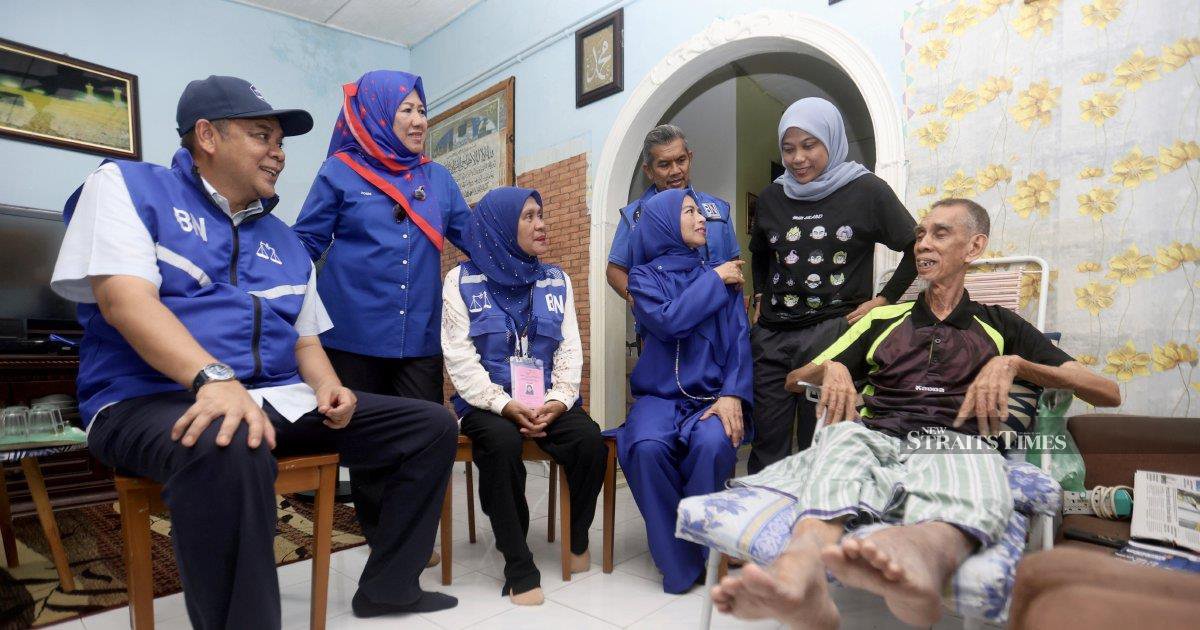
Barisan Nasional is mounting a deliberate strategy to harness the political momentum generated by its resounding success in Johor to persuade voters in Negri Sembilan, with senior party figures actively promoting what they describe as the "Johor aura" as a central campaign message. Datuk Seri Dr Noraini Ahmad, the chief of Wanita Umno, articulated this approach while addressing party supporters in Kuala Pilah, signalling that BN intends to translate the narrative of southern competence and delivery into electoral gains across the state.
The coalition's reliance on Johor's political performance reflects a broader strategy within Malaysian electoral contests, where successful governance in one state frequently becomes a model showcased to voters elsewhere. Johor, strategically positioned as Malaysia's southern economic engine, has historically served as a bellwether for broader national political trends. The state's recent electoral cycles have demonstrated the coalition's capacity to govern effectively and maintain public confidence, creating what party strategists believe represents transferable appeal to adjoining states with similar voter demographics and economic concerns.
Negri Sembilan's electoral landscape differs materially from Johor's more consolidated political environment, yet both states share interconnected economies, overlapping commercial networks, and voter populations with comparable priorities regarding economic growth, employment, and infrastructure development. The coalition's approach suggests confidence that messaging emphasising stability, fiscal management, and development initiatives proven in Johor will resonate with Negri Sembilan constituencies evaluating their own state government's performance and future prospects.
The timing of this campaign strategy assumes significance within Malaysia's current political environment, where state elections increasingly function as indicators of shifting voter sentiment and party competitiveness. By anchoring the Negri Sembilan campaign to Johor's perceived accomplishments, BN effectively presents voters with a choice between two competing visions of governance: one emphasising continuity and proven administrative capability, the other representing alternative approaches to state management and development priorities.
Wanita Umno's active participation in articulating this message underscores the party's strategic position as a mobilisation force within BN's broader campaign architecture. The women's wing traditionally maintains strong grassroots networks across residential areas, community associations, and family-based voter engagement channels, making their endorsement of the "Johor aura" strategy particularly significant for reaching female voters and household decision-makers who frequently influence family voting patterns in Malaysian elections.
The coalition's emphasis on comparative governance success rather than abstract ideological commitments reflects pragmatic electoral strategy rooted in voter behaviour research suggesting that Malaysians increasingly prioritise tangible government performance—rubbish collection efficiency, road maintenance, health service delivery, business licensing procedures, property development control—over partisan rhetoric. By grounding its Negri Sembilan campaign in Johor's documented record across these dimensions, BN attempts to reframe electoral choice as a practical assessment of administrative competence rather than purely partisan affiliation.
However, this strategy carries implicit risks. Negri Sembilan voters may perceive the campaign approach as dismissive of state-specific concerns or as suggesting that local governance should merely replicate southern models rather than address unique regional challenges. The states maintain distinct demographics, industrial compositions, and historical political cultures that might not respond uniformly to messaging centred on another state's achievements. Voters occasionally interpret external comparisons as condescending, particularly when local representatives are perceived as secondary to imported success narratives.
The opposition will likely contest BN's framing by questioning whether Johor's model genuinely applies to Negri Sembilan's distinct circumstances or by offering counter-narratives about alternative governance approaches and policy priorities. This rhetorical contest will substantially shape how voters ultimately evaluate competing campaign claims and assess which party vision aligns most closely with their own expectations for state administration and development direction.
For Malaysian political analysts and observers, the BN campaign strategy offers insights into how coalition parties calibrate messaging across different electoral contexts while maintaining consistency within broader party narratives. The deliberate invocation of the "Johor aura" represents a calculated attempt to consolidate regional political advantages into expanded parliamentary representation, demonstrating the coalition's recognition that modern electoral success requires sophisticated cross-state messaging coordination and strategic deployment of proven governance accomplishments.
The Negri Sembilan election outcome will provide measurable feedback regarding whether BN's Johor-centred campaign approach effectively translates regional success into voter support, or whether state-specific concerns and opposition messaging ultimately prove more influential in shaping electoral results and determining which coalition will govern the state during the coming term.

