Financial institutions across Malaysia are tightening their lending criteria by mandating environmental, social and governance (ESG) reports from companies seeking credit facilities, a shift that promises to reshape corporate financing dynamics across the country. The trend reflects a global movement among lenders to incorporate sustainability metrics into their risk assessment frameworks, signalling that financial access now depends not just on traditional balance sheets but on demonstrable environmental and social responsibility.
The imperative for Malaysian companies to embrace sustainability reporting stems from a fundamental market reality: banks and other financial institutions view ESG performance as a proxy for long-term viability and risk management. Prathab V, principal consultant at ESGright Sdn Bhd, emphasises that this requirement presents a decisive competitive advantage for organisations that comply early. Both large corporations and smaller enterprises stand to benefit from establishing robust sustainability frameworks, as lenders increasingly channel capital toward businesses that can articulate their environmental impact and social commitments in standardised formats.
Currently, mandatory sustainability disclosure applies only to listed companies on Bursa Malaysia, leaving unlisted enterprises and SMEs with discretionary reporting. However, this regulatory distinction masks an economic reality that is rapidly narrowing the gap. Companies operating outside the listing requirement face mounting pressure from their financial partners to voluntarily adopt sustainability reporting standards. Those that resist risk encountering higher borrowing costs, stricter loan covenants, or outright rejection of credit applications as lenders consolidate their exposure to sustainability concerns.
The Malaysian government has positioned sustainability reporting as a strategic priority, actively encouraging businesses through industry regulators and comprehensive guidelines to undertake comprehensive ESG disclosure. This regulatory ecosystem creates a virtuous cycle where early adoption becomes self-reinforcing: companies that embrace sustainability reporting gain preferential access to what Prathab describes as "smart capital"—funding from sophisticated investors and financial institutions that explicitly factor sustainability into their allocation decisions. Conversely, laggards face an increasingly hostile capital market environment where their competitive disadvantages compound over time.
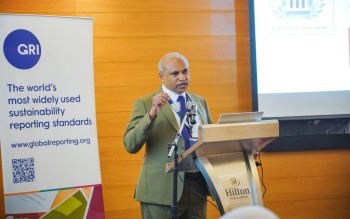
The economic case for compliance extends beyond immediate access to credit. ESGright and the Global Reporting Initiative (GRI) recently convened approximately 40 senior corporate sustainability leaders and industry stakeholders representing combined market capitalisation exceeding RM380 billion to discuss the evolution of ESG reporting frameworks. This concentration of financial firepower underscores how thoroughly sustainability has penetrated Malaysian business leadership thinking. These discussions reveal that companies investing in sustainability reporting infrastructure position themselves to capture supply chain opportunities, meet international customer expectations, and sustain export competitiveness in markets where ESG credentials are non-negotiable.
Malaysia's emergence as a regional leader in sustainability professional capacity demonstrates the country's strategic commitment to this transition. ESGright has ascended to the fifth-largest GRI professional sustainability trainer globally by training volume in 2025, and ranks third in the Asia-Pacific region. Malaysia itself maintains one of the highest concentrations of GRI-certified sustainability professionals within ASEAN, reflecting both government promotion and market demand for expertise. This institutional capacity provides Malaysian businesses with accessible pathways to develop and implement credible sustainability frameworks without requiring expensive international consultants.
Recognition from global standard-setting bodies validates Malaysia's positioning in this space. The International Financial Reporting Standards (IFRS) Foundation recently appointed ESGright as Malaysia's first approved education partner, specifically tasked with disseminating expertise in sustainability-related financial disclosures aligned with International Sustainability Standards Board (ISSB) standards. This credential signals to Malaysian practitioners and companies that local sustainability professionals operate within globally recognised frameworks, enabling seamless integration with international financing and investment requirements.
Small and medium enterprises face distinct challenges in navigating sustainability disclosure requirements due to resource constraints and competing operational priorities. GRI chief executive officer Robin Hodess acknowledges that SMEs require tailored approaches rather than scaled-down versions of large corporate reporting frameworks. A proportionate disclosure regime calibrated to business necessity and resource capacity would enable smaller firms to advance their sustainability journey without prohibitive compliance costs. For SMEs functioning as suppliers to larger corporations, sustainability reporting opens specific commercial advantages: documented compliance strengthens relationships with multinational buyers who conduct supply chain audits and increasingly factor sustainability into procurement decisions.
The complexity of the current reporting landscape, however, creates legitimate navigation challenges. Proliferating frameworks and evolving disclosure standards generate what practitioners term "compliance fatigue," where companies struggle to reconcile multiple, sometimes contradictory reporting requirements. Prathab advocates for strategic focus rather than comprehensive coverage of every sustainability dimension. Rather than pursuing perfection across environmental, social, and governance metrics, companies should identify areas where they can generate outsized positive impact and concentrate their reporting and operational efforts there. This approach reduces compliance burden while producing more credible and material disclosures that resonate with lenders and investors.
Many leading Malaysian listed companies already recognised the strategic imperative for early ESG adoption, implementing GRI-aligned reporting before Bursa Malaysia mandated sustainability disclosures. These pioneering firms understood that international market access and export competitiveness increasingly hinged on environmental and social credentials. Their experience demonstrates that integrating sustainability into core business processes need not impose excessive costs, particularly when approached methodically rather than reactively. Companies that view sustainability as strategic rather than compliance-driven achieve more cost-efficient implementations and generate authentic performance improvements that extend beyond disclosure.
The financing landscape now renders sustainability reporting not merely advisable but practically essential for companies seeking reliable access to capital. As financial institutions standardise ESG requirements across their lending portfolios, sustainability reporting transitions from competitive advantage to baseline expectation. Malaysian businesses that establish robust frameworks during this transitional period position themselves advantageously relative to peers scrambling to comply as requirements tighten. The intersection of regulatory encouragement, lender demand, international standard development, and local professional expertise creates a uniquely supportive environment for Malaysian companies to embed sustainability into their operating and financial reporting systems.

