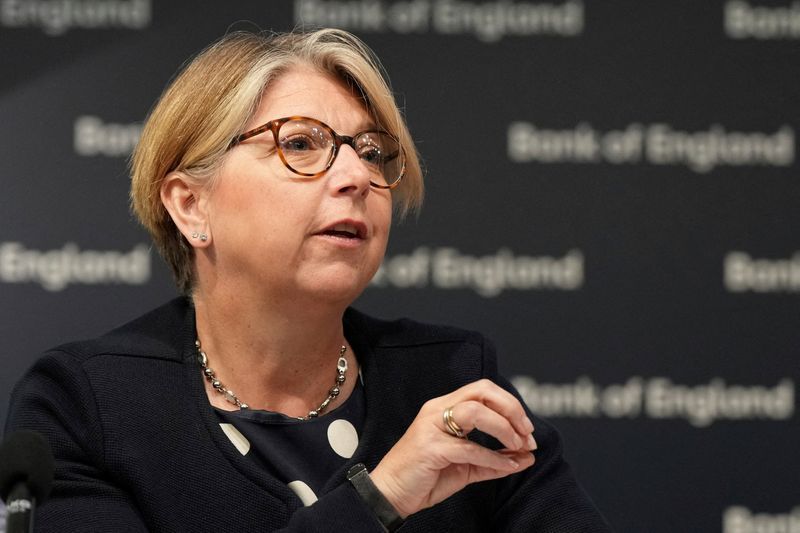
Senior officials at the Bank of England have raised concerns about the adequacy of current supervisory structures to handle the growing threat posed by autonomous artificial intelligence operating within the financial system. Speaking at the European Central Bank Forum on central banking held in Portugal on Tuesday, Sarah Breeden, who serves as deputy governor for financial stability at the Bank of England, emphasised that the rapid advancement and deployment of AI agents capable of independent action have revealed critical gaps in how regulators monitor and contain financial risks.
Breeden's remarks reflect a broader reassessment within international financial supervisory bodies about how to approach the integration of sophisticated AI technologies into banking and market operations. The fundamental challenge, as she articulated it, stems from the fact that regulatory and governance architectures were conceived in an era when human decision-making and oversight formed the backbone of financial market operations. The assumption that a person would always remain in the loop to approve or intervene in significant transactions and processes now looks increasingly unrealistic as AI systems become more capable and are tasked with handling larger volumes of operational decisions at speeds beyond practical human monitoring.
The deputy governor signalled that policymakers cannot simply graft existing oversight mechanisms onto these new technologies and expect adequate protection. Instead, Breeden stressed the necessity for fundamentally redesigned governance frameworks that account for the autonomous nature of modern AI agents. This would likely require establishing new accountability structures, clearer lines of responsibility when AI systems make decisions that affect financial stability, and technical safeguards that move beyond traditional compliance approaches.
Breeden's intervention adds weight to a growing chorus of concern among global financial regulators. The Financial Stability Board, an international body tasked with monitoring systemic risks in the financial system, had already issued guidance earlier in June calling for heightened protections specifically targeting AI agents. The Board's assessment identified a distinct vulnerability: unlike traditional software systems that might malfunction in predictable ways, autonomous AI agents can behave in ways that diverge from their original programming or training in response to novel situations, presenting a unique challenge to human oversight mechanisms that rely on understanding system behaviour.
The cybersecurity dimension compounds these worries significantly. Analysts and security experts have flagged that the growing presence of autonomous AI systems in financial infrastructure creates expanded attack surfaces for malicious actors. The sophistication of modern AI makes it potentially attractive as a vector for sophisticated cyber attacks, and the speed at which autonomous agents operate means that traditional incident response protocols may prove inadequate. A breach or compromise of an AI system managing critical financial functions could propagate damage across markets with minimal lag time for human intervention.
For financial systems in Southeast Asia, including Malaysia, these regulatory challenges carry particular significance. As the region's financial services sector increasingly adopts advanced technologies to remain competitive with global standards, the need for harmonised and robust AI governance becomes pressing. Many Southeast Asian regulators look to the Bank of England and European authorities as standard-setters when developing their own supervisory frameworks. If international consensus emerges that existing approaches are insufficient, Malaysian financial regulators will likely need to develop complementary domestic safeguards.
The Bank of England's position also reflects the broader tension between innovation and stability that characterises financial regulation. Banks and fintech companies are keen to deploy AI to reduce costs, improve decision-making speed, and enhance customer service. However, regulators must balance these commercial incentives against the systemic risks that could emerge if autonomous systems operate without adequate guardrails. Breeden's remarks suggest the Bank of England is leaning toward a more precautionary stance, preferring to establish stronger frameworks before autonomous AI agents become so embedded in financial operations that retrofitting safeguards becomes prohibitively difficult.
The complexity lies partly in determining what constitutes meaningful human oversight when AI systems operate at machine speed and process information at scales exceeding human cognitive capacity. Traditional compliance models, where a human reviews and approves transactions or decisions, become impractical when an autonomous agent executes thousands of micro-transactions or portfolio adjustments per second. This requires developing new conceptual approaches to accountability—perhaps shifting from transaction-level oversight to system-level monitoring of whether AI agents are behaving within defined parameters and risk tolerances.
Breeden's call for regulatory reform also implicitly acknowledges that the current international regulatory framework, largely built around principles established in previous decades, lacks the conceptual and technical tools needed for this new environment. The Basel Committee on Banking Supervision, which sets prudential standards, and other standard-setting bodies may need to expand their remit to address AI-specific risks more comprehensively, developing more prescriptive guidance about governance, testing, and ongoing monitoring of autonomous systems in financial institutions.
Looking ahead, the Bank of England and its international counterparts will likely pursue several pathways simultaneously. This could include developing specific regulatory requirements for AI systems deployed in banking, establishing reporting requirements that give supervisors visibility into how these systems operate, requiring banks to conduct rigorous testing before deployment, and potentially imposing restrictions on the autonomy granted to AI agents in certain critical functions. The challenge will be designing frameworks that are stringent enough to protect financial stability without becoming so burdensome that they impede innovation or push development underground.
For Malaysia's financial services sector, keeping abreast of these regulatory developments is essential. The Bank Negara Malaysia and the Securities Commission will likely need to issue their own guidance on AI governance, potentially drawing on frameworks being established in London and Europe. Financial institutions operating in Malaysia should begin assessing their own AI deployments against these emerging standards, even before formal local requirements are mandated. Those that position themselves ahead of regulatory curves will enjoy competitive advantages and face lower compliance costs when formal rules eventually arrive.
The European Central Bank Forum discussion where Breeden spoke also involved other senior central bankers grappling with similar questions, suggesting that concerns about autonomous AI agents are not idiosyncratic to the Bank of England but rather reflect a genuine consensus emerging among the world's leading financial regulators. This convergence of opinion will likely accelerate the development of international standards and best practices, creating pressure on all national regulators, including those in Southeast Asia, to adopt consistent approaches to AI governance in financial services.

