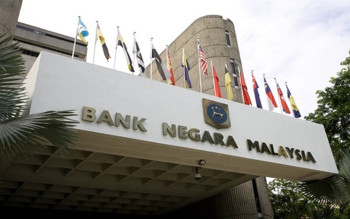
Bank Negara Malaysia dispatched five separate warning letters to Tabung Haji's leadership and the Minister of Religious Affairs, alerting them to a critical mismatch between the institution's assets and liabilities. The severity of the situation prompted central bank intervention during a period when Tabung Haji's precarious position threatened to destabilise Malaysia's broader financial system. Despite these urgent communications, the warnings went unheeded by TH's management at the time, according to remarks made during a parliamentary session by Dr Zulkifli Hasan, Minister in the Prime Minister's Department (Religious Affairs).
The warnings represented an escalation in regulatory pressure on Tabung Haji, one of Malaysia's largest religious institutions managing funds for millions of pilgrims undertaking the hajj journey. That Bank Negara felt compelled to issue multiple alerts underscores how serious the financial deterioration had become. For Malaysian pilgrims and their families—many of whom depend on Tabung Haji's savings schemes—this revelation raises uncomfortable questions about how long the problems persisted before serious intervention occurred.
Following Bank Negara's fruitless warnings, the Auditor-General delivered its own reprimand through comments in the 2017 Financial Statements Report. The accounting watchdog flagged an Emphasis of Matter regarding sudden changes to how Tabung Haji calculated impairment provisions. More troublingly, the institution had adjusted these policies twice within the same calendar year, with adjustments appearing designed to inflate reported profits for 2017. This pattern of accounting adjustments suggests internal pressure to present a rosier financial picture than underlying reality warranted.
The full extent of Tabung Haji's financial engineering emerged only after the newly appointed board took corrective action. In 2018, the institution engaged PricewaterhouseCoopers, a leading international audit firm, to conduct a comprehensive reassessment of its financial health using proper accounting standards. The PwC report confirmed what regulators had suspected: Tabung Haji had engaged in significant financial manipulation. Of the RM4.6 billion in total assets recorded on the institution's books, only RM556 million had been valued by qualified professional valuers. This meant roughly 88 per cent of reported assets lacked independent verification, a finding that sent shockwaves through financial and religious circles.
The implications of these revelations extended far beyond accounting technicalities. Tabung Haji serves approximately 9 million members who contribute through monthly savings schemes, with the understanding that their money remains safe and accessible for their religious obligation. The discovery that asset valuations lacked professional backing suggested that member funds might have been invested in questionable ventures or properties without appropriate scrutiny. For Malaysia's Muslim population, this represented a breach of trust in an institution with deep historical and religious significance.
The Royal Commission of Inquiry into Tabung Haji, established in 2021, spent over a year investigating the institution's management and operations spanning the 2014-2020 period. When the 211-page report was made public on July 29, it documented systematic weaknesses in governance, internal controls, and operational oversight. The inquiry identified 25 specific recommendations for improvement, addressing gaps that had allowed financial mismanagement to persist unchecked for years. By July 30, when Dr Zulkifli provided his briefing to Parliament, Tabung Haji had already implemented 75 per cent of these recommendations, indicating a determination to reform.
The RCI process itself took considerable time to unfold. After the government announced its establishment in 2021, commissioners were formally appointed on January 20, 2022. The inquiry then conducted investigations, heard testimonies, and compiled its findings before presenting the report to Yang di-Pertuan Agong on August 30, 2022. This deliberate pace reflected the complexity of examining years of institutional mismanagement and the need to ensure recommendations could genuinely address root causes rather than merely addressing symptoms.
The Tabung Haji situation carries particular significance for Malaysia's financial stability and governance standards. As a statutory body managing substantial public funds with religious dimensions, Tabung Haji's mismanagement raised questions about oversight mechanisms for similar institutions. The fact that Bank Negara's warnings were ignored suggests potential accountability gaps—there needed to be clearer consequences for institutions that dismissed regulatory guidance, particularly when systemic risk was at stake.
For Southeast Asian observers, the Tabung Haji episode demonstrates why independent audit functions and regulatory independence matter fundamentally. The ability of the Auditor-General and Bank Negara to speak publicly about concerns, combined with the government's willingness to establish an independent inquiry, reflected Malaysia's commitment to addressing institutional failures transparently. However, the years of delay between initial warnings and public acknowledgement also illustrated how institutional inertia and management resistance could frustrate reform efforts.
The restoration of Tabung Haji's financial position will require sustained implementation of the RCI's recommendations and continued regulatory vigilance. As the institution rebuilds confidence among its millions of members, every decision about asset management and governance must reflect the lessons learned. For Malaysian policymakers and regulators, the Tabung Haji experience underscores the importance of moving swiftly when institutional red flags emerge, rather than allowing problems to compound until they threaten broader financial stability.

