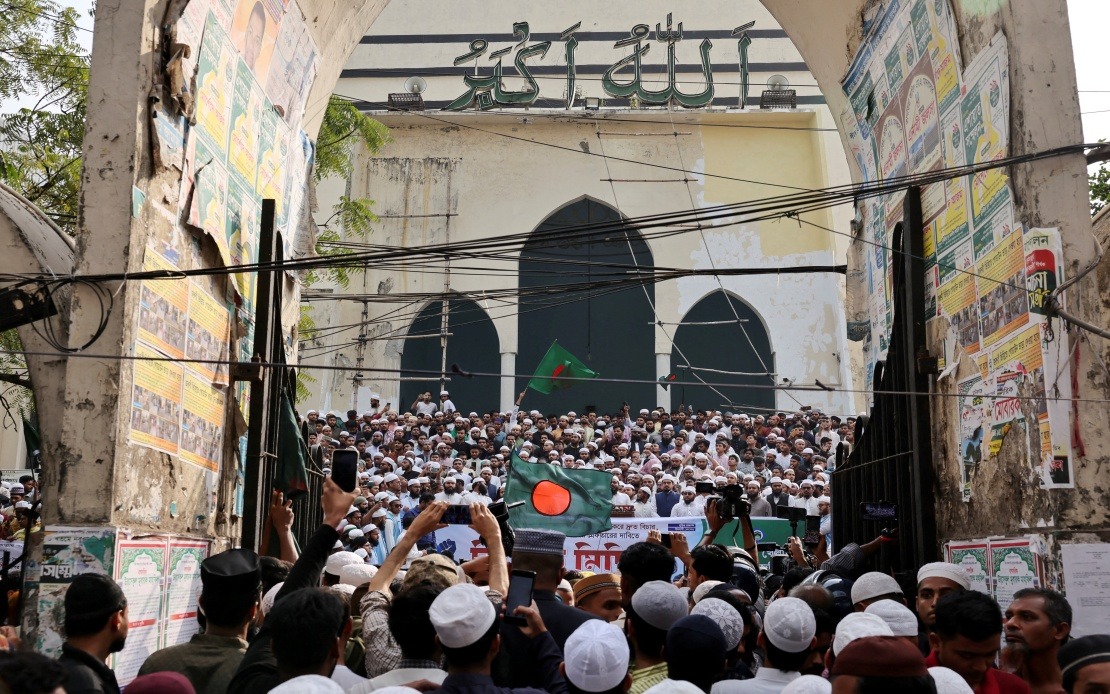
A special tribunal in Bangladesh has delivered death sentences in absentia against three senior police officers for their involvement in the fatal shooting of protesters during the tumultuous 2024 uprising, marking a significant accountability measure in a country still grappling with the aftermath of civil unrest that toppled its government. The International Crimes Tribunal, chaired by Justice Md Golam Mortuza Mozumder, rendered its verdict on Sunday, convicting the officers of crimes against humanity related to incidents that gained widespread attention across social media and international news channels during the July uprising.
The three condemned officers represent different levels of Bangladesh's police hierarchy, reflecting the broad institutional responsibility for the violence that erupted during the demonstrations. Habibur Rahman, who served as the Dhaka Metropolitan Police Commissioner, is already facing execution in another unrelated case, indicating the scale of accountability measures against high-ranking officials. Alongside him, Md Rashedul Islam, a former Additional Deputy Commissioner of the same metropolitan police force, and Md Mashiur Rahman, the ex-chief of Rampura Police Station, received capital sentences. All three remain fugitives, having fled the country or evaded authorities since the collapse of the Sheikh Hasina administration.
The tribunal's judgment extended beyond the death sentences, imposing life imprisonment combined with twenty additional years to two other officers implicated in the same prosecutions. Tariqul Islam Bhuiyan, a former sub-inspector at one of the involved police stations, fell into this category of severe but non-capital punishment. The distinction between capital and non-capital sentences appears to reflect differing levels of command responsibility and direct participation in the fatal incidents, though all four convicted individuals remain at large, complicating the enforcement of these judgments.
Specific cases that formed the basis of the convictions included the particularly shocking incident involving a young man shot dead while hanging from a building in Dhaka, an image that circulated rapidly online and crystallized public outrage. This photograph became emblematic of the perceived brutality of police responses to the demonstrations, transcending Bangladesh's borders to generate international concern about law enforcement practices. Two additional fatal shootings within the capital city were similarly tied to the tribunal's conviction verdicts, suggesting a pattern of lethal force deployed against civilians during the uprising.
The July 2024 uprising, which ultimately forced Sheikh Hasina from office and sent her into exile in August of that year, represented one of South Asia's most significant political convulsions in recent memory. According to United Nations assessments, approximately 1,400 people lost their lives throughout the unrest, with thousands more sustaining injuries. The overwhelming majority of these casualties resulted from police gunfire, with evidence implicating members of Hasina's Awami League party in directing or authorizing such force against demonstrators whose grievances ranged from employment concerns to political representation.
For Southeast Asian observers, Bangladesh's tribunal proceedings carry particular significance as a potential model for accountability in post-conflict or post-authoritarian transitions. Malaysia and other regional democracies closely monitor how fragile institutions in neighbouring countries manage justice mechanisms, particularly when former leaders and their security forces face criminal charges. The challenges Bangladesh faces in apprehending fugitive defendants underscore broader regional difficulties in enforcing international justice standards across borders where political will may be inconsistent.
The tribunal's earlier conviction of Sheikh Hasina herself, sentenced to death in absentia last November on separate crimes against humanity charges, established the framework within which these police officer convictions now operate. Her absence from Bangladesh since August 2024 complicates any potential execution of sentences, yet the legal proceedings continue regardless, establishing a comprehensive record of alleged state violence during her administration's final months in power. This layered approach to accountability—targeting both political leadership and security force implementers—reflects transitional justice thinking that acknowledges systemic rather than individual culpability.
Bangladesh's fragile new political and institutional arrangements continue absorbing the shocks of this upheaval. The conviction of high-ranking police officials represents an attempt to rebuild public confidence in state institutions through demonstrated consequences for those who directed violence against civilians. However, the fugitive status of all defendants raises questions about the practical effectiveness of these sentences and whether Bangladesh's interim authorities possess sufficient international cooperation mechanisms to secure extradition or enforce justice.
The implications for Malaysian readers extend beyond mere regional interest, as instances of police accountability in neighbourhood jurisdictions influence regional standards and expectations for law enforcement conduct. Malaysia's own history of managing civil unrest and police reform efforts provides context for understanding how different democracies navigate the tension between security imperatives and human rights protection. The Bangladesh tribunal's work offers both cautionary lessons about institutional failures and potentially instructive examples of how transitional justice mechanisms attempt restoration.
For the families of those killed during the 2024 uprising, these convictions provide at least symbolic validation of their loss and moral clarity regarding state responsibility, even though execution of the sentences remains distant and uncertain. The tribunal's proceedings have generated extensive documentation of events that will shape Bangladesh's historical record and political memory for generations. As the country stabilizes under new political arrangements, these justice mechanisms represent an attempt to prevent repetition of the violence that claimed over a thousand lives and fundamentally altered the nation's political trajectory.

