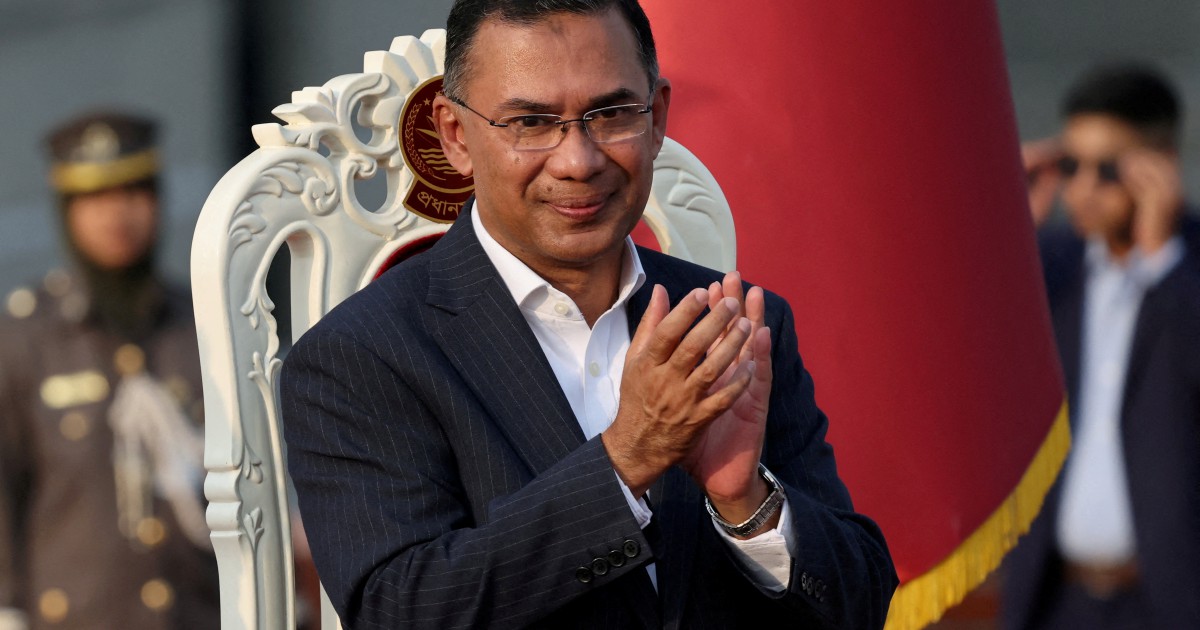
Bangladesh has laid down a stark condition for Prime Minister Tarique Rahman's anticipated visit to India: New Delhi must first extradite former Prime Minister Sheikh Hasina, who sought refuge across the border after fleeing the country during the turbulent 2024 uprising. The position, articulated by officials on Sunday, represents a significant hardening of diplomatic lines between Dhaka and New Delhi, two South Asian nations whose ties have historically been defined by cultural and linguistic bonds alongside periodic political tensions.
Sheikh Hasina's departure from Bangladesh in August 2024 came as mounting pressure from mass protests forced her government from office. The unrest, which escalated into widespread civil disorder, prompted her swift exit to India, where she has since remained. Her presence in New Delhi has become an increasingly contentious issue for the interim administration that succeeded her, particularly as the new government seeks to consolidate its legitimacy domestically while managing regional relationships.
The extradition demand reflects deeper currents within Bangladesh's post-uprising political landscape. Prime Minister Tarique Rahman's government, which assumed office following Hasina's departure, views her continued presence in India as a complicating factor in bilateral relations. From Dhaka's perspective, her return for facing justice domestically—either through formal extradition or her voluntary return—would constitute a necessary closure to the chapter of governance that preceded the 2024 uprising and would signal India's alignment with the country's new political direction.
India's position on the matter remains characteristically measured. New Delhi has not publicly confirmed whether it has received formal extradition requests, and Indian diplomatic circles have been circumspect about the situation. Historically, India has been cautious about extraditing individuals granted asylum, and such decisions typically involve complex legal, diplomatic, and humanitarian considerations that extend beyond immediate bilateral relations. The principle of asylum, anchored in international law, provides protections that nations customarily respect even when doing so creates diplomatic friction.
For Malaysia and other Southeast Asian observers, this impasse carries implications extending beyond the Bangladesh-India dyad. The region's broader stability depends partly on how neighbouring states manage political transitions and cross-border movements of former leaders. Bangladesh's use of extradition as a precondition for high-level visits establishes a precedent that other governments might either emulate or challenge, potentially affecting how nations within the region handle asylum-seekers and individuals fleeing domestic unrest.
The timing of Bangladesh's public declaration also warrants scrutiny. By openly conditioning the PM's India visit on Hasina's extradition, the interim government signals to its domestic constituency that it intends to pursue accountability for the previous administration. This messaging serves multiple purposes: it reinforces the government's legitimacy among those who supported the 2024 uprising, demonstrates resolve in not normalising relations until grievances are addressed, and establishes negotiating parameters for future bilateral engagement.
India-Bangladesh relations, despite their complexity, have historically overcome substantive disagreements through pragmatic diplomacy. The two nations cooperate on issues ranging from border management and water-sharing arrangements to trade and defence. A prolonged standoff over Hasina's extradition risks unsettling these cooperative frameworks, particularly if either side perceives the other as intransigent. However, the conditional nature of the PM's visit—rather than a complete suspension of ties—suggests that both governments retain pathways toward resolution and dialogue.
The practical mechanisms for resolving this impasse remain unclear. Bangladesh might pursue formal extradition requests through legal channels, though India's domestic laws and international obligations would ultimately determine whether such requests succeed. Alternatively, a negotiated settlement brokered through diplomatic channels might emerge, though such arrangements typically require concessions from both sides and may not satisfy activists or constituencies demanding accountability.
For Bangladesh's interim administration, the Hasina question represents a test of its capacity to shape regional relations according to domestic priorities. The government cannot indefinitely delay a prime ministerial visit to India—a crucial neighbour and economic partner—yet neither can it be seen as abandoning demands for accountability. This tension between diplomatic necessity and political symbolism will likely persist until either circumstances change significantly or creative diplomatic solutions emerge that allow both governments to claim some measure of success.
The broader context involves the nature of asylum and state responsibility in South Asia, where political upheavals frequently result in figures seeking refuge across borders. How this particular case unfolds may establish precedents affecting not only future Bangladesh-India relations but also the region's approach to managing leaders fleeing domestic crises. For now, Bangladesh's position is clear: the door to high-level bilateral visits remains closed until India addresses what Dhaka views as an essential prerequisite for normalcy.

