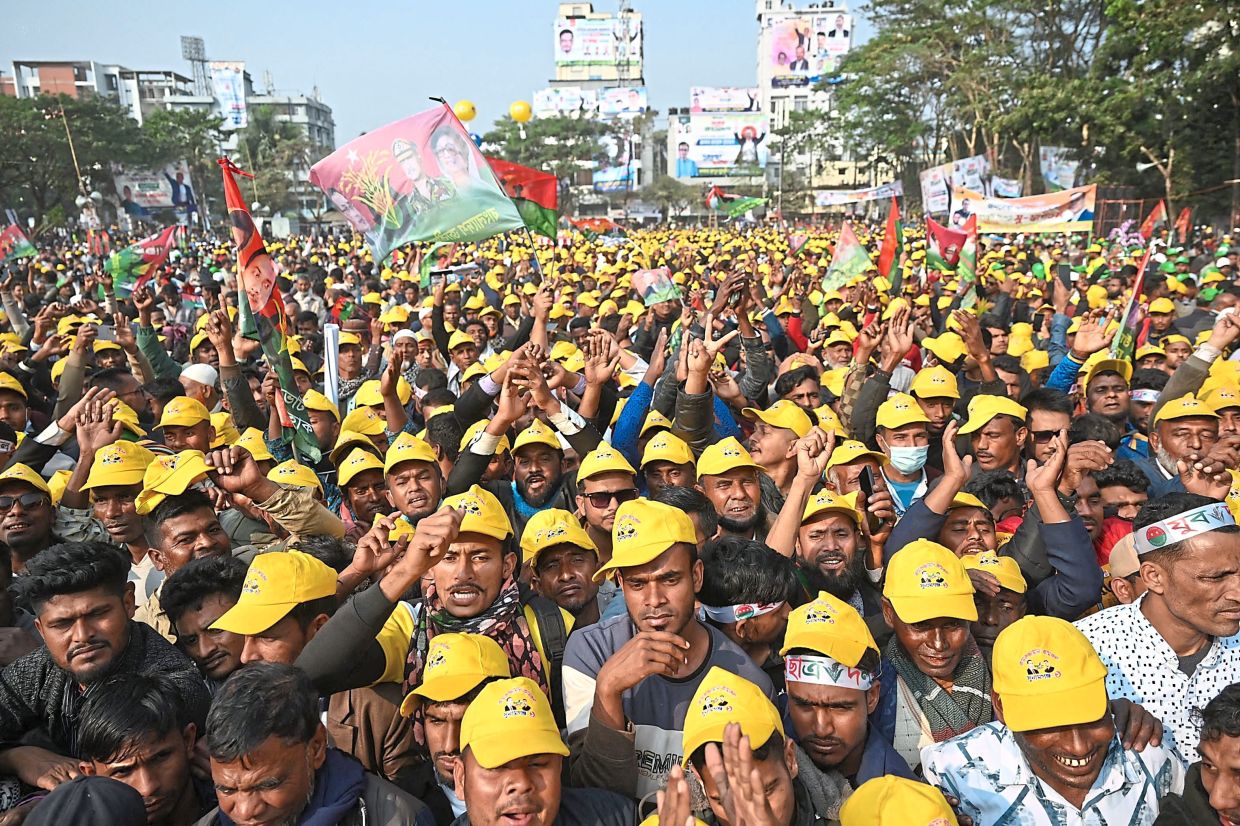
Bangladesh will move into a new institutional phase on Thursday when parliament elects its 23rd president, with the ruling Bangladesh Nationalist Party's veteran politician Mirza Fakhrul Islam Alamgir widely expected to secure the five-year position in a largely ceremonial role. The 78-year-old, who currently serves as secretary general of the BNP and holds the local government ministry portfolio, is poised to achieve overwhelming parliamentary support in the afternoon ballot, cementing the party's grip on power following its February landslide election victory. Alamgir's expected ascension marks another significant transition for a nation still processing profound political upheaval and attempting to rebuild democratic institutions after decades of authoritarian governance.
The path to this presidency reflects Bangladesh's turbulent recent history and the transformative changes the 170-million-person nation has undergone. Prime Minister Tarique Rahman's BNP secured its commanding February election mandate in the first democratic polls held since the 2024 revolution toppled Sheikh Hasina's long-entrenched administration. That political earthquake fundamentally altered Bangladesh's trajectory and opened space for fresh leadership across major state institutions. The presidential election therefore carries symbolic weight beyond its ceremonial function, representing institutional renewal and democratic restoration after years of contested governance and human rights concerns under the previous regime.
Alamgir's predecessor, Mohammed Shahabuddin, vacated the presidency in July following sustained pressure, citing health grounds to end his tenure prematurely rather than completing his full term that was scheduled to conclude in 2028. Shahabuddin, 76, had been closely aligned with Hasina's administration and became increasingly vulnerable as the political landscape shifted decisively against the ousted government. His abbreviated presidency underscored the volatility of institutional positions linked to the previous era. The former president's departure created space for a figure more aligned with the contemporary power structure and the forces that drove Bangladesh's political transformation.
Hasina herself remains a fugitive, having sought refuge in India rather than face domestic justice. In November, a Bangladeshi court convicted her in absentia on crimes against humanity charges and imposed a death sentence, cementing her status as a pariah in her former domain. Her extended absence from Bangladesh and refusal to return for trial crystallize the severity of allegations against her administration. International human rights organizations had documented extensive abuses during her tenure, including extrajudicial killings of political opponents, systematic suppression of opposition activity, manipulation of the judiciary to ensure predetermined outcomes, and elections marred by coercion and irregularity. The comprehensive nature of documented misconduct underscored why institutional change and new leadership have proven necessary for Bangladesh's democratic restoration.
Alamgir's political biography demonstrates sustained commitment to democratic opposition and institutional resilience across difficult periods. Born on January 26, 1948, he emerged as a significant student activist during the 1969 uprising against military rule imposed by Pakistan, a movement that accelerated Bangladesh's trajectory toward independence from West Pakistani domination. After Bangladesh achieved sovereignty in 1971, Alamgir pursued an academic career teaching economics while eventually transitioning into government service and subsequently elective politics. He accumulated ministerial experience across agriculture, aviation, and tourism portfolios, building expertise in economic and developmental policy implementation.
His greatest political prominence, however, derives from his steadfast opposition leadership during Hasina's extended tenure in power. While BNP chairwoman Khaleda Zia faced imprisonment and her son Rahman existed in exile, Alamgir maintained the party's institutional coherence and political viability through particularly challenging circumstances. His repeated arrests on charges he characterized as politically manufactured demonstrated his willingness to endure personal jeopardy rather than capitulate to pressure from the ruling administration. State media attributed to him the achievement of preserving the BNP's organizational structure and maintaining its political relevance during years when the ruling party deployed considerable state resources to marginalize opposition activities and personnel.
Alamgir faces a single competing candidate in Thursday's ballot: Oli Ahmed, who has been nominated by the 11-party opposition coalition led by Jamaat-e-Islami, the major Islamist political organization. The presence of a formal challenger ensures the vote maintains procedural propriety and formal democratic character, though Alamgir's overwhelming parliamentary backing from the BNP's commanding legislative majority renders the outcome essentially predetermined. Parliamentary voting is scheduled to commence around 2 p.m. local time. The procedural completion of this presidential election will remove from the agenda one significant institutional vacancy and allow Bangladesh to consolidate leadership positions across its executive, legislative, and presidential structures.
Upon learning of his likely elevation, Alamgir expressed characteristic humility mixed with determination to serve beyond the office's ceremonial remit. "I never thought that I would become the president -- it is the infinite grace of the party and almighty Allah," he told journalists on Tuesday through the state news agency BSS. He signaled intentions to remain engaged with constituency service and populist accessibility rather than withdrawing into purely ceremonial functions: "Even after becoming president, I wish to remain beside the people and serve them." Such statements indicate Alamgir may interpret the presidential role expansively and seek to leverage the position's symbolic authority to reinforce democratic consolidation and public confidence in institutions.
Alamgir's personal circumstances reflect conventional middle-class professional achievement. He maintains a marriage with Rahat Ara Begum, a retired financial official, and they have raised two daughters together. His family background and domestic stability provide conventional credentials for high office, though they lack the dynastic political prominence associated with Bangladesh's traditional power families. This relative ordinariness in personal circumstances may enhance his capacity to represent broader public constituencies and transcend factional interests, positioning him as a unifying institutional figure rather than a representative of entrenched oligarchic networks that have historically dominated Bangladeshi politics.
For Malaysian observers and Southeast Asian analysts, Alamgir's assumption of the presidency marks another chapter in Bangladesh's ongoing institutional and democratic recovery. The nation's recent political revolution and the subsequent consolidation of changed power relationships demonstrate how regional democracies navigate profound institutional stress and work toward renewed legitimacy. Bangladesh's experience offers relevant lessons regarding electoral competition, civil society resilience, and the challenges of reconstructing state credibility following periods of authoritarian excess. The presidential election itself, while ceremonial in formal terms, carries substantive importance as a confidence-building exercise demonstrating that institutional succession can proceed through established democratic procedures rather than through instability or disruption. Alamgir's leadership, tested through opposition struggle and institutional maintenance, will carry responsibility for articulating and advancing Bangladesh's democratic consolidation as the nation moves beyond revolutionary politics toward sustainable democratic governance and inclusive development under the BNP administration's stewardship.

