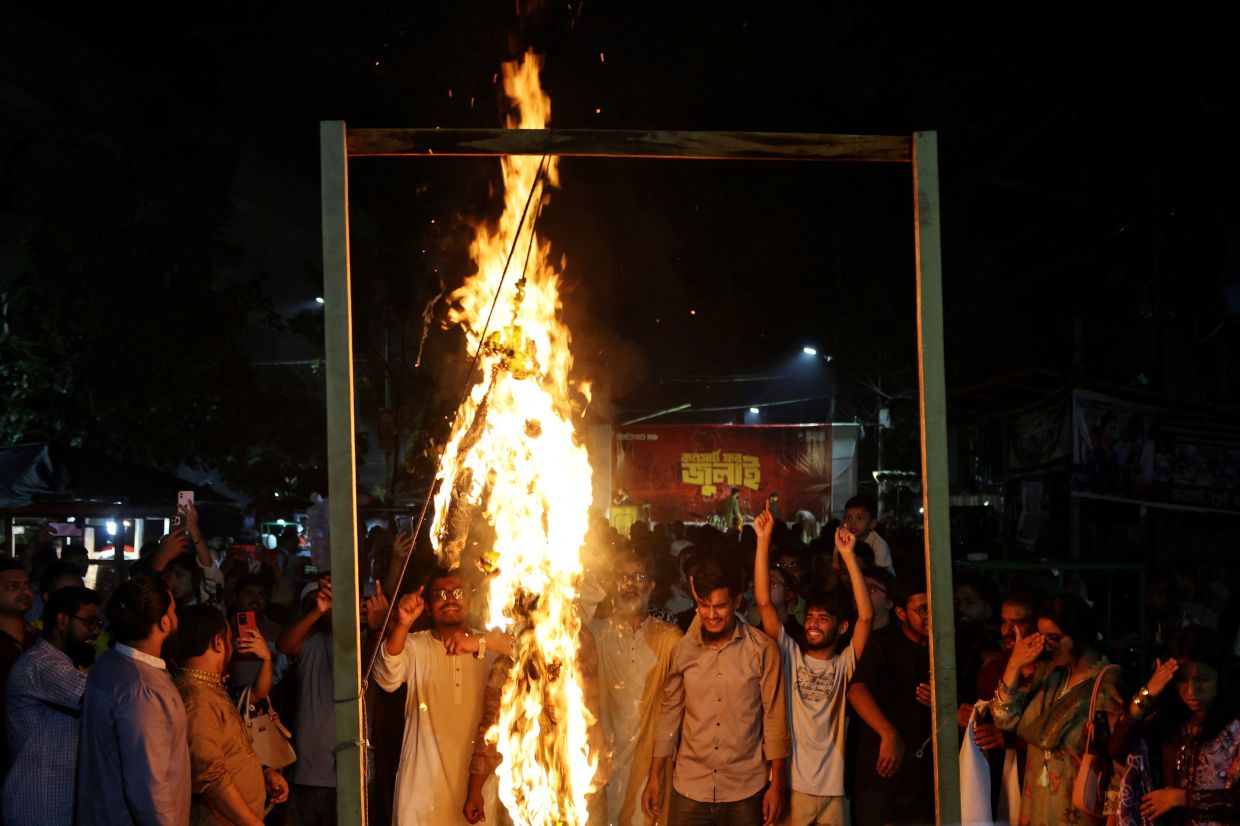
Bangladesh's government has expressed strong displeasure at India's decision to allow former Prime Minister Sheikh Hasina to conduct a live media briefing from New Delhi, framing the event as a significant obstacle to improving ties between the two South Asian neighbours. The Ministry of Foreign Affairs in Dhaka issued a statement on Wednesday night declaring itself "outraged" by the development, particularly given that the ousted leader has been convicted in her home country for human rights violations. The diplomatic complaint underscores deepening tensions over how India is managing Hasina's exile on its territory—a situation that has proven consistently problematic for bilateral relations since her departure from power last year.
Dhaka's foreign ministry stressed that it had previously communicated concerns to New Delhi about the potential consequences of permitting such a public platform for the former leader. The ministry argued that providing Hasina with an opportunity to make allegations against the Bangladeshi state and its people while broadcasting from Indian soil represents a deliberate affront to Bangladesh's sovereignty. Officials in Dhaka view the decision as particularly hurtful given the ongoing process of resetting relations with Bangladesh's new government following the political upheaval that ousted Hasina from her 15-year tenure in power.
The timing of Hasina's virtual press conference—held on the second anniversary of her departure from office—added to the perception in Dhaka that the event was politically calculated. During the briefing, the exiled former premier pledged to eventually return to Bangladesh, statements that Bangladeshi officials regard as inflammatory and contrary to the spirit of diplomatic normalisation that New Delhi has been attempting to pursue with Hasina's successors. The convergence of the media event with the anniversary date suggests deliberate symbolism that Bangladesh's government views as unnecessarily provocative during a sensitive period of diplomatic recalibration.
India's Ministry of External Affairs has maintained that the government played no direct role in facilitating the media briefing. Randhir Jaiswal, the ministry's spokesperson, stated on Tuesday that the "government has no involvement whatsoever" in Hasina's media event and does not endorse any views expressed during such forums. However, the fact that Hasina remains in India and was able to conduct a public media interaction from Indian territory raises questions about the extent to which New Delhi could have prevented or restricted the event if it had wished to do so. India's initial response did not immediately address these nuances when contacted for further comment.
Sheikh Hasina has remained in exile in India since August 2024, when a student-led uprising swept her from power following widespread discontent over her government's handling of public grievances. A special tribunal in Bangladesh subsequently convicted her in absentia of crimes against humanity and sentenced her to death based on allegations related to a deadly crackdown on the protest movement. These serious legal consequences mean that any return to Bangladesh would expose Hasina to arrest and prosecution, making her exile in India effectively indefinite unless dramatic political changes occur within Bangladesh.
The refugee status of Hasina in India reflects the complicated historical relationship between the two nations. For years, New Delhi maintained close ties with her government, viewing it as a strategic partner in regional affairs. That alignment changed dramatically following her ouster, forcing India to navigate a delicate transition toward engaging with the new Bangladeshi administration while managing the optics of continuing to host a leader whom the new government considers a convicted criminal. This diplomatic balancing act has proven inherently difficult and remains a persistent friction point in bilateral ties.
Bangladesh has repeatedly requested India to extradite Hasina under the provisions of a 2013 bilateral treaty, but these requests have not yet yielded a formal response from New Delhi. The absence of action on extradition demands frustrates Bangladeshi officials who view such a step as essential for closure and justice regarding the events that led to the uprising. From India's perspective, however, complying with extradition requests could carry political risks and complications that extend beyond immediate bilateral relations with Bangladesh.
Despite the current friction, India has signalled a genuine commitment to resetting relations with Bangladesh's new leadership. Prime Minister Tarique Rahman is scheduled to visit India in September to participate in the BRICS leaders' summit, a high-profile engagement that demonstrates India's readiness to work constructively with the successor government. Rahman's invitation stems from his capacity as chair of BIMSTEC, the seven-nation regional grouping focused on economic and technical cooperation in the Bay of Bengal region, providing a multilateral framework through which bilateral ties can be reinforced.
Rahman, who assumed leadership following elections in February 2026, has already undertaken diplomatic visits to Malaysia and China, signalling a broader engagement with regional powers beyond the immediate South Asian context. These early diplomatic initiatives suggest that Bangladesh's new leadership is pursuing a diversified foreign policy approach that reduces exclusive dependence on any single neighbour. India's invitation to participate in BRICS meetings reflects an effort to remain central to Bangladesh's foreign policy calculations despite the complications created by Hasina's continued presence in Indian territory.
The incident highlights the persistent challenge that unresolved political grievances can pose to interstate relations in South Asia. While governments may wish to compartmentalise such matters and pursue pragmatic cooperation on mutual interests, domestic constituencies often demand symbolic gestures and demonstrations of principle regarding those convicted of serious crimes. For Bangladesh, hosting the conviction of a former leader abroad while that leader remains protected on neighbouring soil creates a festering irritant that complicates formal diplomatic initiatives, even when both sides acknowledge mutual benefits from improved relations.
Looking ahead, India faces a genuine dilemma: maintaining Hasina's exile while simultaneously appearing to restrict her speech and activism risks appearing inconsistent with democratic values, yet allowing her unfettered platform for anti-Bangladesh rhetoric undermines New Delhi's stated goal of resetting bilateral ties. The resolution of this tension may require either a significant softening of Bangladesh's position regarding Hasina's prosecution and extradition, or alternatively, a more forceful Indian position regarding the parameters of acceptable conduct for political exiles on its soil. Without such clarity, incidents like the recent media briefing are likely to recur, creating recurring diplomatic friction at moments when both nations might otherwise make progress on substantive regional cooperation.

