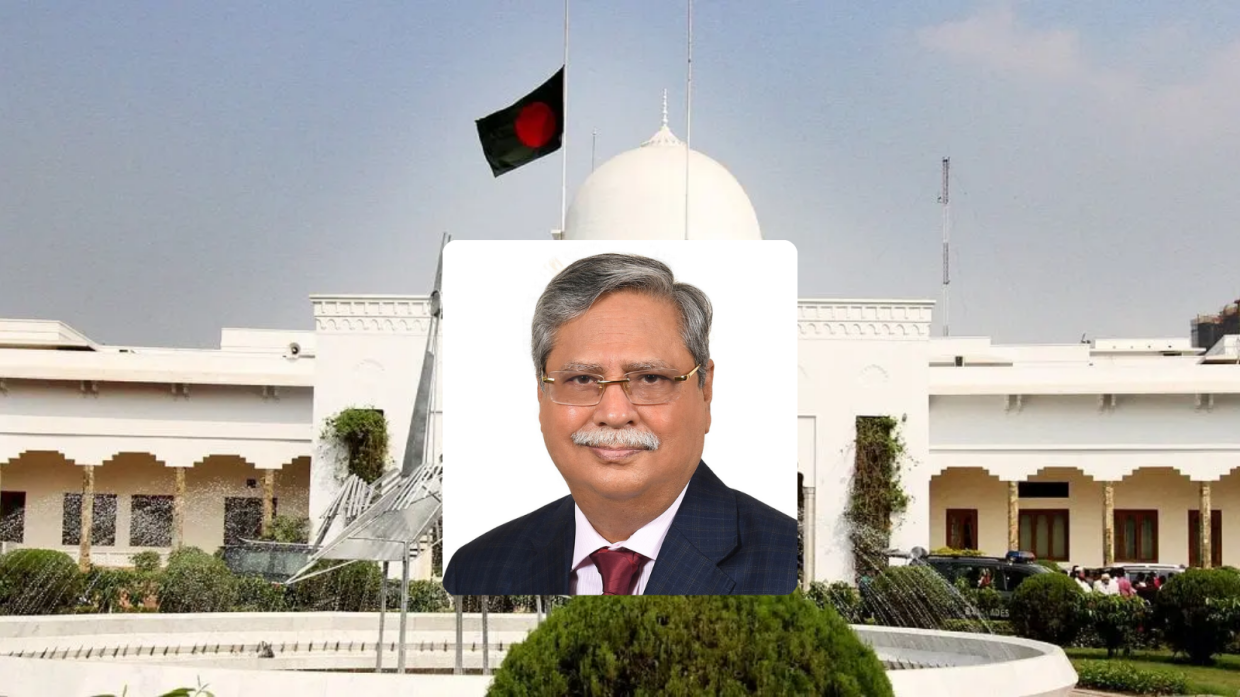
Bangladesh's political landscape faces significant realignment with President Mohammed Shahabuddin poised to step down from office in the coming days, according to multiple government sources. The development marks a crucial turning point in the country's transition following the July 2024 uprising that fundamentally altered the nation's power structure. Shahabuddin, who assumed the presidency on April 24, 2023, currently stands as the sole remaining figure occupying a top constitutional position from the pre-uprising administration, making his departure symbolically important to the new political order.
The resignation appears imminent following a chain of events that intensified political sensitivities within Bangladesh's leadership. In May, Shahabuddin travelled to London for medical treatment and reportedly communicated by telephone with Sheikh Hasina, the exiled former prime minister who has been residing in India since fleeing the country during the mass uprising last year. Intelligence agencies subsequently became aware of this conversation, prompting officials to informally convey to the president that his resignation would be expected. Senior figures within the Bangladesh Nationalist Party confirmed the phone exchange was significant but characterised the broader political crisis as substantially more multifaceted than a single conversation.
The timing of these developments has become increasingly sensitive following Hasina's recent public declaration that she intends to return to Bangladesh in December alongside other senior Awami League members. This announcement fundamentally shifted the political calculus for the current administration, which has undertaken increasingly aggressive measures to consolidate control and prevent the opposition party from regrouping. Hasina currently faces a death sentence within Bangladesh and has been convicted in absentia on charges related to the uprising, while her party's operations remain formally prohibited under current regulations. The prospect of her homecoming has compelled government officials to demonstrate their commitment to preventing any resurgence of Awami League influence.
Government authorities have reportedly intensified surveillance of Awami League reorganisation efforts within Bangladesh, identifying attempts by party operatives to rebuild organisational structures despite the official ban. Prime Minister Tarique Rahman himself underscored this commitment during a July 17 cabinet meeting, explicitly directing relevant departments to strengthen their campaign against the Awami League and its affiliated youth and student organisations. These directives represent an escalation in the government's systematic approach to eliminating what it views as potential destabilising forces, reflecting broader concerns about internal security and political stability following the turbulent transition.
The expected presidential resignation carries substantial symbolic and practical significance within Bangladesh's constitutional framework. Government officials have characterised Shahabuddin's departure as a natural progression in consolidating the new political system, describing his continued presence in the largely ceremonial but constitutionally significant position as increasingly inappropriate. A senior government source explained that maintaining a holdover from the previous era in the country's highest constitutional office no longer aligned with the administration's political objectives or the spirit of the post-uprising transformation. This perspective suggests that the new leadership views complete institutional renewal as essential to establishing its legitimacy and preventing potential resistance from institutional elements with ties to former administrations.
Shahabuddin himself has previously signalled openness to stepping aside under appropriate circumstances. During December 2025, while operating under the previous interim government led by Muhammad Yunus, he had publicly stated his intention to resign midway through his term following the February parliamentary elections, expressing that he felt humiliated by that administration. Following the BNP-led government's assumption of office in February, the president indicated in a newspaper interview that he would remain in his position if the government desired his continuation but would willingly resign if authorities preferred his departure. These statements revealed a pragmatic understanding of his precarious constitutional position and susceptibility to political pressures.
The constitutional succession mechanism stands prepared to manage this transition seamlessly. Should Shahabuddin formally resign, the Speaker of Parliament would assume the role of acting president until Parliament conducts elections to select a replacement. This institutional mechanism ensures continuity of governance while allowing the administration to position an individual more aligned with the new political order in this position. Sources close to the presidential palace indicated that a final decision regarding Shahabuddin's resignation timing could emerge within days, with a scheduled meeting between the president and non-resident ambassadors from four countries on July 29 potentially serving as a final official engagement.
For Malaysia and Southeast Asia, Bangladesh's internal political dynamics merit careful observation given the region's interconnected security and economic interests. Bangladesh's ongoing political consolidation reflects broader patterns of post-conflict state-building across South Asia, where transitional governments frequently reshape institutional frameworks to prevent the return of previous power structures. The removal of holdover figures from prior administrations signals a comprehensive recalibration of Bangladesh's governance architecture, potentially affecting regional diplomatic relationships and institutional stability. ASEAN nations, already engaged with Bangladesh on numerous multilateral platforms, should monitor these developments for implications on bilateral relations and regional cooperation frameworks.
The broader political context surrounding Shahabuddin's anticipated resignation reveals the BNP-led government's determination to establish complete institutional control and prevent what it perceives as threats to political stability. By removing the last remaining constitutional figurehead associated with the pre-uprising period, the administration demonstrates its commitment to thorough institutional renewal and consolidates its monopoly on state power. This approach, while addressing legitimate security concerns related to Hasina's potential return and Awami League reorganisation, represents a significant centralisation of authority that observers will continue monitoring as Bangladesh navigates its post-uprising transition.

