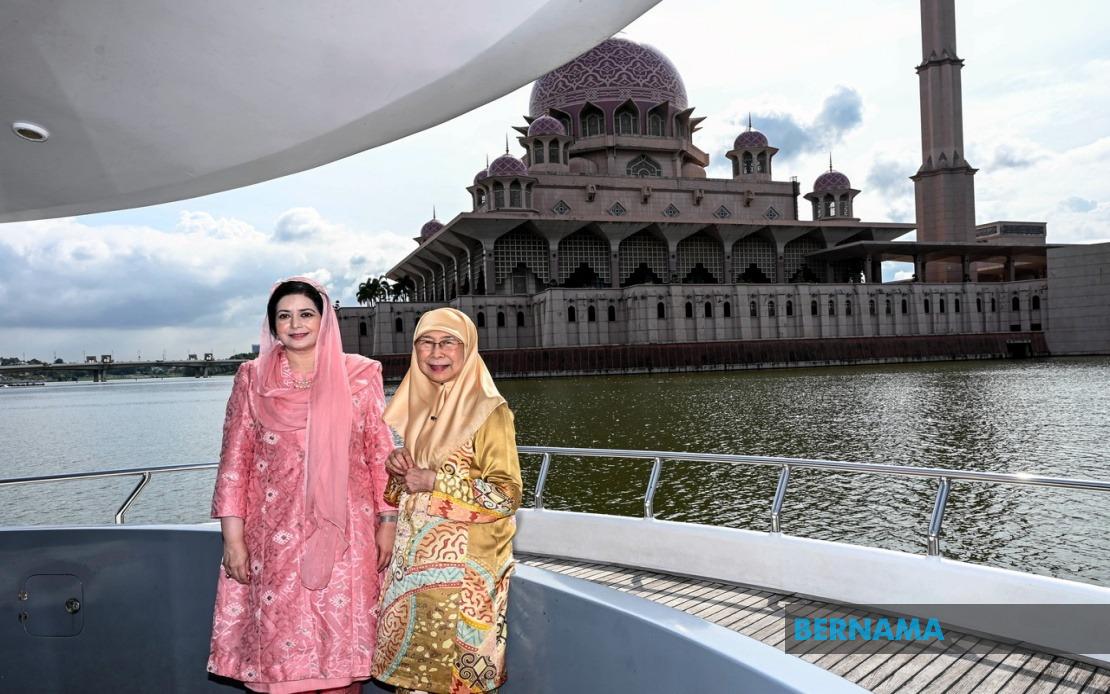
Dr Zubaida Rahman, wife of Bangladesh Prime Minister Tarique Rahman, spent a relaxing morning cruising across Putrajaya Lake on Saturday, admiring the federal territory's distinctive architectural landmarks and waterfront scenery during a carefully choreographed diplomatic engagement. The Bangladesh First Lady arrived at the lake dock at 9:30 am and was greeted by Datin Seri Dr Wan Azizah Wan Ismail, wife of Malaysian Prime Minister Datuk Seri Anwar Ibrahim, alongside Hannah Yeoh, the Minister in the Prime Minister's Department responsible for Federal Territories.
The hour-long leisure excursion allowed the two First Ladies and the federal minister to engage in substantive conversation while appreciating the carefully planned vistas that define Putrajaya as Malaysia's administrative centre. The cruise represented a softer, cultural dimension of bilateral diplomacy—an opportunity for meaningful personal interaction that complements the formal state business conducted at official levels. Such gestures underscore how modern diplomatic protocol increasingly emphasises building rapport between nations' leaders and their spouses, recognising their roles as unofficial ambassadors.
Tarique Rahman and Dr Zubaida arrived in Malaysia on Sunday evening to conduct a two-day state visit that prioritises deepening the economic, political, and people-to-people connections between Dhaka and Kuala Lumpur. This represents Tarique's inaugural official bilateral journey abroad since his election to office in February 2026, making Malaysia a strategically important destination for establishing his international profile and demonstrating commitment to regional partnerships. The invitation from Prime Minister Anwar Ibrahim signals Malaysia's desire to position itself as a preferred engagement partner for Bangladesh's newly-elected leadership.
The timing and nature of this visit reflect broader Southeast Asian geopolitical currents. Malaysia and Bangladesh share complementary economic interests and cultural affinities rooted in shared Islamic heritage and maritime trading traditions. By welcoming Bangladesh's leadership so promptly after their electoral mandate, Malaysia demonstrates strategic foresight in cultivating relationships with major South Asian powers during leadership transitions—a critical window when new administrations establish their foreign policy priorities and international friendships.
Trade statistics underscore the substantive economic foundation undergirding this diplomatic warmth. Bangladesh currently ranks as Malaysia's 28th-largest trading partner worldwide, with bilateral commerce totalling RM12.18 billion. More significantly for regional context, Bangladesh represents Malaysia's second-most important trading partner throughout South Asia, exceeded only by India. These figures reflect the substantial commercial interdependencies that make personal relationships between leaders particularly consequential. When senior politicians and their families cultivate positive associations, they create goodwill that typically translates into smoother negotiations, preferential treatment in trade disputes, and greater willingness to cooperate on contentious issues.
The broader significance of this visit extends beyond ceremonial pleasantries. Bangladesh faces substantial development challenges including infrastructure modernisation, industrial expansion, and technology transfer opportunities—precisely the domains where Malaysian expertise and investment capacity prove valuable. Conversely, Bangladesh's 170 million-person population and growing manufacturing base offer Malaysian companies expansion opportunities in markets where competition from China and India remains less entrenched. The bilateral visit provides both nations' business communities with high-level political cover and encouragement to deepen commercial partnerships.
Putrajaya itself functions as a carefully curated showcase of Malaysian administrative modernity and urban planning achievement. The lake cruise experience deliberately exposes Bangladesh's delegation to Malaysia's development credentials—the ambitious infrastructure projects, the harmonious integration of water features with governmental architecture, and the meticulously landscaped public spaces. Such visual messaging reinforces Malaysia's implicit claim to be a development model worthy of emulation, a positioning particularly resonant for newer administrations seeking best-practice templates for national governance and urban expansion.
For Malaysian audiences, this visit carries implications regarding their nation's diplomatic reach and soft power. The willingness of Bangladesh's leadership to prioritise Malaysia in their early international engagements suggests that Malaysia's regional standing remains robust despite occasional criticisms about its influence decline. The personal warmth evident in the Putrajaya Lake encounter—with Malaysia's First Lady and a senior federal minister personally attending the visiting dignitary—demonstrates continued commitment to relationship cultivation at the highest levels, reinforcing Malaysia's traditional role as a regional diplomatic hub.
The broader South Asian dimension also warrants consideration. As India's dominance in regional affairs occasionally creates anxieties among smaller South Asian nations, Bangladesh's cultivation of Malaysian ties represents a strategic diversification of partnerships. For Bangladesh, developing closer relationships with ASEAN members like Malaysia provides counterbalance and alternative forums for advancing national interests. This partly explains why Tarique Rahman selected Malaysia for his first official bilateral visit—it signals Bangladesh's intention to remain actively engaged across multiple regional partnerships rather than defaulting to India-centric arrangements.
Looking forward, the substantive discussions scheduled during this visit will likely address specific sectoral cooperation including manufacturing partnerships, financial services integration, and potentially defence or security coordination. The Putrajaya Lake cruise, while ostensibly a tourism and leisure activity, functions as the diplomatic groundwork upon which more formal negotiations proceed. When senior officials develop personal rapport in pleasant surroundings, they typically approach subsequent negotiations with greater flexibility and goodwill—psychological dynamics that experienced diplomats deliberately engineer through such carefully orchestrated cultural experiences.