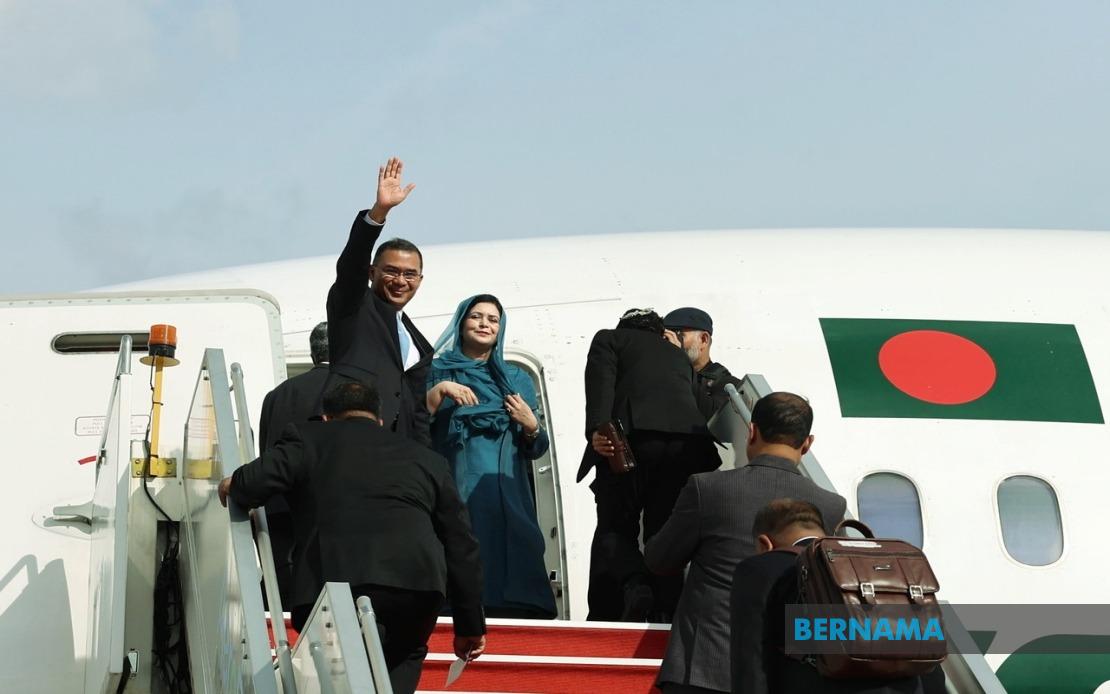
Bangladesh Prime Minister Tarique Rahman has concluded his inaugural bilateral official visit abroad since taking office, departing Malaysia this afternoon bound for China. The special aircraft carrying Tarique and his delegation lifted off from Kuala Lumpur International Airport at 5 pm, following a ceremonial send-off at the Bunga Raya Complex that included a guard of honour from the First Battalion of the Royal Ranger Regiment. Minister in the Prime Minister's Department (Religious Affairs) Dr Zulkifli Hasan attended the farewell ceremony, alongside Tarique's spouse Dr Zubaida Rahman and members of the Bangladeshi delegation.
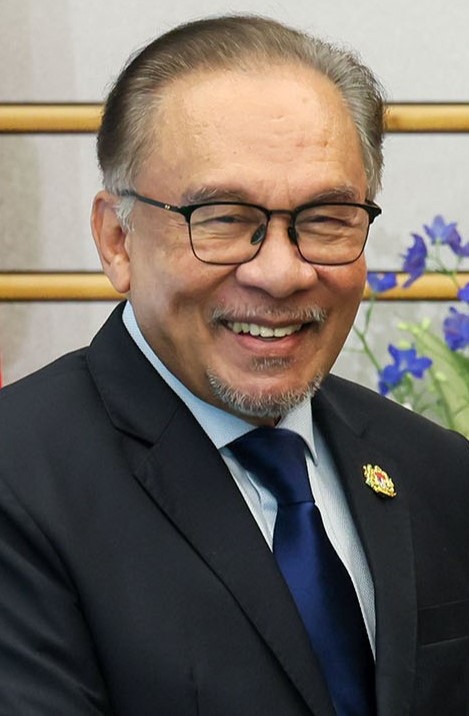
The two-day visit, which commenced last night at Prime Minister Datuk Seri Anwar Ibrahim's invitation, represents a significant diplomatic engagement between two important South Asian and Southeast Asian nations. During bilateral discussions held at the Perdana Putra Complex earlier today, the leaders reviewed the full spectrum of regional and international concerns affecting both countries, with particular emphasis on identifying new avenues for bilateral cooperation. The depth and breadth of these conversations underscore the growing strategic importance of Malaysia-Bangladesh relations within the broader Asian geopolitical landscape.
At the core of the visit lay concrete commitments to expand economic partnerships across multiple sectors. Both governments identified trade and investment, human resource development, semiconductor manufacturing, energy production, agricultural development and educational exchange as priority areas for deepened engagement. The emphasis on semiconductors and energy cooperation is particularly telling, reflecting both nations' recognition that technological advancement and sustainable energy solutions are critical to long-term economic competitiveness in a rapidly evolving global marketplace.
The visit resulted in the signing of several formal instruments cementing these commitments. A Memorandum of Understanding on Cultural Cooperation was executed alongside two Exchanges of Notes addressing Counter-Terrorism Research and Investment Promotion and Facilitation. These agreements demonstrate a multifaceted approach to bilateral relations that extends beyond purely commercial considerations to encompass security cooperation and mutual protection of economic interests. The inclusion of counter-terrorism collaboration reflects growing regional concerns about extremist activities and the imperative for closer intelligence and research sharing among neighbouring nations.
Among the most significant outcomes was a mutual commitment to expedite negotiations on a fast-track free trade agreement, a mechanism designed to accelerate tariff reductions and eliminate non-tariff barriers to enhance bilateral commerce. The leaders also prioritized enhanced cooperation in the energy sector and the burgeoning halal industry, recognition that these domains offer substantial growth potential given Bangladesh's increasing energy requirements and both nations' positioning within the global Islamic economy. Bangladesh's interest in leveraging Malaysia's extensive experience in halal certification and standards represents a pragmatic approach to capturing value within Muslim-majority markets worldwide.
Prime Minister Tarique reaffirmed Bangladesh's strategic aspiration to secure ASEAN Sectoral Dialogue Partner status, a designation that would formalize Dhaka's engagement with the regional bloc and amplify Bangladesh's voice in Asian economic and political deliberations. He also signaled Bangladesh's determination to accede to the Regional Comprehensive Economic Partnership, one of the world's largest free trade arrangements encompassing ASEAN members alongside China, Japan, South Korea, Australia and New Zealand. Malaysia's support for these objectives could prove instrumental in facilitating Bangladesh's integration into regional frameworks that would substantially reshape its trade patterns and geopolitical alignments.
Beyond bilateral considerations, both leaders articulated shared positions on major global questions, demonstrating alignment on pressing humanitarian and peace-building challenges. They expressed mutual commitment to supporting the Palestinian cause and expressed deep concern about the deteriorating humanitarian conditions in Gaza, indicating that both governments prioritize this issue within their foreign policy frameworks. Discussions also encompassed efforts to secure durable peace arrangements in the Persian Gulf region and with Iran, matters of acute relevance to energy security and regional stability that directly affect both nations' strategic interests and economic wellbeing.
The Rohingya refugee situation featured prominently in discussions, with both governments pledging to strengthen cooperation through ASEAN institutional mechanisms to achieve a lasting resolution to this longstanding humanitarian crisis. Malaysia, which hosts one of the world's largest Rohingya refugee populations, has particular stakes in resolving this issue through engagement with Myanmar authorities and international pressure. Bangladesh's willingness to coordinate with Malaysia through regional bodies demonstrates recognition that unilateral approaches have proven insufficient and that only multilateral, regionally-anchored solutions can address the underlying causes and facilitate the repatriation and rehabilitation of affected populations.
The economic relationship between Malaysia and Bangladesh has grown substantially in recent years. During 2025, bilateral trade reached RM12.18 billion (US$2.84 billion), with Malaysian exports to Bangladesh valued at RM10.08 billion (US$2.35 billion), predominantly comprising petroleum products that underscore Bangladesh's energy import dependency. Bangladeshi exports to Malaysia amounted to RM2.10 billion (US$500 million), primarily comprising textiles, apparel and footwear products that reflect Bangladesh's position as a major garment manufacturing hub.
Within the broader context of Malaysia's trading relationships, Bangladesh has emerged as the nation's 28th-largest trading partner globally and its second-most significant trading partner within South Asia after India. This ranking underscores both the existing importance of economic ties and the substantial untapped potential for growth, particularly as Bangladesh continues its industrial transformation and energy sector expansion. The focus on fast-track FTA negotiations suggests both governments recognize that bilateral commerce has reached a threshold where formal preferential arrangements could unlock significantly higher volumes of two-way trade and investment flows.
Prime Minister Tarique's choice to conduct his first bilateral official visit abroad in China, following the Malaysia stopover, carries its own geopolitical significance. The itinerary reflects Bangladesh's balancing act among major Asian powers and its strategic positioning within the evolving regional architecture. Malaysia's role as a constructive bridge between South Asia and Southeast Asia, combined with its demonstrated commitment to supporting Bangladesh's regional integration aspirations, positions it as an important partner in Dhaka's broader diplomatic strategy of diversifying relationships and anchoring itself within multiple institutional frameworks.