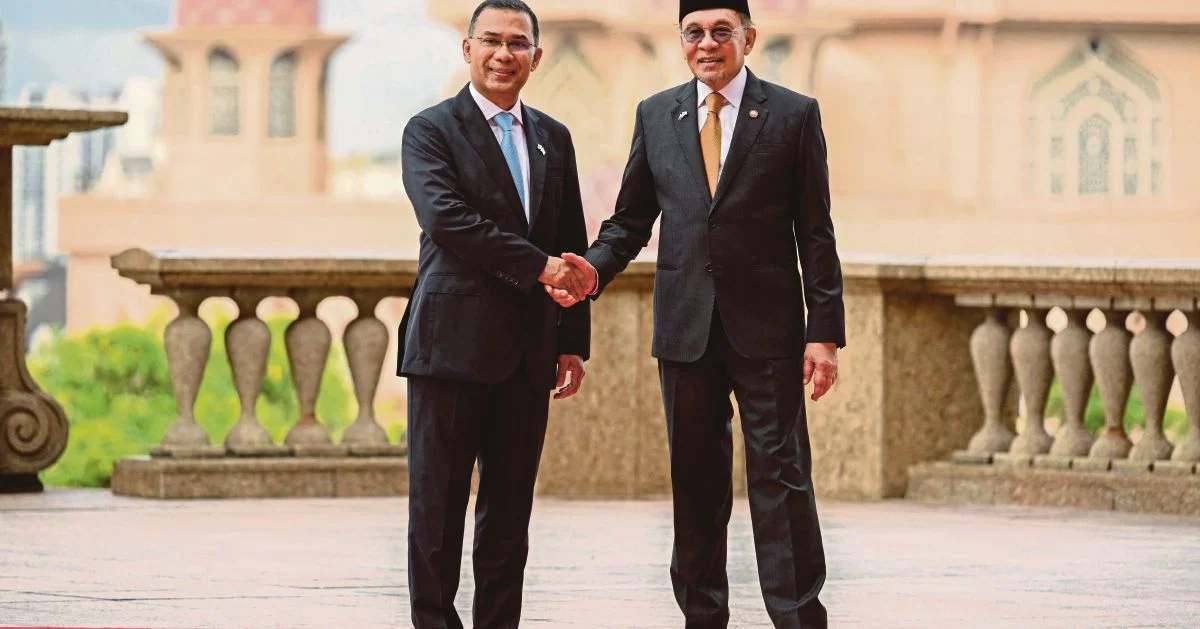
Bangladesh Prime Minister Tarique Rahman wrapped up his maiden state visit to Malaysia on Monday with a renewed commitment to strengthening the relationship between the two Southeast Asian nations. During his time in Kuala Lumpur, Rahman expressed determination to work more closely with his Malaysian counterpart Datuk Seri Anwar Ibrahim to advance what both governments characterise as a multifaceted partnership spanning trade, defence, education, and cultural exchanges.
The visit marks a significant diplomatic moment for Bangladesh, which has undergone considerable political transition in recent months. Rahman's first official journey abroad as premier underscores Dhaka's priority in engaging with established regional players like Malaysia, whose economy and political stability make it an important partner for the fledgling administration. The choice of Malaysia as a destination reflects broader regional positioning and the shared interests that bind the two Muslim-majority nations within the broader Asian community.
Rahman's emphasis on working collaboratively with Anwar carries particular weight given the Malaysian Prime Minister's influence within ASEAN circles and his track record of developing pragmatic bilateral relationships. Anwar has positioned himself as a bridge-builder within the region, and Bangladesh's receptiveness to deepening ties aligns with efforts to create a more cohesive Southeast Asian bloc capable of navigating geopolitical complexities and economic interdependencies.
The multifaceted nature of the proposed partnership reflects the diversity of potential cooperation between the two nations. Trade relations, already established through existing frameworks, offer scope for expansion as Bangladesh seeks to diversify its international commercial networks beyond traditional partners in South Asia. Malaysian companies operating in sectors such as manufacturing, telecommunications, and financial services see opportunities in Bangladesh's vast labour market and growing consumer base. Conversely, Bangladeshi workers remit significant sums from Malaysia, making employment and skills exchange central to bilateral prosperity.
Defence and security cooperation represents another pillar of the deepening relationship. Both nations face maritime security challenges in shared waters and have interests in maintaining freedom of navigation and regional stability. Enhanced military-to-military engagement, information sharing, and joint training exercises could benefit both countries' capacity to respond to transnational threats ranging from piracy to human trafficking networks operating across the region.
Educational partnerships also feature prominently in the bilateral agenda. Malaysian universities increasingly attract Bangladeshi students, while scholarship programmes facilitate knowledge transfer and people-to-people connections that transcend formal diplomatic channels. These educational ties create networks of professionals and intellectuals who often serve as informal ambassadors for their nations, fostering cross-cultural understanding and long-term strategic alignment.
Cultural and religious dimensions of the partnership merit consideration in understanding the depth of potential cooperation. Both nations draw identity from Islamic heritage, and collaborative efforts in this domain—from interfaith dialogue initiatives to heritage preservation projects—can reinforce mutual respect and demonstrate the region's capacity for pluralistic coexistence. Malaysia's experience managing religious diversity could offer valuable insights for Bangladesh as it navigates its own communal dynamics.
The timing of Rahman's visit assumes added significance given Bangladesh's recent political upheaval and international attention to the nation's trajectory. By formalising commitments to enhanced Malaysian engagement, Rahman signals stability and continuity in foreign policy, reassuring both domestic constituencies and international observers that Bangladesh remains a reliable partner capable of honouring agreements. This messaging is crucial as foreign investors and development partners assess risk and opportunity in Bangladesh's economy.
From Malaysia's perspective, strengthening ties with Bangladesh expands its influence within South Asia and reinforces its position as a connector between Southeast Asian and South Asian regional frameworks. As ASEAN navigates changing dynamics with rising powers and evolving geopolitical alignments, deepened relationships with neighbouring South Asian nations offer strategic flexibility and additional vectors for regional dialogue.
The bilateral relationship also operates within the context of broader multilateral frameworks. Both nations participate in organisations such as the Organisation of Islamic Cooperation and various ASEAN-affiliated bodies, where coordinated positions on issues ranging from climate change to maritime governance amplify their collective voice. Strengthening bilateral foundations thus enhances their ability to collaborate effectively within these larger structures.
As Rahman returns to Dhaka, the commitment articulated in Kuala Lumpur will be tested through concrete implementation. Success hinges on translating diplomatic statements into actionable policies, securing budgetary allocations, and establishing mechanisms for regular high-level dialogue. The coming months will reveal whether this inaugural visit catalyses substantive institutional deepening or remains primarily ceremonial in nature.