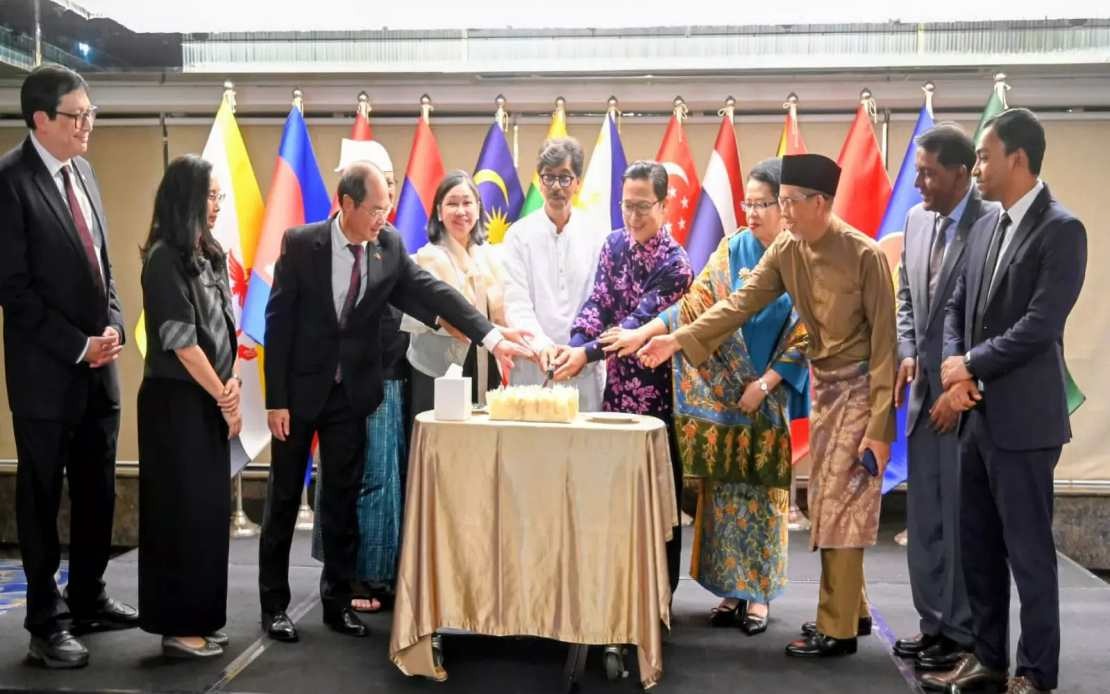
Bangladesh is pursuing a more structured engagement with the Association of Southeast Asian Nations, with Fisheries, Livestock and Agriculture Minister Mohammed Aminur Rashid announcing Monday that the country has formally applied for Sectoral Dialogue Partner status. The move represents a strategic effort to deepen Bangladesh's involvement in regional affairs and institutionalise its cooperation mechanisms with Southeast Asian neighbours. Speaking at a reception marking the 59th ASEAN Day in Dhaka, Rashid emphasised that strengthening ties across the regional bloc remains a top diplomatic priority for the government.
The minister's remarks underscore a broader recognition within Bangladesh's leadership that closer alignment with ASEAN serves national interests across multiple dimensions. Historically, Bangladesh has maintained cordial relations with individual ASEAN member states, but the new SDP application signals intent to move beyond bilateral arrangements toward sustained multilateral engagement. Rashid highlighted the deep-rooted connections between Bangladesh and Southeast Asia, noting that shared history, cultural affinities and mutual strategic interests form a natural foundation for expanded partnership. These connections have long been evident in trade flows, people-to-people exchanges and religious and cultural communities that span the region.
Prime Minister Tarique Rahman's government has clearly signalled its regional ambitions by prioritising ASEAN relations in its foreign policy framework. That commitment was visibly demonstrated when Rahman selected Malaysia for his first official overseas visit, a deliberate choice that underscored the significance Dhaka attaches to Southeast Asian connections. Such symbolic gestures carry weight in regional diplomacy, and the Malaysian visit appears designed to strengthen bilateral ties while also reinforcing Bangladesh's positioning within broader ASEAN dynamics. The selection reflects recognition that Malaysia, as a bridge between South Asia and Southeast Asia, holds particular importance for Bangladesh's regional strategy.
Bangladesh's application for SDP status represents a pragmatic step toward institutionalising what has hitherto been a more informal relationship with ASEAN. While not equivalent to full membership, sectoral dialogue partnership would provide Bangladesh with structured mechanisms for engaging with ASEAN on specific thematic areas. The arrangement would allow Dhaka to participate in relevant meetings, contribute to policy discussions and collaborate on initiatives aligned with Bangladesh's economic and development priorities. For a nation seeking greater regional influence and economic integration, such formalised standing offers tangible benefits beyond symbolic recognition.
The sectoral initiatives already underway demonstrate the concrete substance underpinning Bangladesh's ASEAN engagement. A US$1 million Bangladesh-ASEAN Cooperation Project on Fisheries and Aquaculture, implemented through Rashid's ministry, exemplifies how cooperation can address shared development challenges. Fisheries remains economically vital to multiple Southeast Asian nations, and collaborative efforts on sustainable aquaculture, resource management and technology transfer create mutual value. Beyond fisheries, additional joint projects in tourism, information and communication technology, and cultural exchange are being developed, reflecting the breadth of potential collaboration areas.
Tourism cooperation holds particular promise for Bangladesh and ASEAN states, given the region's considerable appeal to international visitors and the potential for enhanced intra-regional travel flows. Cultural and educational exchanges in ICT sectors could position Bangladesh as both participant and beneficiary in Southeast Asia's digital transformation agenda. Such initiatives move beyond traditional trade considerations to encompass the knowledge economy and soft power dimensions increasingly central to regional standing. These partnerships also create opportunities for Bangladeshi professionals, students and entrepreneurs to access Southeast Asian markets and expertise.
Rashid's framing of ASEAN as "one of the world's most successful regional blocs" reflects a wider regional view that membership or close partnership with ASEAN enhances a nation's geopolitical weight and economic prospects. ASEAN's track record in maintaining peaceful interstate relations, developing institutional frameworks and navigating great power competition has indeed made it influential in Southeast Asian affairs. By seeking formalised association, Bangladesh signals desire to benefit from ASEAN's institutional gravitas and participate in the region's collective decision-making processes on issues ranging from maritime security to economic integration.
The request for active support from ASEAN diplomatic missions present at the Dhaka reception reveals that Bangladesh understands the necessity of building consensus among member states for its SDP application. Heads of mission from Indonesia, Thailand, Vietnam, Singapore, the Philippines, Myanmar, Brunei, Cambodia and Laos, along with Malaysian High Commissioner Mohammad Shuhada Othman, who chairs the ASEAN Dhaka Committee, collectively wield considerable influence over whether Bangladesh advances in its application. By directly appealing for their backing at an official gathering, Bangladesh's government attempted to leverage the diplomatic channels and goodwill embedded in Southeast Asian representation in Dhaka.
The celebration of ASEAN Day through traditional Bangladeshi cuisine, particularly the prominent featuring of Kalijira rice biryani and Black Bengal Goat dishes, carried deliberate cultural messaging. These products represent Bangladesh's agricultural heritage and international recognition through geographical indication protection, serving as tangible reminders of Bangladeshi identity and economic contribution. Using such elements in diplomatic hospitality reflects understanding that regional partnership thrives when nations take pride in their distinctive identities and contributions rather than seeking mere assimilation into broader frameworks.
For Malaysian observers and wider Southeast Asian audiences, Bangladesh's strategic repositioning merits attention. As South Asia's most developed economy and a nation of 170 million people with significant maritime interests, Bangladesh's deeper involvement in ASEAN structures could reshape regional dynamics. Enhanced Bangladesh participation could strengthen ASEAN's engagement with South Asia, address shared maritime security concerns in the Bay of Bengal and Indian Ocean, and expand economic cooperation networks. The SDP bid thus represents not merely a Bangladeshi initiative but a potential reconfiguration of Southeast Asian regional architecture to accommodate growing South Asian interests.
The timing of Bangladesh's application and the enthusiasm displayed by the government reflect shifting geopolitical realities in South and Southeast Asia. As regional powers recalibrate their positions amid broader international competition, Bangladesh's effort to secure formal standing with ASEAN demonstrates recognition that regional multilateral institutions increasingly determine the scope and nature of diplomatic influence. For a nation navigating complex relationships with larger regional and global powers, ASEAN membership or partnership status provides useful diplomatic leverage and forums for advancing national interests.
While the SDP application remains under consideration, Bangladesh's diplomatic push signals sustained commitment to Southeast Asian engagement beyond ceremonial exchanges. The concrete sectoral projects already implemented, combined with ongoing initiatives in tourism, ICT and culture, demonstrate that the relationship extends into functional cooperation areas likely to generate measurable benefits. Whether Bangladesh ultimately secures SDP status or continues pursuing closer ties through alternative arrangements, the trajectory clearly points toward deeper integration with Southeast Asia and greater participation in regional governance processes that will shape the decades ahead.

