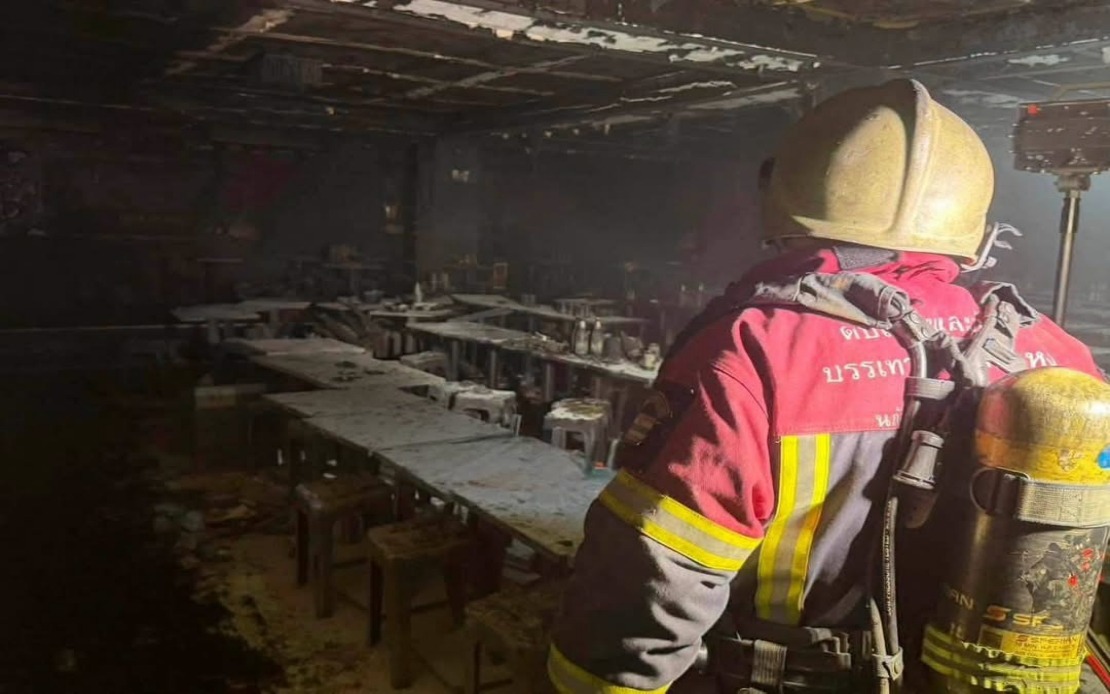
A devastating fire that swept through a bar in Bangkok's Lat Phrao area during the early hours of Monday morning has claimed the lives of at least 27 people, marking one of Thailand's deadliest venue fires in recent memory. The blaze, which erupted shortly after midnight at the establishment located in Chatuchak district, left 18 additional individuals injured, including eight in critical condition requiring emergency medical care. Bangkok Governor Chadchart Sittipunt arrived at the scene around 2:40 am to assess the catastrophe firsthand, with initial investigations revealing troubling patterns about how the fire may have spread and how victims became trapped.
According to the Bangkok Metropolitan Administration's Department of Disaster Prevention and Mitigation, the death toll comprises nine men and 18 women. The disproportionate number of female victims raises questions about the venue's layout and the circumstances under which patrons were attempting to escape. Preliminary observations suggest that flames propagated with terrifying speed through the ceiling area, yet many plastic furnishings inside remained relatively intact, an anomaly that forensic investigators will scrutinise closely when determining the fire's origin. Medical personnel are conducting victim identification procedures, with the governor urging families to monitor official announcements through designated coordination centres rather than relying on unofficial sources.
Evidence gathered at the scene points to a grim reality about how quickly occupants succumbed to the disaster. While authorities believe smoke inhalation was the primary cause of death for most victims, conclusive determination awaits completed forensic examinations and comprehensive investigative findings. The speed at which the fire claimed lives suggests that many individuals had minimal time to recognise the danger, locate exits, and evacuate safely—a scenario that underscores critical deficiencies in emergency preparedness at the venue.
A particularly alarming detail emerged during preliminary investigations: several victims were discovered clustered near an emergency exit on the building's left side, where authorities suspect obstructions may have prevented people from reaching safety. Governor Chadchart emphasised that investigators must thoroughly examine this finding before drawing definitive conclusions, but the preliminary evidence already suggests that barriers—whether intentional, accidental, or structural—may have transformed what should have been a lifeline into a death trap.
Thai Prime Minister Anutin Charnvirakul visited the location early Monday and received briefings from emergency officials. During his inspection, Anutin spoke with a musician who had been performing when the fire erupted, and the account provided chilling details about how catastrophe unfolded. The musician recalled that flames initially appeared at an electrical switchboard before events accelerated dramatically, with explosions and thick smoke forcing desperate patrons to flee amid chaos. This eyewitness account suggests that the venue's electrical infrastructure may warrant intense scrutiny regarding maintenance standards and safety protocols.
The Bangkok Metropolitan Administration has initiated a comprehensive audit of the establishment's operating licence and compliance with fire safety regulations. This examination will specifically target the number and condition of emergency exits, the visibility and clarity of exit signage, and whether evacuation routes had been blocked or inadequately maintained. For Malaysian readers familiar with similar venues in Kuala Lumpur and other major cities, this incident underscores how quickly a night of entertainment can transform into a nightmare when safety standards are compromised or enforcement is insufficient.
The rapid spread of flames through the ceiling—contrasting sharply with the relatively undamaged plastic furnishings—presents an enigma that investigators must resolve. This pattern could indicate that the fire's origin lay above the main floor, possibly within concealed spaces containing electrical wiring, insulation, or other flammable materials not immediately visible to patrons. Such scenarios frequently emerge in investigations of venue fires across Southeast Asia, where older buildings or illegally modified structures may harbour hidden fire risks.
For the regional hospitality and entertainment industry, this tragedy carries urgent lessons. Thailand's tourism economy depends heavily on nightlife venues that attract both domestic and international visitors. A catastrophic fire at a Bangkok establishment does not merely affect Thailand—it raises concerns throughout Southeast Asia about whether similar vulnerabilities exist in comparable venues across Malaysia, Singapore, and neighbouring countries. Venue operators, local authorities, and safety inspectors must confront uncomfortable questions about how thoroughly they enforce regulations and whether existing standards adequately protect public safety.
The investigation's outcomes will likely trigger policy discussions within Thailand regarding mandatory safety upgrades for existing venues, improved emergency exit standards, and enhanced inspection regimes. These conversations should reverberate across the region, prompting Malaysian authorities to revisit fire safety protocols at similar establishments. The demographic profile of victims—predominantly women—may also inform discussions about how emergency procedures should account for varied physical capabilities and how panic responses differ among different populations in crisis situations.
Authorities have yet to determine the precise cause of the fire, though the electrical switchboard origin mentioned by the musician provides a potential starting point for investigation. Whether the cause proves to be faulty wiring, inadequate maintenance, overcrowded circuitry, or something entirely different, the fundamental question remains: why did the venue fail to prevent this disaster? As forensic officers complete their examinations and investigators file final reports, Thailand and the broader Southeast Asian region will be watching closely for answers that might prevent similar tragedies.

