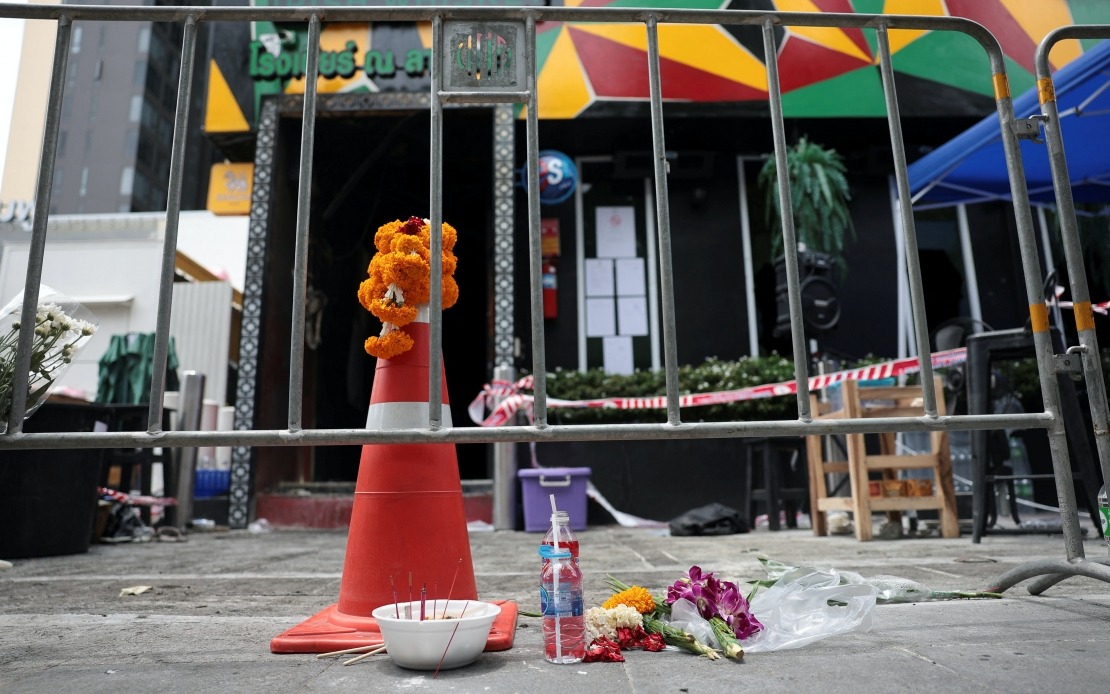
Authorities in Bangkok have established that the 33 people who perished in a devastating bar fire in the Lat Phrao district died as a result of toxic gas inhalation rather than thermal injuries from flames. Metropolitan Police Bureau Commissioner Police Lieutenant General Sayam Boonsom announced the findings after forensic examination of the scene, stating that all victims succumbed to asphyxiation caused by exposure to poisonous fumes released during the incident.
The pathological examination detected both carbon monoxide and cyanide in the bodies of the deceased. These substances operate by preventing tissues throughout the body from utilising oxygen, creating a condition where the brain and vital organs are starved of the oxygen necessary to sustain life. The toxicity of these gases means that fatal outcomes can occur within minutes of exposure, even before individuals experience severe thermal burns. This discovery carries significant implications for understanding how the tragedy unfolded and the sequence of events that led to the loss of life.
Sayam explained that forensic officers have now concluded their physical examination of the venue, though the broader investigation into the cause of the fire continues with multiple avenues being pursued simultaneously. Investigators are examining whether electrical faults within the building could have ignited the initial fire, and are paying particular attention to structural and safety violations that may have compromised the establishment's ability to protect patrons during an emergency.
Among the key focus areas are unauthorised modifications made to the building's structure, which may have altered fire safety characteristics or compromised structural integrity. Equally concerning are indications that emergency exits were blocked or obstructed, a common violation in entertainment venues operating in Southeast Asia. Such blockages would have severely limited the ability of patrons and staff to evacuate safely once the fire began, potentially trapping people in areas where toxic fumes accumulated.
While no formal charges have been filed at this stage, police have indicated their intention to pursue multiple criminal offences against responsible parties. These anticipated charges include causing death and injury through negligence, conducting unauthorised structural alterations to a building, and negligently causing a fire. Investigators are also examining whether the venue operated in violation of entertainment licensing regulations, and whether it exceeded the scope of activities permitted under its operating licence.
The breadth of potential violations being investigated suggests a pattern of non-compliance that may have compounded the tragedy. The establishment's operators may have prioritised expansion and modification of the space without securing proper approvals, while simultaneously allowing safety features such as emergency exits to become compromised. For Malaysian readers familiar with enforcement challenges in Southeast Asia's entertainment sector, such violations represent familiar patterns where regulatory oversight struggles against commercial pressures.
As of Thursday, investigators had conducted interviews with more than 106 witnesses, gathering testimony about the fire's origin, its rapid spread, and the circumstances surrounding evacuation attempts. These accounts will prove crucial in establishing a timeline of events and identifying points at which intervention might have prevented loss of life.
The fire erupted shortly after midnight on Monday at the entertainment outlet, spreading with sufficient speed to overwhelm occupants before escape routes could be fully utilised. Beyond the 33 fatalities, more than 70 people sustained injuries requiring medical treatment. The medical response has been substantial, with 14 individuals still requiring intensive care as of Thursday, while 44 others have been discharged following stabilisation and treatment of their injuries.
For the broader Southeast Asian region, the incident underscores persistent vulnerabilities in entertainment venue safety standards and enforcement. Malaysia has experienced similar tragedies in recent years, and this Bangkok incident reinforces the importance of rigorous compliance with fire safety codes, including maintaining clear emergency exits, installing functioning fire detection and suppression systems, and ensuring that venue modifications do not compromise structural safety. The discovery that toxic gas inhalation rather than burns proved fatal also highlights the critical importance of ventilation systems and the rapid deployment of emergency response protocols in confined spaces.
The investigation's focus on both technical factors and regulatory compliance reflects recognition that fire safety depends on multiple integrated systems functioning properly. Even a single point of failure—such as blocked exits or faulty electrical infrastructure—can prove catastrophic when combined with other vulnerabilities. For venue operators throughout the region, the Bangkok case serves as a sobering reminder that cost-cutting measures and unauthorised modifications carry life-or-death consequences that extend far beyond the operator to their staff and customers.

