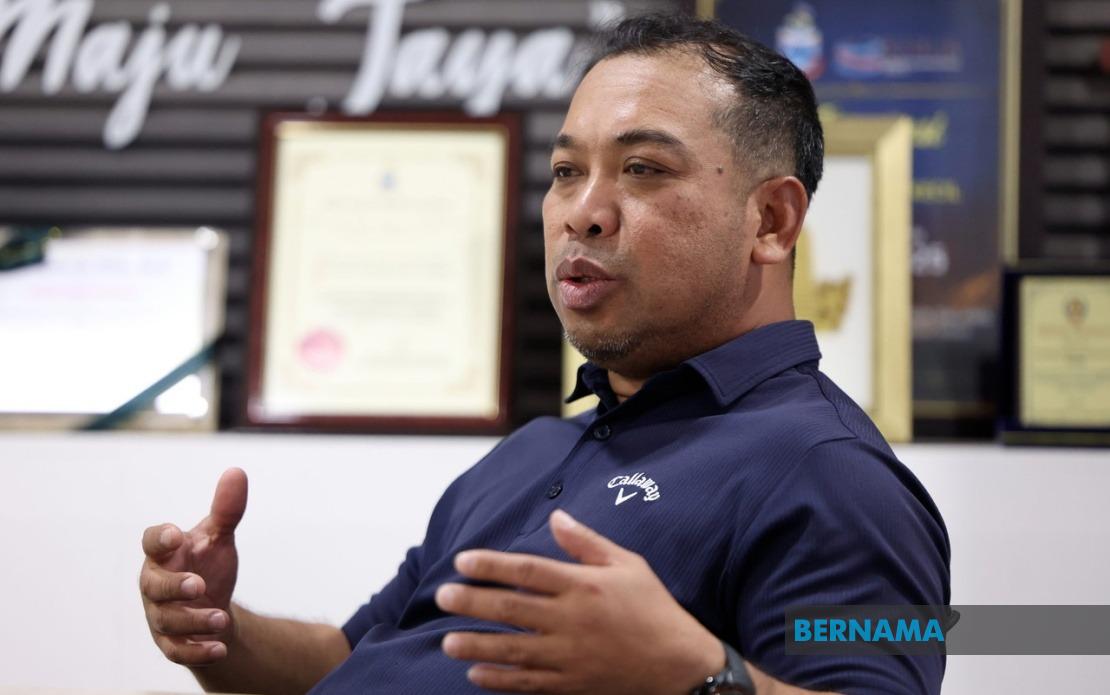
Kota Kinabalu has become the focal point of a push to unlock major infrastructure investment for one of Sabah's most isolated constituencies. Datuk Mohamad Mohamarin, the Member of Parliament for Banggi, is pressing the federal government to greenlight an ambitious RM300 million road construction project that would transform connectivity on Pulau Banggi and its surrounding islands. The ambitious undertaking envisions a fully paved or concrete thoroughfare spanning approximately 37 kilometres from Kampung Meliu to Kampung Dogoton, with implementation divided into manageable three-phase tranches.
The proposal represents a carefully calibrated response to infrastructure deficiencies that have accumulated over decades on the island. When Mohamad presented the initiative to Prime Minister Datuk Seri Anwar Ibrahim during a May 9 visit to Pulau Banggi, he was drawing attention to conditions that severely constrain economic and social development. The existing road network totals just 81 kilometres across the main island, yet of this modest total, only 14 kilometres currently possess paved surfaces. More troublingly, even this limited paved infrastructure has deteriorated significantly, with extensive pothole damage creating hazardous conditions that have already claimed lives through traffic accidents.
The constituency's infrastructure challenges extend well beyond Pulau Banggi itself. Mohamad's responsibilities encompass several additional islands within Banggi—namely Pulau Balambangan, Pulau Sibogo, and Pulau Tigabu—along with the Tanjung Manawali peninsula. These outlying areas remain almost entirely disconnected from modern road networks, effectively isolating their populations from economic opportunities available on the main island and mainland Sabah. This fragmentation creates a cascading disadvantage, as even residents who might establish businesses or seek employment struggle to move goods and people efficiently between settlements.
The timing of this proposal coincides with a broader pattern of political attention to the region. Both Chief Minister Datuk Seri Hajiji Noor and Prime Minister Anwar Ibrahim have made recent visits to Pulau Banggi, during which various development initiatives received announcement or promise. However, Mohamad's parliamentary intervention suggests that such announcements have not translated into concrete action or budgetary allocation. His measured criticism reflects frustration that high-level political engagement remains disconnected from the practical resource mobilisation required to address entrenched infrastructure gaps.
The financial commitment involved underscores the scale of the developmental challenge. At more than RM300 million, this represents substantial federal expenditure, yet for a constituency with minimal existing road infrastructure, the per-kilometre cost appears reasonable when compared to major highway projects elsewhere. Critically, Mohamad structured the proposal into three phases, a deliberate attempt to make the project manageable within normal budget cycles rather than demanding an implausible single-year appropriation. This phasing strategy demonstrates political sophistication—acknowledging fiscal constraints whilst maintaining pressure for implementation.
During debate on the Supplementary Supply Bill 2026 at the Sabah State Legislative Assembly, Mohamad extended his questioning beyond road construction itself. He specifically challenged the Sabah Works Ministry to confirm whether the urgent rehabilitation of the existing 14-kilometre paved section appears in the current fiscal year's budget or implementation roadmap. This tactical focus on the immediate crisis—vehicles navigating dangerously potholed surfaces—complements his longer-term request for comprehensive new construction. By highlighting specific potholes and documented fatalities, he shifted the conversation from abstract development priorities to immediate public safety concerns.
The road deficit represents only one dimension of Pulau Banggi's infrastructure starvation. Recognising this, Mohamad simultaneously advocated for renewable energy development as a complementary initiative. His proposal targets a wind energy installation ranging from 15 to 50 megawatts to strengthen electricity provision and catalyse economic diversification on the island. Wind conditions on Pulau Banggi, positioned in the northern Sabah coastal region, likely make such a facility feasible, whilst improved power supply would enable light manufacturing, agricultural processing, and small-scale tourism enterprises that remain impractical under current electricity constraints.
The interconnection between these initiatives reflects sophisticated development thinking. Improved roads facilitate the transportation of materials and workforce required to construct and maintain renewable energy infrastructure. Enhanced electricity supply, in turn, incentivises businesses to locate in settlements now connected by the new paved network. Together, these projects create a multiplier effect where each investment enhances returns on the others. For a constituency historically marginalised within Sabah's development hierarchy, such comprehensive infrastructure investment could represent a pivotal opportunity for economic transformation.
Pulau Banggi's geographic isolation has traditionally relegated it to the periphery of political and economic attention. Whilst larger Sabah constituencies benefit from pre-existing networks of roads, ports, and power systems upon which incremental improvements can build, Banggi requires foundational infrastructure investment. This asymmetry has created a disadvantage that compounds across generations—young people migrate to better-equipped areas, businesses cannot establish operations, and tax revenues remain minimal, reducing government incentive to invest further. Breaking this cycle demands precisely the type of coordinated, multi-phase approach Mohamad has outlined.
The reception given to Mohamad's proposals will signal whether the federal government genuinely prioritises narrowing the development gap between Malaysia's centre and periphery. Prime Minister Anwar Ibrahim's May visit to Pulau Banggi suggests political awareness of the constituency's needs, yet awareness and allocation remain distinct phenomena. Whether the RM300 million road project progresses, stalls, or receives partial funding will have implications beyond Banggi itself, shaping how other marginalised constituencies perceive the credibility of government infrastructure commitments. For residents of Pulau Banggi, the question is no longer whether development is needed—decades of political visits have confirmed that—but rather when federal resources will finally arrive to translate that recognition into concrete paving.
Moving forward, the success of Mohamad's initiative will likely depend on his ability to maintain political pressure whilst facilitating bureaucratic pathways for implementation. The three-phase structure he has adopted suggests readiness for practical negotiation rather than mere grandstanding. If allocated even partial funding in the coming budget cycle, the project could establish momentum, demonstrating to the federal government that investment in Banggi yields political returns and to constituents that parliamentary advocacy produces tangible results. The RM300 million price tag, substantial though it may seem, represents the cost of addressing decades of neglect—a price that will only increase the longer implementation is delayed.

