Bahrain is signalling economic resilience in the face of regional turmoil, with the kingdom's development minister confirming that it has not yet accessed a $5.3 billion currency swap agreement secured with the United Arab Emirates in April. Noor bint Ali Alkhulaif, who heads both the Ministry of Sustainable Development and the Bahrain Economic Development Board, told Reuters that despite mounting pressures from the Iran conflict that has destabilised the Gulf region, Bahrain maintains sufficient liquidity without resorting to emergency financial measures.
The strategic restraint in using the swap reflects a broader picture of recovery that Alkhulaif stressed is already materialising across multiple economic sectors. Speaking as fresh tensions flared in the region, she acknowledged that the escalation represented an unexpected detour from the nation's planned trajectory. "What has happened is unfortunate, not what we planned for," Alkhulaif said on Tuesday. "It was meant to be a year of building the new Bahrain." Her comments underscore how thoroughly the conflict has disrupted the kingdom's development agenda, which was positioned as a transformative period for economic modernisation.
Yet the minister's optimism about recovery gains traction when examined against specific sectoral developments. Major manufacturing and logistics companies operating across the Gulf have successfully pivoted away from reliance on the Strait of Hormuz, identifying alternative transportation routes that reduce exposure to the volatile waterway through which approximately one-third of the world's seaborne traded oil passes. Simultaneously, regional tourism—which constituted roughly 90 percent of Bahrain's 15 million visitor arrivals last year—has rebounded to pre-conflict levels, suggesting that travellers from neighbouring Gulf states view the security situation as sufficiently stable to resume leisure activities.
Bahrain's exposure to the Iran conflict is arguably more acute than that facing other Gulf economies, owing to its pre-existing burden of one of the region's heaviest debt loads. The kingdom had been engaged in a difficult fiscal consolidation effort when hostilities erupted, making the timing particularly precarious. International credit rating agency S&P Global projects the conflict will trigger a 3 percent contraction of Bahrain's gross domestic product this year, coupled with a fiscal deficit approaching 8.5 percent of GDP—figures that rank among the most severe economic headwinds in the region and underscore why maintaining confidence in Bahrain's financial position matters considerably.
Concern about foreign exchange reserves had intensified after recent declines brought them to approximately $3 billion, marking the lowest level since the COVID-19 pandemic disrupted global commerce. That metric might ordinarily trigger immediate resort to emergency funding mechanisms such as the UAE currency swap. Yet Alkhulaif confirmed that "based on the information I have, it was not exercised," while noting her dual role as a board member of Bahrain's central bank, which negotiated the arrangement. Her statement suggests confidence that the kingdom's balance-of-payments position, while strained, remains manageable without external currency support.
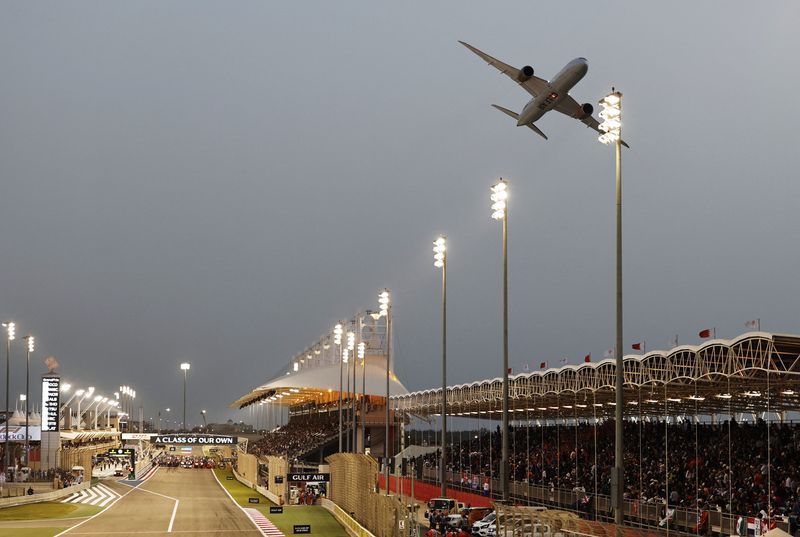
Beyond financial management, Bahrain is actively pursuing the restoration of its Formula One Grand Prix, which was cancelled last March alongside Saudi Arabia's race following the outbreak of hostilities. The weekend event typically draws approximately 105,000 spectators, with international visitors of higher spending capacity accounting for 10 to 15 percent of attendance. Industry sources indicate that the most viable scheduling window is the weekend of October 3-4, positioned between the Azerbaijan Grand Prix in Baku and the Singapore event on October 11, a slot that would benefit from the easing of US-Iran tensions that presently complicates its viability.
Alkhulaif indicated that discussions are underway regarding reinstatement of cancelled races into the 2024 calendar, though she cautioned that no firm commitments have materialised. "There is the talks about maybe plugging in some of the races that were cancelled back into the calendar. No confirmation still on that, (but) potentially," she stated. Formula One operations specialists note that scheduling decisions must come promptly to permit teams adequate preparation time for logistical and technical arrangements, creating a window of urgency that may concentrate the minds of both Bahraini officials and F1 stakeholders.
The Formula One Grand Prix represents far more than a sporting spectacle for Bahrain. The event constitutes a significant vehicle for international image projection and tourism revenue during a period when the kingdom's reputation faces scrutiny due to regional instability. A successfully executed race would demonstrate to global investors and visitors that Bahrain possesses the political stability and security infrastructure necessary to host world-class events, potentially reversing narratives that paint the Gulf as uniformly destabilised.
Longer-term prospects offer additional strategic importance. Bahrain is positioned to reclaim the prestigious opening race of the 2026-27 Formula One season, a timing advantage that results from Ramadan falling earlier in that calendar year. Should regional conditions stabilise sufficiently, the kingdom would additionally host the pre-season testing rounds that precede the championship, multiplying the economic and promotional benefits accruing from motorsport activities. Nevertheless, Alkhulaif made clear that progression toward these objectives remains contingent upon de-escalation of the broader conflict dynamic that has already disrupted this year's racing schedule.
The kingdom's measured approach to its financial challenges and its diplomatic engagement regarding the F1 return reflects a calculated strategy: avoiding appearance of desperation while positioning for recovery as soon as security calculations permit. Bahrain's refusal to tap the UAE currency swap, despite legitimate pressure from reserve depletion and economic contraction, may serve a signalling function to international credit markets, suggesting authorities retain confidence in the economy's medium-term trajectory. Whether that confidence proves warranted will depend substantially upon whether regional tensions continue their recent trajectory toward escalation or begin to recede, a dynamic beyond Bahraini control but central to every element of the kingdom's economic outlook.

