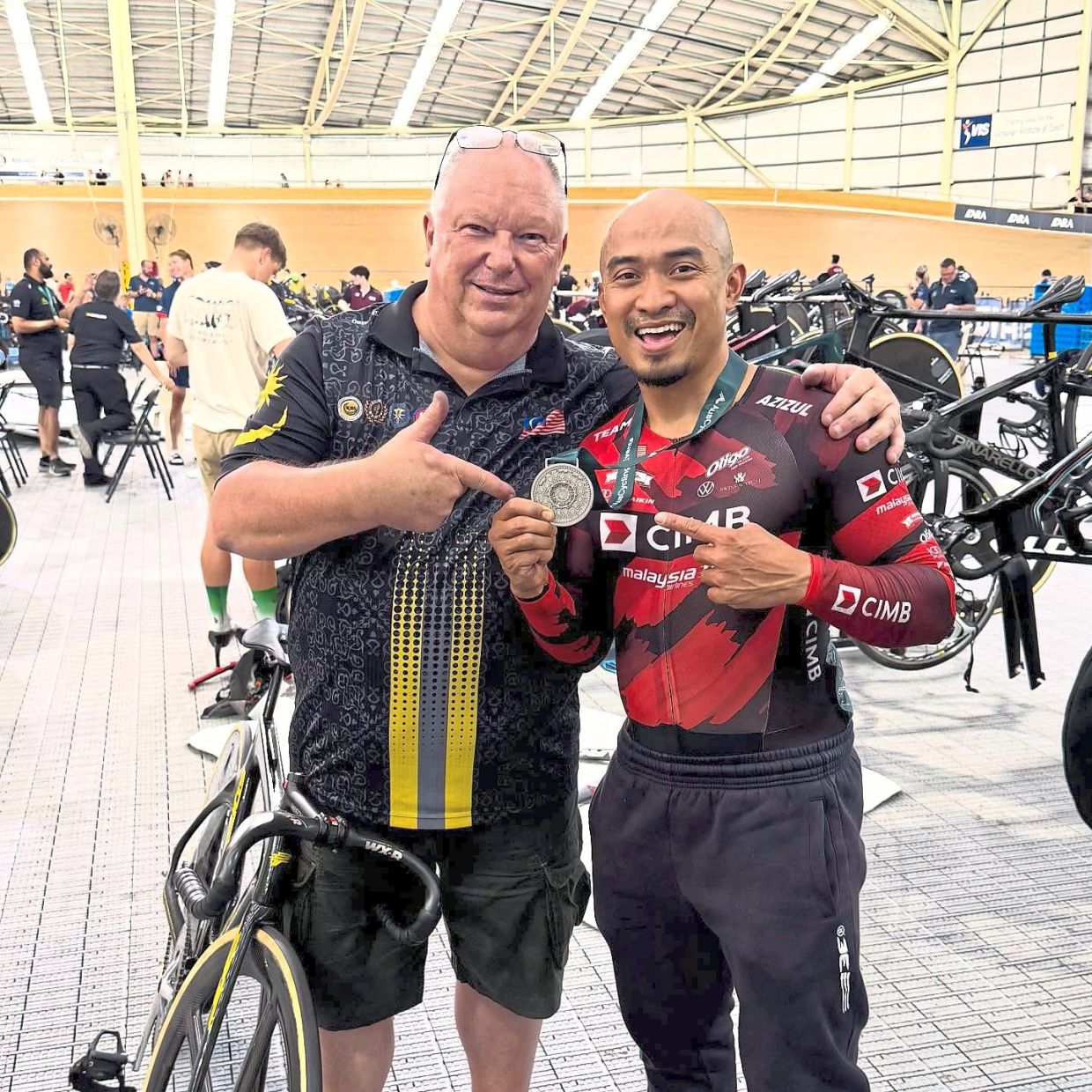
National track cyclist Azizulhasni Awang has openly acknowledged that his public defence of technical director John Beasley carries considerable personal risk, potentially exposing him to coordinated criticism and attempts to undermine his standing within Malaysian cycling circles. The two-time Olympic medallist, speaking from Petaling Jaya, made clear that he fully understands the precarious position he has adopted by speaking out in support of Beasley during a period of heightened scrutiny around the sport's leadership and direction.
Azizul's willingness to take a stand reflects a measured assessment of the stakes involved. He recognises that his vocal backing of Beasley could become a liability if results at the upcoming Commonwealth Games and Asian Games fall short of national expectations. In that scenario, Azizul anticipates that critics may seize the opportunity to attack not only Beasley's tenure but also Azizul himself for having aligned with him publicly. Such a development would place the sprinter in an uncomfortable position, potentially becoming collateral damage in a wider dispute about the direction of Malaysian track cycling.
Yet Azizul has chosen to proceed regardless, driven by his conviction that Beasley's contributions to Malaysian cycling over two decades have been substantial and largely beneficial. The Australian technical director has been instrumental in nurturing world-class talent and building systems that have elevated Malaysia's standing in international cycling. From Azizul's perspective, these concrete achievements warrant public acknowledgment, even if the political consequences are unpredictable. His defence represents a principled stance in favour of recognising merit and contribution, rather than following the safer path of remaining silent amid controversy.
The Tokyo 2020 Olympics silver medallist has grounded his resilience in personal conviction and faith. Azizul stated explicitly that he is unafraid of potential retaliation because he believes his decisions align with his values and spiritual convictions. He invoked Islamic teaching, noting that he trusts in divine will and therefore feels emboldened to speak what he believes to be true. This perspective provides him with psychological fortification against the pressure of institutional politics and the risk of becoming a social pariah within Malaysian cycling if circumstances shift unfavourably.
The underlying dynamics deserve closer examination, as they reflect broader tensions within Malaysian sports governance. Beasley's position has come under attack from unnamed critics, apparently including individuals affiliated with state cycling bodies. Their public criticism, conducted through informal channels rather than official administrative procedures, prompted the Malaysia National Cycling Federation (MNCF) to initiate disciplinary action. Datuk Amarjit Singh Gill, the federation's president, announced last week that show-cause letters would be issued to two individuals from state affiliates for having damaged the national body's reputation through unauthorised public commentary.
This sequence of events illustrates a pattern of governance frustration where critics operate outside formal channels, potentially reflecting either a lack of faith in the MNCF's internal dispute-resolution mechanisms or a deliberate strategy to apply public pressure. The federation's response suggests an intent to enforce institutional protocols and prevent further erosion of leadership authority through grassroots dissent. Azizul's emergence as a defender of Beasley complicates this picture by introducing the voice of a credible athlete whose achievements carry considerable weight within Malaysian sporting circles.
From a competitive perspective, Azizul's primary concern remains ensuring that preparations for both the Commonwealth Games and Asian Games proceed without further disruption. His call for unified support from all stakeholders reflects an athlete's pragmatic understanding that institutional discord undermines performance. The pressure on Malaysian track cyclists to deliver results at these major competitions is substantial, and distractions stemming from internal political wrangling threaten to compromise preparation and focus. Azizul's willingness to absorb potential criticism himself may partly stem from a desire to depoliticise the technical environment and allow athletes to concentrate on their training and competition strategy.
The timing of Azizul's defence is significant, as it comes at a juncture when the Malaysian cycling programme faces real scrutiny regarding its international competitiveness and medal prospects. Success or failure in the coming months will likely determine whether Azizul is vindicated or becomes retrospectively viewed as having backed a failed or controversial administration. This high-stakes scenario explains his candid acknowledgment that poor results will invite fresh criticism, potentially directed at both Beasley and anyone publicly associated with supporting him.
Azizul's position also speaks to deeper questions about loyalty, merit, and institutional culture within Malaysian sports. His argument essentially holds that individuals who have contributed meaningfully to national sporting development deserve recognition and support, even amid controversy. This contrasts with what he perceives as a tendency among some state-level officials to pursue personal or factional agendas by publicly attacking established figures without utilising proper administrative channels. By defending Beasley despite the personal cost, Azizul is implicitly championing a culture of institutional respect and merit-based evaluation.
Looking forward, Azizul's gambit will be tested by actual athletic results. If Malaysian cyclists perform strongly at the Commonwealth Games and Asian Games, his defence of Beasley will appear prescient and his personal resilience will be validated. Conversely, disappointing outcomes could transform his principled stand into a liability that critics exploit. This dynamic captures an important reality in sport: the same decisions can appear wise or foolish depending entirely on subsequent events. For now, Azizul has chosen to prioritise principle over political caution, betting that his faith in both Beasley's value and divine providence will prove justified.