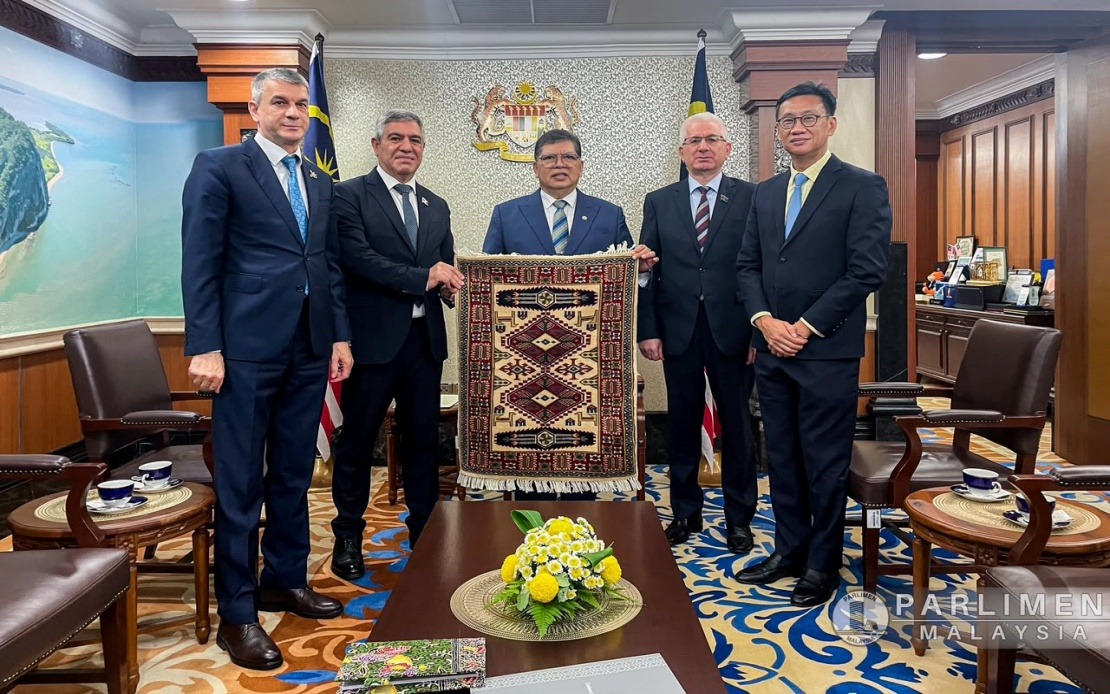
A parliamentary delegation from Azerbaijan has concluded a working visit to Malaysia aimed at expanding cooperation across political and commercial channels. Led by Vugar Bayramov, who heads the Working Group for Azerbaijani-Malaysian Interparliamentary Relations in the Azerbaijani Parliament, and accompanied by fellow parliamentarian Bakhtiyar Aliyev, the mission reflects deepening engagement between Baku and Kuala Lumpur at a time when regional dynamics are shifting across multiple fronts.
The timing of this visit carries particular significance for Southeast Asia's growing relationships with nations beyond the immediate region. Azerbaijan, a strategically positioned country at the intersection of Europe and Asia, has been actively pursuing trade partnerships and diplomatic engagement with emerging markets. Malaysia, as the largest economy in ASEAN with a substantial Muslim-majority population and established business networks across the Islamic world, represents an attractive partner for Caucasian interests seeking market access and institutional partnerships.
During their stay, the Azerbaijani representatives conducted a series of high-profile meetings with Malaysia's parliamentary leadership. A courtesy call on Dewan Rakyat Speaker Tan Sri Johari Abdul established formal acknowledgment of the visit at the highest legislative level. These protocol engagements serve as foundational moments for future parliamentary exchange programmes and legislative cooperation on matters of mutual interest, from trade regulation to regional security frameworks.
Beyond ceremonial interactions, the delegation engaged substantively with Malaysian parliamentarians overseeing international affairs. Wong Chen, who chairs the Special Select Committee on International Relations and International Trade, participated in discussions centred on bilateral economic prospects and trade facilitation. Similarly, Zahir Hassan, leading the West Asia Friendship Group, brought expertise on regional dynamics that could inform collaborative positions on international forums where both nations participate.
The meeting with Dewan Negara President Datuk Awang Bemee Awang Ali Basah underscored the bicameral nature of Malaysia's parliamentary oversight and the comprehensive approach both countries are adopting. By engaging both chambers and their respective leadership, Azerbaijan demonstrated respect for Malaysia's institutional structure while creating multiple pathways for future dialogue at different legislative levels.
The economic dimension of the visit emerged as particularly substantive. Meetings with S. Gnanasambanthan, secretary-general of the Malaysian National Chamber of Commerce and Industry, and representatives from over twenty Malaysian business entities transformed the delegation's mission into a practical commercial prospecting exercise. This B2B engagement model reflects modern diplomatic practice, where government representatives actively facilitate private sector networking rather than simply conducting state-to-state formalities.
Conversations between Azerbaijani and Malaysian business representatives centred on concrete opportunities rather than generic expressions of goodwill. Discussion points included expanding bilateral trade volumes, identifying sectors suitable for investment collaboration, and establishing frameworks for ongoing business-to-business engagement. Such discussions plant seeds for commercial relationships that can develop independently of political cycles, creating economically rooted stability in the bilateral relationship.
Speaker Johari's subsequent public remarks elevated the visit beyond transactional metrics. His observation that diplomatic engagement operates ultimately through human connection and relationship-building reflects a philosophical approach gaining traction among parliamentarians navigating contemporary geopolitical complexity. In an era marked by great power competition and bloc formation, Johari's emphasis on people-centred diplomacy suggests Malaysia's determination to maintain open partnerships across diverse geographic and ideological spaces.
Johari's commentary about geopolitical uncertainties testing international relations resonates particularly in Southeast Asian contexts. Nations in this region have historically balanced relationships with multiple powers while avoiding forced alignment. Azerbaijan, similarly positioned between competing regional influences, may find Malaysia's diplomatic model instructive. The Azerbaijani delegation's visit suggests both countries recognise value in maintaining flexible, multi-directional engagement.
The institutional framework created through this visit—working groups, parliamentary exchanges, business forums—establishes mechanisms for sustained engagement beyond individual diplomatic moments. Such structures prevent relationships from depending on singular visits or specific personalities. They create pathways for regular communication, joint problem-solving, and gradual expansion of cooperation scope.
For Malaysian policymakers and business communities, the Azerbaijani overture opens consideration of Central Asian and Caucasian markets often overlooked in Southeast Asian strategic calculations. Azerbaijan's position within regional trade corridors connecting Europe, Central Asia, and potentially East Asia through evolving infrastructure projects creates potential for Malaysian firms seeking diversified international presence. Conversely, Malaysia's experience in Islamic finance, Islamic education, and moderate governance frameworks holds appeal for Azerbaijan's ongoing institutional development.
The visit demonstrates how parliamentary diplomacy continues serving essential functions alongside formal government channels. Lawmakers engaging in international missions develop personal relationships and policy understanding that inform legislative actions and committee work. This grassroots diplomatic engagement builds constituencies within parliaments supportive of bilateral cooperation, creating multiple anchors for the relationship.
Looking forward, the success of this initial parliamentary delegation visit likely sets precedent for reciprocal engagement. Malaysian parliamentarians visiting Baku would further deepen institutional familiarity and create balanced relationship dynamics. Regular exchanges, bilateral parliamentary forums, and joint committees on specific sectors could mature from this foundation, gradually transforming Azerbaijan and Malaysia from distant diplomatic acquaintances into substantive partners with embedded institutional cooperation.

