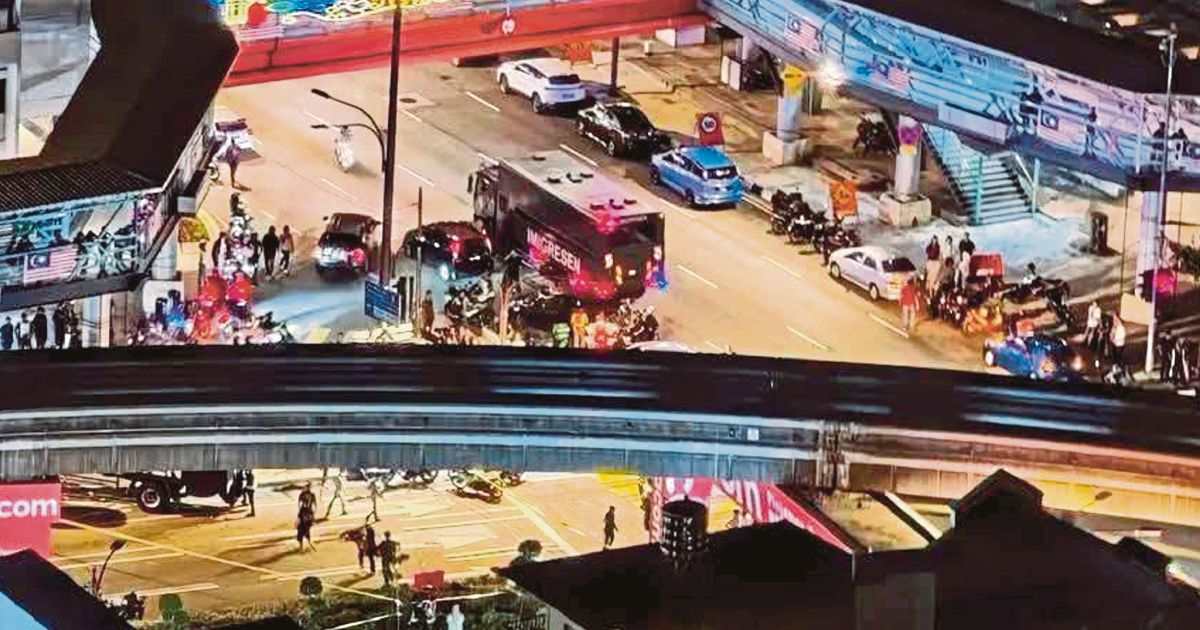
Investigators have launched a comprehensive examination of video material gathered from multiple sources as they work to establish the precise circumstances surrounding a fatal vehicular accident in Kuala Lumpur's busy commercial district. The tragedy, which unfolded early yesterday on Jalan Sultan Ismail, involved an Immigration Department lorry and claimed the lives of a man and two children. The police-led inquiry is now focused on reconstructing the sequence of events through available dashcam and closed-circuit television footage, representing a critical element of the initial investigation phase.
The collision marks a significant incident on one of the capital's major thoroughfares, drawing immediate police and emergency response attention. Jalan Sultan Ismail remains a key arterial route connecting various commercial and administrative zones within the city, making traffic safety on this corridor a persistent concern for municipal authorities. The involvement of an official government vehicle in this fatal incident has also prompted heightened scrutiny and inter-agency coordination.
Video evidence has become increasingly valuable in modern traffic accident investigations, allowing forensic specialists to establish timelines, identify causative factors, and determine responsibility with greater precision than ever before. Dashcam footage from vehicles in the vicinity can capture vehicle movements, traffic signal compliance, speeds, and driver behavior in the moments preceding impact. Similarly, CCTV systems strategically positioned throughout urban areas provide independent perspectives that help corroborate or clarify the narrative constructed from other sources.
The loss of three family members in a single incident represents a profound tragedy with rippling consequences for extended family networks and communities. The death of a father alongside his two daughters underscores the randomness of fatal traffic accidents and the vulnerability of families even during routine travel. Such incidents often trigger public discourse surrounding road safety standards, enforcement mechanisms, and the conduct of official vehicle operators who carry additional responsibility when piloting government-owned transport.
Police investigations into fatal motor vehicle accidents typically proceed through several parallel tracks. Beyond video analysis, detectives will interview eyewitnesses, examine damage patterns on both vehicles, review maintenance records for the truck, assess weather and road conditions at the time, and obtain toxicology reports to exclude impairment as a contributing factor. Each data point contributes to a comprehensive reconstruction that either affirms preliminary theories or reveals unexpected causative elements.
The Immigration Department, as the government entity operating the involved vehicle, faces its own internal review processes and potential accountability considerations. Official departments operating commercial vehicles maintain responsibility standards that exceed those of private motorists, given their status as public servants handling state assets. Insurance assessments will also proceed parallel to police investigations, potentially involving multiple parties and coverage determinations.
For Malaysian road users, fatal accidents involving government vehicles inevitably prompt reflection on safety culture across the public sector. Official drivers often operate under time pressures and volume commitments that may create competing incentives against cautious driving practices. Enhanced training protocols and enforcement mechanisms targeting official vehicle operators represent potential policy responses that authorities may consider following conclusive investigation outcomes.
The timing of the accident—early morning on a major commercial street—raises questions about traffic volume, visibility conditions, and the presence of commuter vehicles during what may have been peak movement hours. These temporal and spatial factors influence accident probability and severity in measurable ways, informing broader traffic management strategies that municipal and federal authorities deploy across the capital.
As investigations proceed, grieving family members face not only overwhelming personal loss but also the bureaucratic processes accompanying formal accident inquiries. Coroner's inquests, insurance settlements, and potential civil litigation may extend for months, prolonging the traumatic experience for survivors. Meanwhile, the broader Malaysian motoring public continues operating on roads where such tragedies can strike without warning, highlighting the persistent dangers embedded within vehicular transport systems despite modern safety features and enforcement efforts.
The commitment to thorough video-based investigation reflects professional policing standards now expected in modern traffic inquiries. By systematically examining available footage and integrating findings with physical evidence and witness testimony, investigators can construct authoritative accounts of how fatal accidents occur, potentially identifying systemic factors or individual culpability. Such findings occasionally influence subsequent policy adjustments or enforcement emphasis shifts when patterns emerge across multiple incidents.

