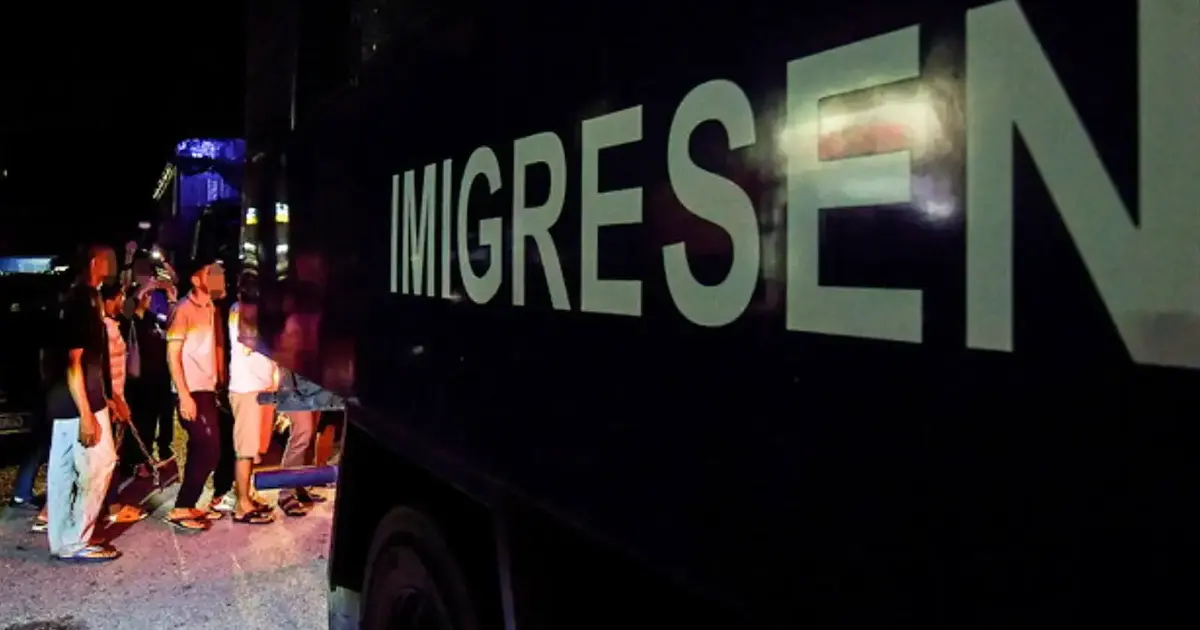
Malaysian immigration enforcement officers conducted a sweeping midnight operation in Pudu, detaining 186 individuals suspected of residing illegally within the country. The coordinated raid, carried out under strict operational security, resulted in the arrest of migrants believed to be in breach of immigration regulations governing their authorized period of stay and mandatory travel documentation requirements.
The detainees now face investigation on multiple grounds, including charges of overstaying their permitted duration in Malaysia and failure to maintain valid travel documentation as mandated by national immigration law. Such infractions represent some of the most commonly prosecuted violations under Malaysia's Immigration Act, which establishes clear protocols for foreign nationals' legal residence and documentation obligations. The distinction between temporary visitors, work permit holders, and long-term residents carries significant legal weight in determining the severity of charges and potential penalties.
Pudu, a densely populated area in central Kuala Lumpur known for its diverse migrant communities and informal commercial activity, has historically been a focal point for immigration enforcement operations. The neighborhood's complex urban landscape, with its network of residential blocks, hostels, and informal accommodations, creates both logistical challenges and enforcement opportunities for authorities seeking to identify undocumented residents. The strategic timing of midnight operations reflects standard immigration enforcement practice, designed to maximize apprehension success rates when subjects are most likely to be present at residential locations.
The scale of this single operation underscores the ongoing challenge Malaysia faces in managing irregular migration flows. Southeast Asia has witnessed substantial population movements driven by economic disparities, regional conflicts, and employment opportunities, with Malaysia remaining a primary destination for migrants from neighboring countries and beyond. The country's relatively developed economy and labor market demand create powerful pull factors, even as enforcement capacity strains under the volume of potential violations.
Detailed protocols governing detention and processing of undocumented migrants require authorities to record personal information, conduct identity verification, and initiate administrative or legal proceedings within specified timeframes. Those held must receive access to legal counsel and consular representatives, depending on their nationality. The immigration department typically coordinates with relevant embassies to facilitate orderly processing and eventual repatriation where appropriate. The logistical complexity of managing 186 simultaneous detentions demands significant departmental resources and coordination between multiple agencies.
Malaysia's approach to immigration enforcement balances compliance with international obligations regarding migrant protection against domestic imperatives to maintain border integrity and public order. The country remains signatory to certain United Nations conventions addressing migrant welfare, though immigration policy continues prioritizing national sovereignty in determining admissions and removal procedures. Recent years have witnessed increased public and policy attention to migrant vulnerabilities, including exposure to trafficking, labor exploitation, and inadequate access to healthcare and legal protections.
The prevalence of overstaying violations reflects several underlying dynamics within Malaysia's immigration system. Temporary visitor passes, work permits, and other authorized entry categories often expire, yet enforcement mechanisms struggle to maintain comprehensive tracking of the estimated millions of foreign nationals present in the country at any given time. Employment in informal sectors frequently obscures the immigration status of workers, while some migrants deliberately remain beyond their authorized periods, betting that detection probability remains manageable. Economic necessity and limited legal pathways for formal employment in certain industries perpetuate cycles of irregular status.
For Malaysian society, undocumented migration generates complex trade-offs. While irregular workers contribute labor to sectors facing domestic recruitment challenges and economic growth depends partly on migrant workers, unauthorized residence creates legitimate concerns regarding public health, security screening, taxation, and social service provision. Communities hosting high concentrations of undocumented migrants sometimes experience strain on basic services and heightened security perceptions, even where statistical evidence of crime correlations remains contested. These tensions shape political discourse around immigration policy and enforcement intensity.
The operation reflects immigration authorities' continued commitment to active enforcement despite resource constraints and the logistical complexity of the task. Malaysia maintains specialized immigration investigation units and conducts regular raids across major urban centers, though the relative frequency and scale of operations vary seasonally and according to enforcement priorities. Intelligence gathering and tip-offs from community members often precede targeted raids, though authorities also conduct periodic sweep operations in known high-risk areas.
Moving forward, the 186 detainees will proceed through the formal immigration system, facing potential fines, detention, and deportation depending on individual circumstances and the severity of documented violations. Repeat offenders typically face enhanced penalties. The operation, while removing a significant cohort from illegal status, represents merely one enforcement action within an ongoing cycle of detention and repatriation that characterizes Malaysia's approach to managing undocumented migration populations.
The incident highlights persisting gaps between Malaysia's stated immigration enforcement objectives and practical capacity constraints. As Southeast Asia continues experiencing substantial migration pressures, policymakers grapple with balancing economic demands for migrant labor, humanitarian concerns regarding vulnerable populations, and domestic expectations for effective border management. The results of this Pudu operation will likely inform ongoing discussions regarding enforcement strategies and resource allocation within Malaysia's immigration apparatus.
%22%2F%3E%3C%2Fpattern%3E%3C%2Fdefs%3E%3Crect%20width%3D%22100%25%22%20height%3D%22100%25%22%20fill%3D%22url(%23ph14rfdg)%22%2F%3E%3Crect%20width%3D%22100%25%22%20height%3D%22100%25%22%20fill%3D%22url(%23ph14rfdp)%22%2F%3E%3Ctext%20x%3D%2250%25%22%20y%3D%2250%25%22%20text-anchor%3D%22middle%22%20dominant-baseline%3D%22central%22%20fill%3D%22rgba(255%2C255%2C255%2C0.95)%22%20font-family%3D%22Georgia%2C%20'Times%20New%20Roman'%2C%20serif%22%20font-weight%3D%22700%22%20font-size%3D%22272%22%20letter-spacing%3D%22-0.02em%22%3EAnwar%3C%2Ftext%3E%3C%2Fsvg%3E)