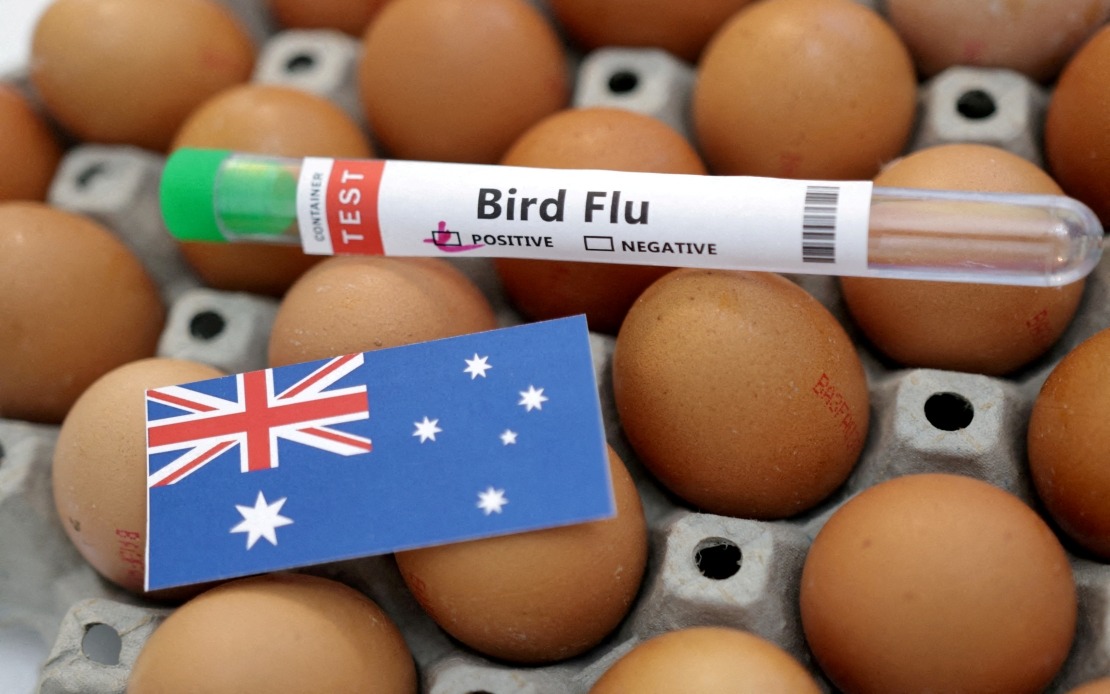
Australia is confronting a rapidly expanding avian influenza crisis, with confirmed and presumed positive cases of the deadly H5N1 strain climbing above 200 as of Saturday, according to the federal Department of Agriculture, Fisheries and Forestry (DAFF). The scale of the outbreak has accelerated dramatically over the past month, raising serious concerns about potential spillover to commercial poultry operations and broader implications for regional food security. For Southeast Asian nations including Malaysia, which have experienced their own avian influenza challenges in recent years, Australia's struggle underscores the persistent threat posed by H5N1 and the speed with which wild bird populations can disseminate highly pathogenic variants across vast territories.
The statistical trajectory of the Australian outbreak is alarming. From just 52 cases documented at the close of July, the nation recorded 203 confirmed or presumed positive H5N1 cases by early August, representing a 290 per cent jump in a single month. This explosive growth pattern mirrors similar wildlife-driven outbreaks observed in other regions and demonstrates how quickly H5N1 can establish itself in new geographic areas, particularly among seabird populations that frequently migrate across long distances. The velocity of this increase has prompted urgent action from state authorities seeking to establish protective barriers before the virus gains foothold in domestic bird populations, where transmission and economic damage could multiply exponentially.
South Australia bears the heaviest burden of the current outbreak, accounting for nearly three-quarters of confirmed cases. The state recorded 147 infections in total, with 28 additional presumed positive cases confirmed on Saturday alone. Notably, all 28 of these new South Australian detections occurred in wild seabirds, consistent with the outbreak's origin pattern in free-ranging avian populations. This concentration suggests the virus has achieved significant circulation within particular wild bird populations, likely waterbirds and seabirds frequenting coastal and inland waterway regions where ecological conditions favour transmission between animals.
Victoria, Australia's second-most affected jurisdiction, has reported 43 cases distributed unevenly across the state. The Victorian government disclosed that 36 birds tested positive for H5N1 during Thursday and Friday alone, with these specimens discovered in the state's western regions adjacent to the South Australian border. This clustering near the state boundary reflects the natural movement patterns of migratory birds and the difficulty in imposing biological containment boundaries on wildlife. The concentration of newly detected cases in Victoria's border areas suggests the outbreak's epicentre is expanding its geographic footprint, advancing northward and westward through wild bird populations.
In response to this deteriorating situation, Victoria's government implemented a preemptive biosecurity measure targeting the commercial poultry industry. On Friday, authorities announced that poultry producers along the state's southern coast—encompassing the Melbourne metropolitan region and surrounding areas—must house their flocks indoors for an initial 14-day period if their operations contain at least 50 birds. This threshold captures small-scale commercial producers and sizeable backyard operations, representing a significant intervention in farming practices. The measure's purpose is straightforward: preventing infected wild birds from making direct contact with domestic poultry, thereby interrupting the transmission chain that could transform an outbreak among wildlife into a catastrophic event affecting Australia's egg and poultry production sectors.
Victorian Agriculture Minister Michaela Settle framed the indoor housing requirement as a precautionary approach designed to safeguard the state's poultry industry from H5N1 incursion. The 14-day window represents an initial containment phase; authorities may extend these restrictions if epidemiological evidence suggests the measure requires continuation. Such targeted interventions reflect a strategy of geographic risk management, concentrating protective measures in regions where wild bird surveillance data indicates elevated H5N1 presence. This approach avoids blanket restrictions that might cripple production but still maintains vigilance in vulnerable zones.
The outbreak's containment within wild bird populations thus far contrasts sharply with scenarios in other countries where H5N1 breached poultry sector defences, resulting in millions of culled birds and substantial economic losses. Australia's rapid detection capabilities and state-level biosecurity coordination have prevented such escalation so far, yet the continued geographic expansion and the sheer number of infected wild birds suggest sustained risk. The 203-case milestone represents not a plateau but potentially midpoint in an outbreak trajectory that may continue accelerating as southern hemisphere winter progresses and wild bird movements intensify.
For Malaysia and other Southeast Asian nations, Australia's H5N1 episode carries instructive lessons about outbreak velocity and the importance of early, aggressive intervention. Despite Australia's advanced surveillance infrastructure and developed economy, the virus has proliferated from 52 to 203 cases in weeks, demonstrating H5N1's capacity to spread faster than many governments anticipate. Malaysia itself has contended with periodic avian influenza detections in both wild and domestic bird populations, and this Australian experience reinforces the necessity of maintaining robust monitoring systems in wild bird populations and rapid response protocols when cases are identified.
The indoor housing mandate Victoria has introduced represents a model of proportionate intervention that other nations might consider. By targeting specific geographic areas with elevated risk and imposing time-limited measures rather than indefinite restrictions, authorities can balance disease prevention with economic viability. Yet implementation success depends on farmer compliance and adequate provision of housing capacity—challenges that Australian producers will navigate while smaller-scale or backyard operators in Malaysia and the region might find more daunting. The absence of reported human infections in Australia remains crucial; H5N1 rarely jumps to humans, but when it does, mortality rates approach 50 per cent, making any poultry industry outbreak a potential public health concern despite wildlife origins.

