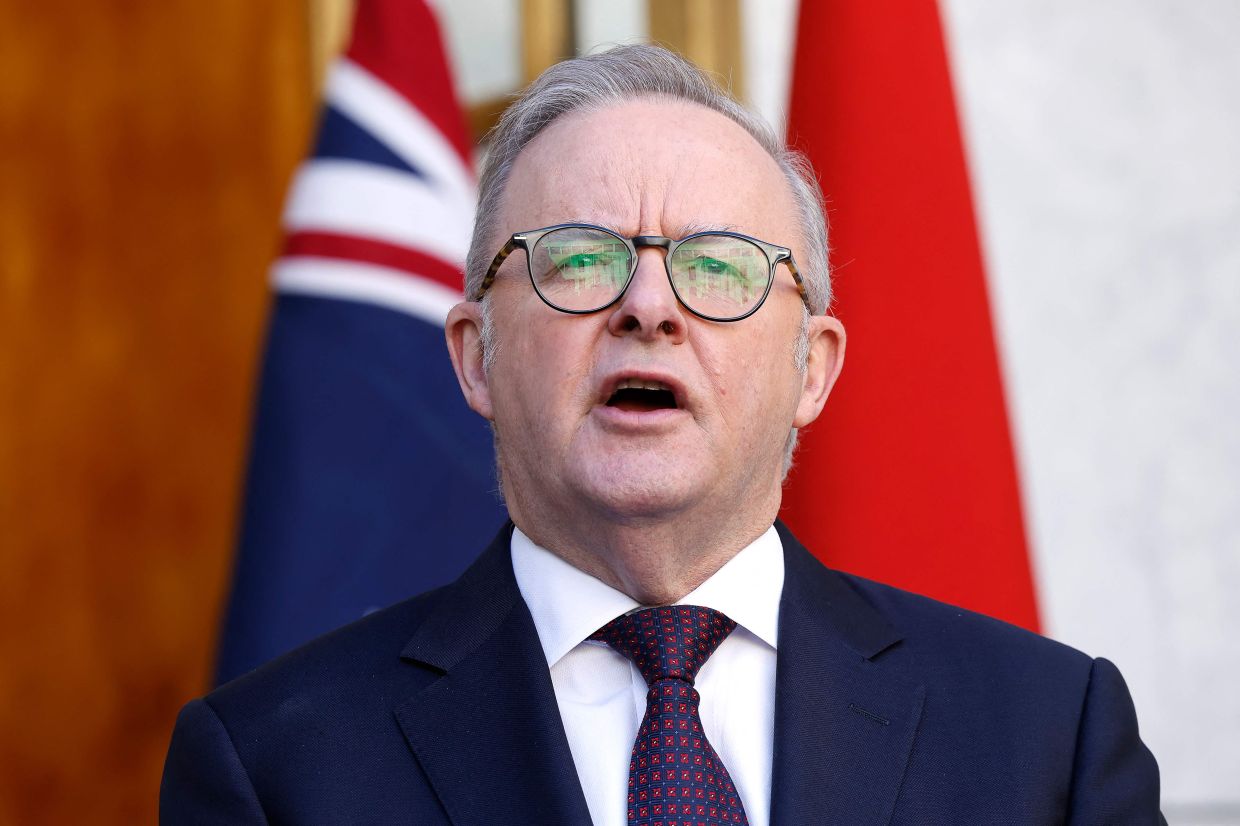
Australian Prime Minister Anthony Albanese on Tuesday refused to apologise for remarks about a gift from Japanese counterpart Sanae Takaichi, despite mounting pressure from political opponents who condemned the comments as disrespectful. The controversy centres on crude banter captured during a podcast interview at his official residence, in which the Australian leader joked about the nature of a premium melon Takaichi had presented during her visit to Australia in May. When asked directly in parliament whether he would offer an apology for what critics characterised as insulting conduct, Albanese firmly rejected the framing of the question, asserting instead that his intentions had been misunderstood.
The incident represents a continuation of diplomatic communication troubles for Albanese, who had already faced criticism and issued an apology just weeks earlier over separate comments made during the same interview with Bush Deep podcast host Nikki Osborne. In those earlier remarks, the Prime Minister made crude references to Australian singer Kylie Minogue, prompting swift backlash and a public statement of regret. The latest controversy, however, suggests Albanese has taken a different approach, choosing to stand firm rather than acquiesce to demands from opposition lawmakers seeking another formal apology.
During his conversation with Osborne at his residence, Albanese described the melon as an unusual present, prompting the host to enquire whether Takaichi had brought the fruit through Australian customs regulations. In response, the Prime Minister made the comment "got a couple of melons," a remark the host appears to have interpreted as innuendo by responding that Takaichi "came in looking like Pamela Anderson." This exchange, though seemingly lighthearted at the time, has since triggered significant diplomatic discomfort as the full context became public knowledge.
The melon itself carries considerable cultural and economic significance in Japan, where premium varieties are treated as prestige gifts and luxury commodities commanding exceptionally high prices in specialist markets. According to Japan's former ambassador to Australia, these elite specimens can retail for more than AUS$270, equivalent to approximately US$190. The fruit's status as a thoughtful diplomatic gesture underscores why Takaichi's gift would have been intended as a meaningful symbol of goodwill between the two nations. This context makes the crude joking about the present particularly problematic from a diplomatic perspective, as it diminishes what was clearly meant to be a respectful overture.
Australia's opposition leadership has seized upon the incident as evidence of what they view as disrespectful behaviour unbecoming a Prime Minister. Opposition lawmakers have called for a formal apology, characterising Albanese's remarks as insulting to both Takaichi personally and to Japan as a nation more broadly. The political opponents argue that such conduct damages bilateral relations at a moment when Australia and Japan are strengthening defence and security partnerships, particularly in response to regional strategic developments in the Indo-Pacific.
Foreign Minister Penny Wong moved to defend the Prime Minister, rejecting characterisations of the comments as deliberately insulting. Wong stated that Albanese had been explicit that he did not intend for his remarks to be interpreted in the manner opposition members were suggesting. Her intervention suggests the government has decided to take a unified stance in resisting what it views as partisan opportunism, rather than treating the controversy as a serious diplomatic breach warranting contrition. The Foreign Minister's comments indicate the government believes the matter has been overblown by political rivals seeking to embarrass the administration.
Albanese himself emphasised his personal relationship with the Japanese leader, describing Takaichi as "a friend of Australia and a friend of mine." This assertion appears designed to undercut opposition claims that his comments reflected genuine disrespect toward the Japanese Prime Minister. By highlighting the personal rapport between the two leaders, Albanese attempts to frame the controversy as a misunderstanding rather than evidence of contempt. The statement implicitly suggests that those interpreting his remarks as insulting are either misreading his intentions or deliberately distorting his words for political advantage.
The controversy arrives at a sensitive moment for Australia-Japan relations. Both nations have been deepening strategic cooperation on defence and security matters, with Japan emerging as a crucial regional partner in Australian efforts to maintain regional stability and counter strategic challenges from China. Any suggestion of disrespect toward Japanese leadership carries the potential to undermine diplomatic goodwill at a time when both countries are seeking to strengthen institutional ties and defence coordination. The incident thus carries implications beyond the immediate political theatre in Canberra.
The podcast interview itself appears to have been a relatively informal, conversational affair conducted at Albanese's official residence, the kind of setting where Australian political leaders often attempt to appear relatable and unscripted to general audiences. However, the episode demonstrates the contemporary reality that remarks made in what might be intended as off-the-record or casual contexts can quickly circulate widely and attract scrutiny from diplomatic and political quarters. For regional observers in Southeast Asia and the broader Indo-Pacific, the controversy illustrates how domestic political pressures can occasionally complicate bilateral relationships that governments are otherwise committed to strengthening.
The refusal to apologise may reflect Albanese's assessment that issuing a second apology in as many weeks would compound perceptions of weakness or poor judgment. Alternatively, the government may believe that acceding to opposition demands would establish a precedent encouraging further complaints over matters of interpretation and tone rather than substantive policy disagreement. Either way, the Prime Minister's stance suggests confidence that the diplomatic relationship with Japan is sufficiently robust to weather the controversy without requiring formal contrition.
For Australia's standing in regional diplomacy, the incident underscores the importance of maintaining appropriate decorum in public statements, particularly regarding fellow leaders with whom partnerships are being developed or expanded. While Albanese's supporters may argue that much has been made of a small matter, the episode serves as a reminder that words attributed to national leaders carry weight beyond their immediate context, particularly when those leaders hold the highest office and represent their nation's interests internationally.

