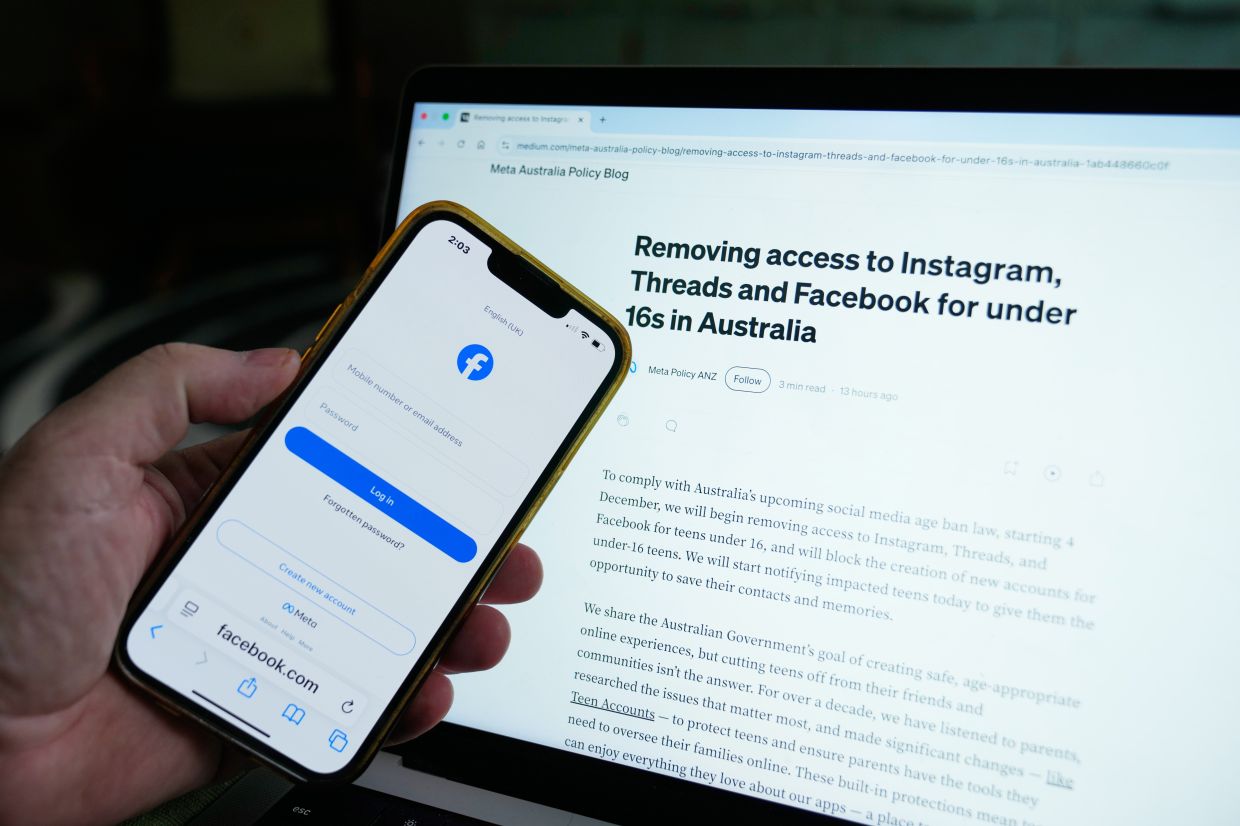
Prime Minister Anthony Albanese has condemned the decision by the opposition and minor parties to refer proposed amendments to a Senate inquiry, warning that the eight-week delay will allow social media platforms to circumvent new regulatory requirements on the child social media ban introduced in December for users under 16 years old.
The government submitted legislation to Parliament designed to substantially strengthen the enforcement capabilities of eSafety Commissioner Julie Inman Grant, the nation's chief online safety regulator. Under current rules, Inman Grant can only demand information from platforms, but the amendments would grant her the power to demand documents and detailed records of their compliance efforts. This distinction carries significant practical implications: while information requests can be met with vague responses, document demands create verifiable accountability trails that are harder for platforms to manipulate or selectively disclose.
Albanese articulated his frustration in an interview with the Australian Broadcasting Corporation, emphasising that the timing of legislative passage directly affects regulatory effectiveness. He contended that delaying passage until after the Senate inquiry concludes in eight weeks creates a window of opportunity for platforms to delete records, remove evidence of non-compliance, and destroy digital trails that would demonstrate their failure to exclude underage users. The Prime Minister stressed that immediate passage would have enabled the Commissioner to issue demands with immediate effect, followed swiftly by fines for non-compliance—a cascade of consequences that becomes logistically possible the moment legislation receives Royal Assent.
The amendments also propose to double the maximum financial penalty for platforms failing to take reasonable steps to exclude children from A$99 million, equivalent to approximately US$68 million or RM276.56 million. Additionally, they would empower Inman Grant to demand information from third parties including age assurance technology providers, enabling her to independently verify whether platforms are accurately reporting their compliance measures or misrepresenting their technical capabilities.
However, the conservative Liberal Party opposition and the Greens, citing concerns about the legislation's design and implementation, referred the bill to an eight-week Senate inquiry on July 2. This procedural move reflects deeper scepticism about the ban's effectiveness and design. The Labour government, which does not command a Senate majority, finds itself unable to override this delay through parliamentary mechanism, placing the amendments in extended limbo while the regulatory situation on the ground remains unchanged.
David Shoebridge, a Greens Senator who has consistently opposed the social media ban, questioned the logical foundation of the enforcement mechanism itself. He argued that doubling penalties that have never been utilised in the five months since the ban commenced does not constitute meaningful regulation. Shoebridge's position reflects an ideological critique: that financial penalties imposed but never actually applied signal regulatory theatre rather than genuine enforcement capacity, and that increasing theatrical penalties without demonstrating willingness to use existing ones suggests deeper problems with either the law's design or the regulator's independence.
The opposition's communications spokesperson, Senator Sarah Henderson, characterised the entire framework as fundamentally flawed. She contended that the original legislation was hastily drafted, poorly implemented, and already demonstrably ineffective, making incremental amendments insufficient to address systemic deficiencies. Henderson's argument suggests that rather than expanding the eSafety Commissioner's powers through these amendments, Parliament should reconsider the ban's foundational architecture—a position that implies the opposition may push for more comprehensive legislative overhaul rather than simply endorsing strengthened enforcement of existing rules.
The stark disparity between initial compliance reports and subsequent monitoring data underscores why these enforcement amendments matter substantively. When the ban took effect on December 10, the government reported that platforms removed, deactivated, or restricted accounts for more than 5 million children—figures presented as evidence of swift, comprehensive compliance. However, eSafety Commissioner Inman Grant's March report delivered a sobering reassessment: seven in ten children who held accounts on restricted platforms on the ban's commencement date remained actively present on Facebook, Instagram, Snapchat, and TikTok. This data revelation transformed the narrative from apparent regulatory success to documented failure, suggesting either that the initial 5 million figure represented temporary account restrictions later reversed, or that verification methods were inadequate.
Inman Grant escalated pressure in April by signalling her intention to pursue court action against Facebook's parent company Meta, Instagram, Snapchat, TikTok, and YouTube, alleging they had not implemented reasonable measures to exclude children. Simultaneously, she acknowledged being satisfied with compliance efforts from X, Kick, Reddit, Threads, and Twitch, creating a two-tiered landscape where the world's most widely-used platforms were actively resisting while smaller competitors demonstrated greater cooperation. This distinction raises questions about whether enforcement capacity exists to compel large technology corporations that generate substantial revenue from younger demographic engagement.
Communications Minister Anika Wells confirmed that eSafety has provided monthly progress reports since March, and critically stated that these reports show no measurable improvement—a statement that explains the urgency driving the government's push for enhanced enforcement powers. If the ban has produced no discernible improvement in child protection despite five months of implementation, then either the ban requires substantially different enforcement mechanisms, or the fundamental approach needs reconceiving entirely.
The Senate inquiry delay reflects how Australia's decentralised legislative architecture can create obstacles to executive regulatory objectives, particularly when the government lacks upper house control. For Malaysian readers observing regulatory approaches to online safety, the Australian case demonstrates both the potential and the complications of age-restricted platform access: while such restrictions can theoretically protect younger users from harmful content, enforcement against sophisticated technology companies operating across multiple jurisdictions requires enforcement powers that developing regulations have often struggled to define and deploy effectively.
The outcome of this Senate inquiry will likely influence other jurisdictions considering similar bans, including Malaysia, which has recently expanded its regulatory framework for digital platforms. If Australia's enforcement amendments proceed and subsequently demonstrate effectiveness, they may serve as a model for Southeast Asian regulators seeking to protect minors online. Conversely, if the inquiry results in scaling back enforcement powers or fundamentally revising the ban's approach, it could provide cautionary lessons about the limitations of age-based regulatory tools when platforms have commercial incentives to maintain user engagement across all age groups.

