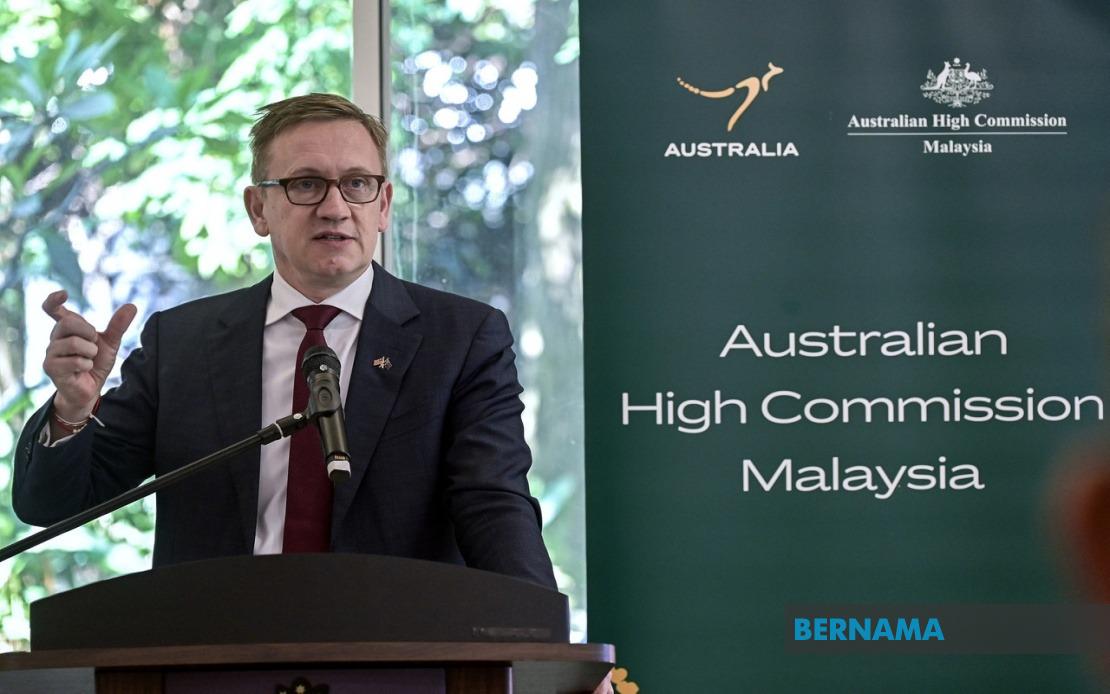
The Australian High Commission in Malaysia has unveiled the Australia Awards-Malaysia Semester Programme, a freshly minted scholarship initiative designed to give Malaysian undergraduates and postgraduate students the chance to undertake a portion of their tertiary education across the Tasman Sea. The launch, officiated by Australia's Assistant Minister for International Education Julian Hill in Kuala Lumpur, represents a deliberate strategic investment in what Canberra views as a cornerstone of long-term bilateral partnership: the cultivation of lasting personal and professional networks among young people from both nations.
Hill framed the initiative as an expression of Australia's enduring commitment to fostering people-to-people connections that transcend formal diplomatic channels. His argument carries particular weight in Southeast Asia, where educational mobility has historically served as a soft-power tool and a means of building goodwill. More than half a million Malaysians have previously studied in Australia, according to Hill, creating an existing foundation of alumni who have embedded themselves across Australian industries and professions. The hope articulated by Australian officials is that these returning scholars will maintain psychological and professional ties to Australia, becoming informal ambassadors who strengthen trade relationships and economic cooperation long after their formal studies conclude.
The programme's mechanics are straightforward yet comprehensive. Malaysian students enrolled at Australian university branch campuses operating within Malaysia—currently Curtin University Malaysia, Monash University Malaysia, and the University of Wollongong Malaysia, with Swinburne University of Technology Sarawak Campus eligible to join—can apply for support covering the full cost of studying in Australia for up to two semesters. This includes international airfare, residential accommodation, living expenses, visa fees, travel insurance, and ancillary costs that might otherwise deter talented but financially constrained students from pursuing this opportunity. The pilot cohort, comprising sixteen Malaysian students, has already commenced studies in Australia following the July intake, signalling that this is not merely aspirational policy but an operational programme with immediate momentum.
What distinguishes this initiative from previous scholarship arrangements is its emphasis on semester mobility rather than complete degree migration. By allowing students to remain enrolled at Malaysian institutions while completing a substantial portion of their studies abroad, the programme creates a hybrid model suited to the practical realities of many Malaysian families and the economic logic of Australian universities. Branch campuses in Malaysia have become significant income streams for Australian tertiary institutions, and this scheme incentivises continued enrolment at these campuses while simultaneously deepening the educational exchange experience. It is, in essence, a mechanism to convert existing Malaysian students into temporary Australian residents, a category with documented long-term benefits for bilateral relations.
Hill's framing of reciprocity is noteworthy and reveals how Australia conceptualises its educational diplomacy in the region. He explicitly stated that the relationship must flow in both directions, expressing hope that more Australian students would reciprocate by studying at these branch campuses or through complementary programmes such as the New Colombo Plan. This emphasis on mutual benefit appears designed to forestall perceptions in Malaysia that Australia views its education sector primarily as a market to exploit. By positioning the scheme as part of a broader two-way exchange, Canberra signals respect for Malaysian institutions and acknowledgment that knowledge flows should benefit both nations.
The research and innovation dimension adds another strategic layer to this initiative. Hill highlighted that Australian universities in Malaysia function not merely as teaching factories but as genuine research institutions capable of generating knowledge and fostering collaborative problem-solving on transnational challenges. He specifically identified medical science, clean energy, mining, and agriculture as priority areas where academic cooperation between the two countries could yield tangible benefits. For Malaysia, this framing suggests that hosting Australian branch campuses and participating in such exchange programmes offers opportunities for Malaysian researchers and students to engage with cutting-edge work in fields directly relevant to the country's economic diversification ambitions and sustainability goals.
The financial commitment backing this initiative reveals Australian government seriousness about the venture. Hill indicated that Canberra has allocated funding for an initial four-year period aligned with its budget cycle, though he expressed hope that sustained performance would justify converting this into a permanent programme. Four years provides sufficient time to build institutional momentum, generate measurable outcomes in terms of alumni networks and bilateral engagement metrics, and construct a compelling case for long-term continuation. For Malaysian stakeholders evaluating whether to encourage participation among their students and academic staff, this timeframe offers reasonable confidence that the programme will remain accessible during a typical undergraduate degree cycle.
The presence of MARA Chairman Dr Asyraf Wajdi Dusuki at the launch signals Malaysian government endorsement and suggests that this initiative aligns with broader national strategies concerning human capital development and international education partnerships. MARA's involvement indicates coordination between Australian diplomacy and Malaysian institutional frameworks, reducing bureaucratic friction and potentially creating pathways for the scholarship to reach Malaysian students who might not have discovered it through conventional advertising channels. This institutional alignment matters considerably in Southeast Asia, where governmental blessing often determines whether programmes achieve critical mass participation.
Context matters significantly when evaluating this programme's implications for the Malaysian education sector and bilateral relations. Australia faces mounting competition from other English-speaking nations and from rising regional powers in attracting Malaysian students. The United States, Canada, and United Kingdom have long-established Malaysian student communities, while closer regional alternatives such as Singapore increasingly appeal to Malaysian families seeking quality education without extensive international relocation. By introducing a scholarship programme specifically targeting Malaysian students already enrolled in Australian institutions, Canberra effectively removes a major barrier—cost—that might otherwise convince students to pursue alternative options. This is strategic competition disguised as generous educational cooperation.
The programme's emphasis on financial accessibility deserves particular scrutiny in the Malaysian context, where educational inequality remains pronounced despite significant progress in recent decades. By explicitly removing financial hardship as a barrier to international study, the scheme potentially democratises access to Australian education in ways that benefit lower and middle-income Malaysian families. This carries social as well as diplomatic implications. Students from provincial areas or modest economic backgrounds who might otherwise lack the means to study abroad now possess a pathway, provided they gain admission to the relevant Malaysian branch campuses. Over time, this could produce cohorts of Malaysian professionals with direct experience of the Australian education system and economy, potentially influencing capital flows, business relationships, and professional networks in ways advantageous to both nations.
For Australian universities themselves, the programme represents astute market development strategy. Rather than cannibalising enrolments at Australian campuses by creating attractive alternatives in Malaysia, the scheme uses Malaysian branch campuses as recruiting grounds for a semester or two in Australia. Students who taste the Australian experience during their studies have documented higher propensities to return for postgraduate qualifications, professional development, or extended work visas. The programme thus functions as a sophisticated customer acquisition mechanism, using public funds to subsidise private institutional benefits. This alignment of public diplomacy with commercial university interests characterises much contemporary educational exchange and warrants acknowledgment even as one recognises the genuine mutual benefits the programme offers.

