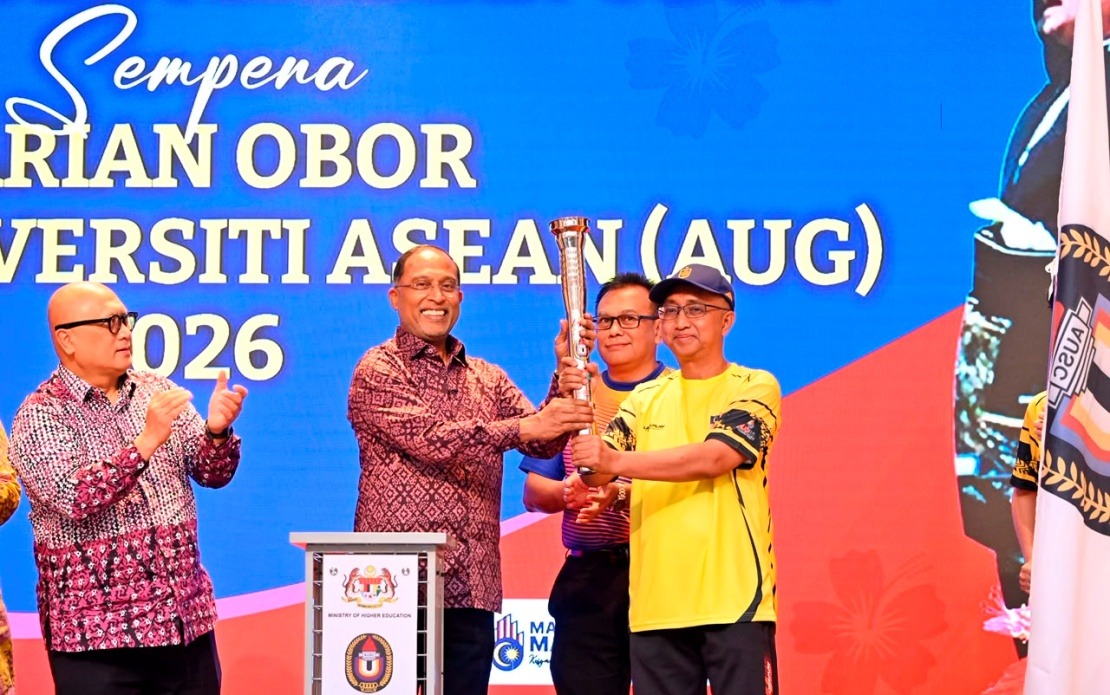
Malaysia's pursuit of excellence at the upcoming ASEAN University Games has gained symbolic momentum with the official torch run ceremony held at the Ministry of Higher Education headquarters in Putrajaya. The ceremonial lighting, conducted by Higher Education Minister Datuk Seri Dr Zambry Abd Kadir, represents more than administrative pageantry—it underscores the nation's commitment to fielding a competitive contingent at the region's premier university athletics competition. The handover of the torch to Malaysian contingent chief Prof Dr Mohammad Ismail, who doubles as Universiti Malaysia Kelantan's Deputy Vice-Chancellor for Student and Alumni Affairs, crystallises the interconnection between academic excellence and sporting prowess that the games are designed to celebrate.
The torch run ceremony carries particular weight given Malaysia's ambitions for the December event. Zambry's remarks to the gathered athletes emphasised the dual responsibility facing competitors—to pursue victory while simultaneously projecting Malaysia's image across ASEAN. His exhortation to "carry the Malaysian torch and the torch of victory" reflects a sentiment common in regional sports diplomacy, where athletic achievement becomes intertwined with national representation. For Malaysian student-athletes, the message is clear: success on the playing field translates directly to national prestige within the Southeast Asian community of nations.
The inaugural torch journey involved four accomplished athletes whose selection underscores the breadth of Malaysia's competitive roster. Andre Anura Anuar and Nani Sahirah Maryata, both representing Universiti Putra Malaysia in the long jump and shot put disciplines respectively, bring established credentials to Malaysia's track and field contingent. Their presence alongside karate competitor Thevendran Kaliana Sundram from Universiti Pertahanan Nasional Malaysia and taekwondo athlete Lee Hui Yee from Sultan Salahuddin Abdul Aziz Shah Polytechnic signals Malaysia's strength across multiple sporting disciplines. The deliberate inclusion of athletes from diverse institutions reflects the government's vision of distributing competitive opportunity across the nation's higher education ecosystem.
The torch run itself follows a carefully choreographed route designed to build momentum and institutional engagement. Beginning at MOHE's Putrajaya grounds, the flame proceeded to the Ministry of Tourism, Arts and Culture before returning to the starting point. However, this initial circuit represents merely the opening phase of an extended relay. The torch will subsequently visit Universiti Kebangsaan Malaysia, Universiti Putra Malaysia, the National Defence University, Universiti Malaya, and Universiti Teknologi MARA—essentially a comprehensive tour of Malaysia's premier tertiary institutions. This extended journey serves to galvanise student participation and institutional pride, transforming the torch run from a ceremonial formality into a nationwide campaign building anticipation toward December.
The scale of AUG 2026 underscores why Malaysia's preparation efforts command serious attention. Scheduled for December 10 to 19, the games will attract approximately 4,669 participants drawn from 11 ASEAN nations. This total encompasses 2,849 competing athletes and officials, supplemented by 700 referees and competition administrators, plus 920 volunteers coordinating logistical support. These figures represent a substantial mobilisation of human resources, reflecting the regional significance of an event that brings together Southeast Asia's university sports community. For Malaysia as the host nation, successful delivery of such an undertaking demands meticulous planning across accommodation, transportation, security, and competition logistics.
The competitive scope further illustrates the event's magnitude. Nineteen different sports will be contested across four distinct venues—Shah Alam, Kuala Lumpur, Serdang, and Bangi—positioned conveniently across the Klang Valley and Selangor region. This geographic distribution, while administratively challenging, provides accessibility for ASEAN delegations while showcasing Malaysia's sporting infrastructure and urban development. The chosen theme of "HOLISTIC.EXCELLENCE" projects an aspirational vision emphasising comprehensive human development rather than narrow athletic achievement alone. This thematic framing aligns with contemporary educational philosophy in Malaysia and across ASEAN, positioning university sports as instruments of character formation alongside performance excellence.
For Malaysian competitors, hosting advantage carries tangible implications. Familiarity with venues, climatic conditions, and logistical arrangements typically benefits the home contingent, provided domestic preparation adequately capitalises on these structural advantages. The torch run ceremony, by ceremonially commencing the countdown, signals to Malaysian universities that the window for intensive training and team preparation is narrowing. Institutional pride becomes a motivating factor—competing institutions will desire successful outcomes both for their athletes and for the prestige accruing to the host university. This competitive intensity among Malaysian institutions should theoretically elevate the overall quality of the national delegation.
Regional considerations add strategic dimension to Malaysia's approach. ASEAN University Games function as a proving ground for emerging talent within national sports systems, with successful performers often graduating to senior international competition. Malaysia's investment in this event reflects recognition that sustained competitive excellence requires careful development of junior talent pipelines. By hosting, Malaysia gains opportunities to scout regional competitors and benchmark its own emerging athletes against counterparts from Thailand, Indonesia, the Philippines, Vietnam, Singapore, and other ASEAN members. This intelligence-gathering function complements the direct competitive objectives, positioning the games as valuable within longer-term national sports strategy.
The institutional partnerships represented in the torch run relay also illuminate Malaysia's governance approach to university sports. Rather than concentrating programme administration within a single federal sports authority, responsibility is distributed across the Ministry of Higher Education in partnership with universities themselves. This model encourages institutional autonomy and competitive differentiation while maintaining government-level coordination. The ceremonial recognition of diverse universities—from research-intensive institutions like Universiti Malaya to specialised providers like the National Defence University and Sultan Salahuddin Abdul Aziz Shah Polytechnic—validates the broader higher education ecosystem's role in sporting development.
Looking ahead, the torch run signals that Malaysia's preparations have transitioned from administrative planning phases into visible, symbolic acceleration toward the December competition. With less than four months remaining, the intensity of training regimens should escalate correspondingly. The torch's journey through Malaysia's premier universities will provide visible reminders of the approaching competition and the opportunity for these institutions to contribute to national sporting achievement. For Malaysian athletes, the flame represents not merely historical ritual but tangible embodiment of the expectations and aspirations invested in their performances.

