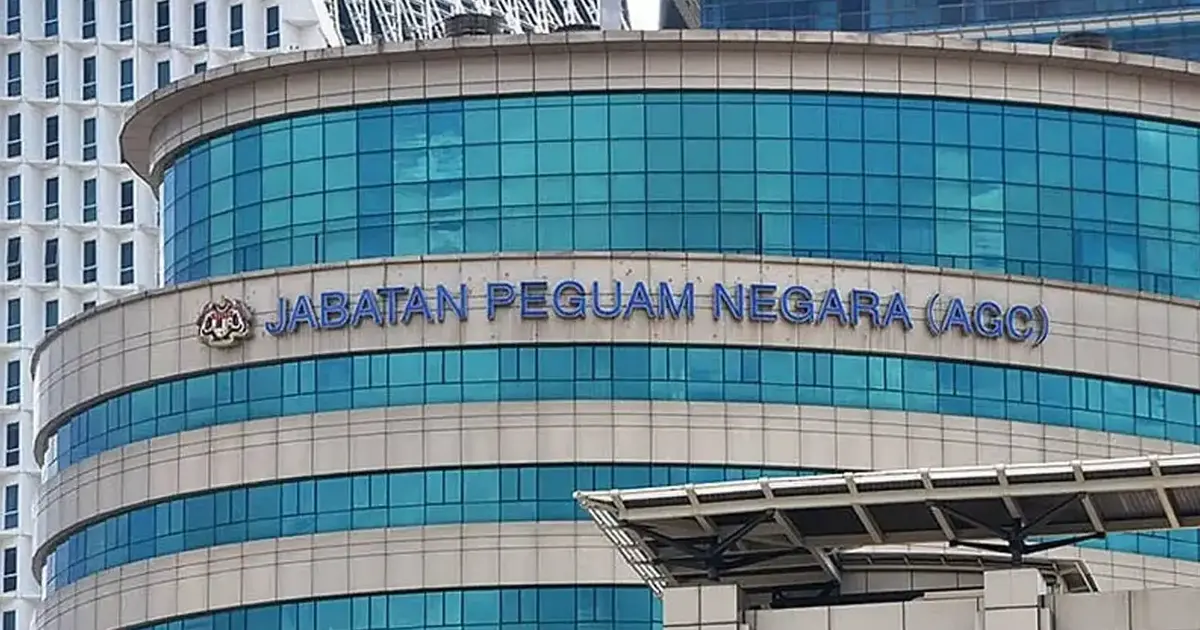
The Attorney General's Chambers (AGC) is maintaining its ongoing examination of investigation documents related to the Durian Tunggal matter, more than four weeks after receiving the latest resubmission of materials from investigating authorities. This prolonged deliberation phase underscores the complexity inherent in cases requiring multiple rounds of documentation refinement and legal assessment before prosecutorial decisions can be formalized.
The home minister has issued a statement calling on all stakeholders and the public to exercise restraint and permit the established legal framework to function without external pressure or premature conclusions. This appeal reflects standard protocol when sensitive matters are under official review, particularly those attracting public attention and scrutiny. The emphasis on allowing procedural integrity carries particular weight in Malaysia's legal system, where the AGC holds considerable authority in determining whether sufficient grounds exist to proceed with formal charges.
The iterative submission process—now in its fourth iteration—suggests that investigating officers have been making refinements to their documentation in response to feedback or guidance from the AGC's legal team. Such back-and-forth interactions are customary when evidence packages require strengthening, clarification of procedural compliance, or better alignment with prosecutorial standards. Each cycle typically involves closer examination of evidentiary chains, witness statements, and legal sufficiency of the case materials before final prosecutorial decisions can be reached.
Durian Tunggal has become a significant focal point in Malaysian political discourse, drawing widespread public interest and media coverage. The sustained attention on this investigation reflects its sensitivity within the broader political landscape and the considerable implications any eventual outcome might carry. The home minister's public statements represent attempts to manage expectations while maintaining confidence in institutional processes, a delicate balance required when high-profile cases remain under review.
The AGC's deliberative pace, while potentially frustrating to observers seeking resolution, reflects the seriousness with which Malaysia's prosecutorial authority approaches matters of this magnitude. Rushing through such determinations could compromise both the strength of any resulting prosecution and the perceived legitimacy of institutional decision-making. The legal review process demands thorough examination of all materials to ensure that any charges brought would withstand judicial scrutiny and meet constitutional standards.
For Malaysian legal observers, this extended timeline illustrates the sometimes lengthy interval between investigation completion and prosecutorial determinations in complex cases. The fourth resubmission indicates that previous iterations contained gaps or inconsistencies requiring attention, a reality that highlights the meticulous standards maintained by Malaysia's chief legal adviser. Such rigor, though time-consuming, ultimately serves to strengthen institutional credibility and judicial outcomes.
The home minister's characterization of the situation as requiring patience suggests official confidence in the legal process, even as it remains unresolved. Public confidence in institutional impartiality depends significantly on visible adherence to proper procedures and absence of politically motivated shortcuts. By emphasizing the importance of allowing legal processes to unfold without external interference, the minister reinforces the principle that prosecutorial decisions should rest on evidentiary and legal grounds rather than political expediency or public pressure.
Regional observers of Malaysian institutional governance will note that this situation exemplifies both the strengths and frustrations of formal legal review systems. Thorough examination of evidence and legal sufficiency prevents wrongful prosecution but can also create extended periods of uncertainty. The fourth submission and ongoing review thus demonstrate how high standards of prosecutorial judgment, while essential to justice, necessarily consume time and resources.
The implication for Malaysian legal practitioners and institutional stakeholders is clear: cases involving sensitive political dimensions or considerable public interest will receive extended deliberation within the AGC. This reality should inform expectations regarding timeline for resolution in comparable matters. As the Durian Tunggal investigation continues its methodical path through official channels, all parties involved remain bound by the home minister's implicit reminder that institutional integrity depends on permitting proper legal procedures to advance without external acceleration or interference, regardless of public curiosity or political implications.

