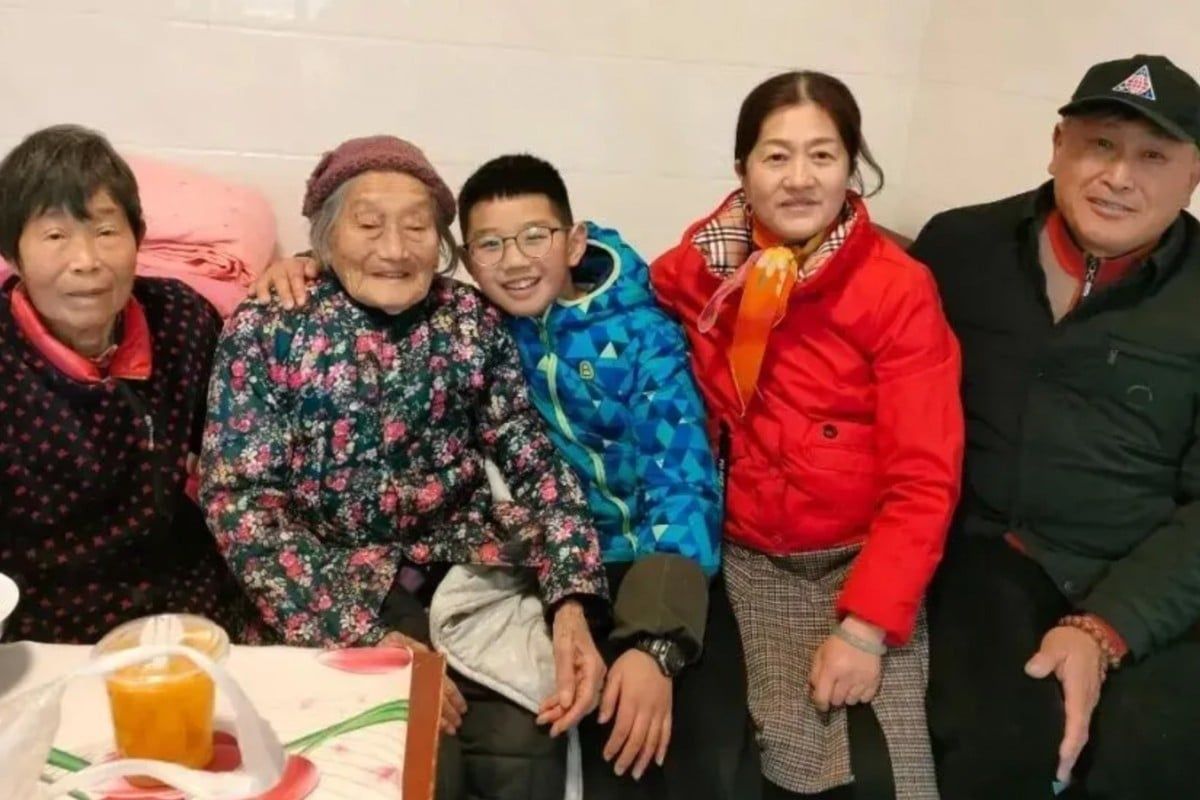
Wang Gaiying, a 111-year-old grandmother living in Rugao, Jiangsu province, has become a social media sensation across eastern China by demonstrating that longevity may stem not from complex interventions or expensive wellness regimens, but rather from unremarkable daily practices woven into ordinary life. Her case illuminates how fundamental lifestyle choices, combined with environmental factors and psychological resilience, can contribute to reaching well over a century of age with mental clarity and physical mobility intact.
Rugao itself holds particular significance within China's demographic landscape. The city has earned recognition as one of the nation's "longevity capitals," with documented evidence that as of February this year, approximately 672 residents had reached the age of 100 or beyond. This concentration of centenarians far exceeds what demographers would expect from random chance, suggesting that something distinctive about the region—whether genetic, environmental, or cultural—actively promotes extended lifespans. The prevalence of such longevity clusters has drawn scholarly attention from institutions examining the structural and biological foundations of human aging.
Scientific investigation into Rugao's phenomenon has produced compelling findings. Researchers affiliated with the Chinese Academy of Sciences' Institute of Soil Science in Nanjing have identified the region's mineral composition as a significant contributing factor. The soil across Rugao's agricultural zones contains elevated concentrations of trace elements and minerals that accumulate in locally grown crops. When residents consume produce cultivated in this enriched soil over many decades, they obtain micronutrients that conventional diets in other regions may lack. This geological advantage, essentially a accident of geography, provides inhabitants with nutritional foundations that support cellular function and metabolic processes throughout their lives.
Wang's domestic circumstances reflect broader patterns of family structure in rural China. She resides within a five-generation household arrangement, surrounded by descendants spanning several generations, though specific details about her husband's circumstances remain undisclosed. This multi-generational living arrangement contrasts sharply with the nuclear family isolation increasingly common in developed nations and urban Chinese centers, offering potential psychological and social benefits through constant intergenerational contact and shared responsibility for household functions.
Her approach to physical activity represents perhaps the most directly replicable aspect of her longevity formula. Rather than viewing exercise as a separate, often burdensome category of activity requiring dedicated time and specialized equipment, Wang integrates movement seamlessly into her daily routine through housework. Well into her advanced age, she remains occupied with light domestic tasks—wiping surfaces, folding garments, maintaining her living spaces—activities that keep her limbs engaged and her circulatory system active without the injury risks associated with high-impact exercise. When family members suggest she rest and reduce her workload, Wang articulates the physiological logic underlying her resistance: continuous gentle movement maintains blood circulation and preserves musculature in ways that sedentary comfort cannot replicate. This intuitive understanding aligns with contemporary gerontological research demonstrating that sustained low-level activity throughout daily life often provides greater health benefits than sporadic intense exercise sessions.
Wang's nutritional philosophy emphasizes equilibrium rather than restriction or excess. Her family deliberately rotates her diet, varying staple foods like dumplings and steamed buns to ensure dietary diversity. She expresses particular fondness for fish, appreciating its tender texture and digestibility while acknowledging its nutritional value. Her conscious avoidance of overeating reflects a discipline that many longevity researchers identify as significant—not through harsh caloric deprivation, but through mindful moderation that prevents the metabolic stresses associated with chronic overeating. Notably, her family discontinued a once-regular practice of consuming rice steeped in baijiu, a potent traditional liquor, about five years ago as a precaution against intoxication-related falls and associated injuries, demonstrating adaptive wisdom about age-appropriate risk management.
Psychological and emotional patterns emerge as equally important components of Wang's longevity equation. She attributes her long life partly to kindness, maintaining a personal discipline of performing one small benevolent act daily—whether offering genuine compliments to family members or sending brief greetings to elderly acquaintances. This commitment to quotidian compassion provides her with a sense of purpose and social connection that research increasingly links to extended lifespans and improved health outcomes. Equally significant is her approach to emotional distress: rather than ruminating over problems or allowing worries to occupy her mental space throughout the evening, she consciously chooses sleep as her response to frustration. This habit of "sleeping off" troubles, combined with her observation that many issues seem less consequential after rest, suggests a form of emotional regulation that prevents the corrosive effects of chronic stress on her physiology.
Wang's sleep schedule demonstrates remarkable consistency and discipline. She maintains a sleep cycle from 7pm until 7am, supplemented by one or two daytime naps, totaling approximately 10 to 11 hours of sleep daily. This generous allocation of sleep time, far exceeding the recommended eight hours for younger adults, may reflect genuine biological needs in advanced age or alternatively represent an adaptation that her body has maintained throughout her life. The consistency itself—sleeping and waking at identical times daily without apparent deviation—suggests a circadian rhythm that remains well-entrained despite her advanced age, potentially contributing to metabolic stability and cognitive function.
Wang's mental state remains notably sharp and engaged despite her 111 years. She actively resists characterizations of herself as elderly, insisting that her continued mobility and mental acuity contradict such labels. This psychological orientation—a refusal to adopt an identity of frailty or decline—may itself constitute a form of preventive health maintenance. Gerontologists have documented correlations between self-perceived age and actual health outcomes, with individuals who regard themselves as younger tending to exhibit better physical function and longevity than chronological age alone would predict. Wang's spirited assertion of continued vigor thus becomes not merely an emotional preference but potentially a physiological advantage.
The case of Wang Gaiying resonates particularly for Southeast Asian audiences facing their own aging populations and mounting healthcare pressures. Unlike interventions requiring expensive medications, medical infrastructure, or specialized expertise, her model emphasizes practices accessible across economic strata: purposeful daily movement, dietary balance, emotional resilience, and social connection. Rugao's distinction as a longevity zone also raises questions relevant to Malaysian and other regional contexts about whether similarly advantaged environments exist or could be created through urban planning and agricultural practices. Her example suggests that longevity secrets, rather than remaining locked within laboratories or luxury wellness facilities, may be discoverable through attention to how ordinary people actually live their daily lives across extended periods, offering lessons that transcend cultural and geographical boundaries.

