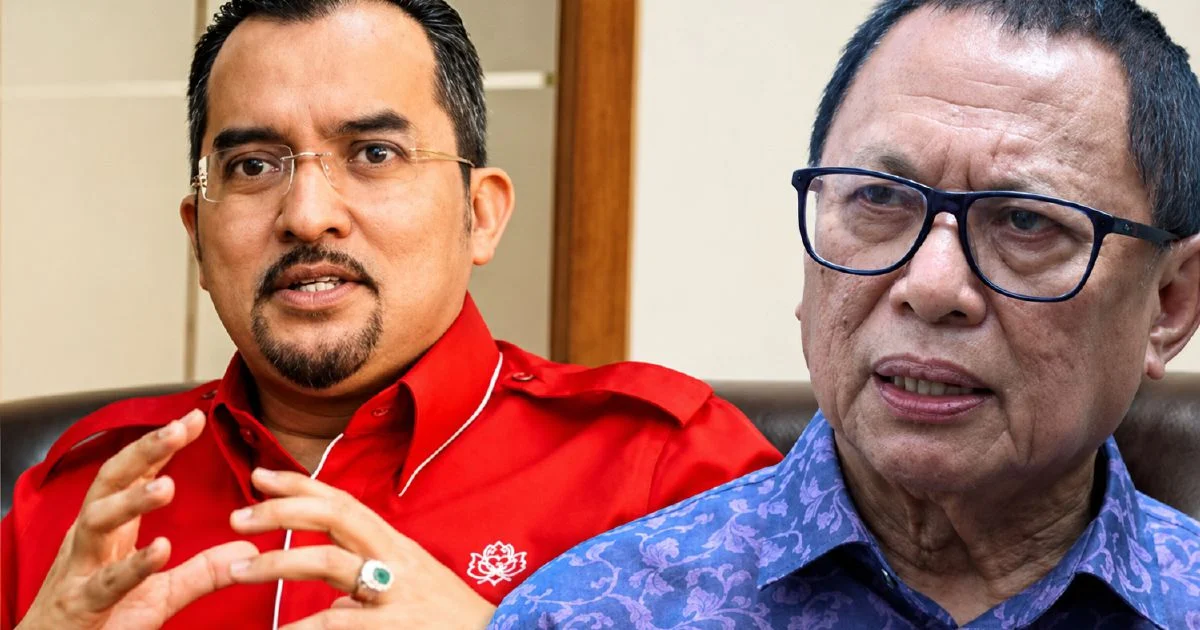
The leadership of UMNO has entered turbulent waters once again, with Datuk Dr Asyraf Wajdi Dusuki, the party's secretary-general, mounting a vigorous defence against criticism levelled by departing senior figure Datuk Dr Mohd Puad Zarkashi. The clash, unfolding in Johor Baru, reflects the internal tensions that continue to simmer within Malaysia's oldest and most influential political party, even as it attempts to consolidate its position in the current political landscape.
Puad Zarkashi's decision to step away from UMNO has reverberated through the party machinery, particularly given his prominence within the organisation and his previous roles in championing Malay-Muslim interests. His departure itself would have drawn attention in political circles, but the accompanying accusations—specifically those touching upon the involvement of palace institutions—have injected a more combustible element into what might otherwise have been a routine organisational transition. Such claims carry significant weight in Malaysia's constitutional framework, where the role of the royal institution commands deep respect and occupies a distinct position in the nation's governance structure.
Ashraf Wajdi's combative response signals that UMNO leadership is unwilling to allow Puad Zarkashi's narrative to dominate public discourse without challenge. The secretary-general's role places him at the administrative heart of the party, responsible for oversight of party structures, discipline, and implementation of party policy at ground level. His intervention therefore represents an official party position rather than a personal grievance, lending considerable institutional weight to his rebuttal. The public nature of this exchange, conducted through media channels rather than behind closed doors, suggests that both protagonists believe their respective positions merit airing before the broader constituency of party members and the Malaysian electorate.
For Malaysian observers, this internal UMNO fracture arrives at a sensitive moment. The party, which has governed Malaysia for most of the nation's post-independence history, has experienced significant erosion of its once-dominant political position. Internal cohesion becomes particularly vital when an organisation faces external challenges to its relevance and electoral competitiveness. Public disputes between senior figures risk reinforcing perceptions of institutional weakness or disarray, potentially emboldening rival political formations seeking to capitalise on UMNO's difficulties.
The specific allegations concerning palace involvement add another layer of complexity to this episode. Malaysia's constitutional monarchy has traditionally remained above the fray of partisan politics, though historical moments have occasionally tested this convention. For party members to invoke claims about royal institutions in the context of internal party disputes risks dragging constitutional actors into political controversy—a development that royal institutions themselves typically resist. Asyraf Wajdi's response likely addresses not merely the substance of Puad Zarkashi's charges but also the appropriateness of invoking palace-related claims in what should remain an internal party matter.
Within UMNO's membership and amongst Malay-Muslim constituencies who form the party's traditional base, questions about party loyalty and principled dissent carry particular significance. The party has long positioned itself as the custodian of Malay-Muslim interests, and this self-appointed role means that disagreements within the organisation often become framed in terms of fidelity to broader communal objectives rather than mere personal or factional rivalry. Puad Zarkashi's resignation, if accompanied by accusations that party direction has been compromised by improper external influence, strikes at the heart of this identity claim.
Ashraf Wajdi's forthright rebuttal demonstrates that UMNO's leadership is prepared to defend both the party's current direction and its institutional integrity against such challenges. The secretary-general's position requires him to maintain party discipline and protect the organisation's reputation—responsibilities that inevitably place him in confrontation with dissenting voices, however prominent. His response will likely set the tone for how other party officials address Puad Zarkashi's departure, effectively rallying the institutional machinery behind the leadership consensus.
For Southeast Asian observers monitoring Malaysian politics, this internal UMNO dispute reflects broader dynamics affecting traditional ruling parties across the region. Many long-dominant organisations face challenges maintaining cohesion when confronted with changing electoral landscapes and shifting social expectations. How UMNO manages its internal disagreements while projecting an image of purposeful leadership will influence not only party members' confidence but also voters' assessments of whether the organisation remains capable of governing effectively.
The allegations touching upon palace involvement, whether substantiated or not, inject a constitutional dimension into what might otherwise remain a straightforward party management issue. Malaysia's carefully calibrated arrangement balancing parliamentary democracy with constitutional monarchy depends partly on maintaining clear boundaries between political contestation and royal prerogative. Public disputes invoking claims about palace involvement risk blurring these boundaries, potentially creating complications for all parties involved.

