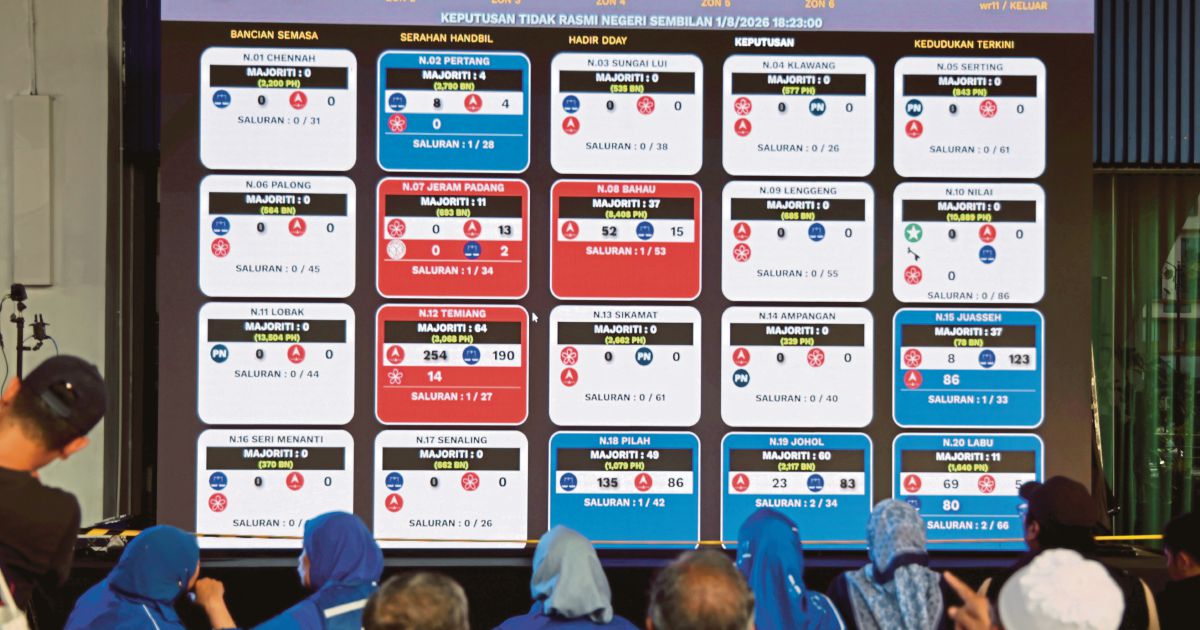
Umno's Datuk Dr Asyraf Wajdi Dusuki has claimed that the Barisan Nasional and Perikatan Nasional alliance has assembled enough parliamentary backing to establish government in Negri Sembilan, citing a combined seat count of 23 across the state assembly. The assertion signals the coalition's confidence in navigating the post-election political landscape in Malaysia's smallest peninsular state.
Negri Sembilan's state assembly comprises 36 seats total, making 19 the minimum threshold required to form a governing majority. The BN-PN claim of 23 seats would position the coalition comfortably above this constitutional requirement, providing a buffer of four additional representatives. This margin carries significance, as it suggests the partnership could absorb potential defections or absences without jeopardising stability—a consideration that proved critical during previous coalition negotiations in other Malaysian states.
The informal nature of Asyraf's announcement underscores the fluid political environment characterising Malaysia's state-level electoral cycles. Unlike formal declarations made through the state ruler or official government channels, preliminary seat tallies from political figures often reflect campaign expectations rather than conclusively verified results. This distinction matters for clarity: voters and analysts should treat such claims as authoritative indicators pending official verification by the Election Commission and formal swearing-in ceremonies.
The strategic alliance between BN and PN represents a significant consolidation of centre-right political forces in Negri Sembilan. Barisan Nasional, traditionally anchored by Umno, Mca, and Mic, has been rebuilding electoral support following successive electoral setbacks since 2018. Perikatan Nasional, dominated by Pas with Umno's previous participation, has positioned itself as a pan-Malay and Islamic-focused coalition. Their collaboration in Negri Sembilan reflects broader coalition-building patterns observed across multiple Malaysian states as political parties navigate fragmented electoral results increasingly characterising the post-2018 era.
For Negri Sembilan specifically, the BN-PN arrangement carries practical governance implications. The state has experienced political turbulence in recent years, including leadership transitions and internal party tensions. A coalition government would require careful balance between the respective party structures and ministerial representation. Umno would likely anticipate key portfolios reflecting its anticipated seat strength, whilst PN partners would seek meaningful executive positions validating their electoral contribution.
Malaysian state elections have grown increasingly unpredictable, with many competitive three-way contests between BN, PN, and the opposition Pakatan Harapan coalition. Negri Sembilan's voting patterns have shifted markedly since 2018, making traditional predictive models less reliable. The apparent BN-PN convergence suggests both parties calculated that coalition-building offered better prospects than contesting independently or splitting the centre-right vote.
The potential formation of a BN-PN government in Negri Sembilan also carries broader federal implications. Successful state-level collaboration establishes working relationships and coordination mechanisms that can influence federal legislative dynamics, particularly in parliamentary committees and resource allocation decisions. Conversely, any instability in state governance following election disputes or defections creates pressure that reverberates through national political structures.
Regional perspectives matter significantly for understanding this development. Within Malaysia's peninsular states, Negri Sembilan occupies a strategic position between the economic powerhouses of Selangor and Perak. State-level policy decisions on land development, environmental management, and infrastructure investment affect inter-state commerce and migration patterns. A stable governing coalition potentially facilitates medium-term planning and investment confidence among businesses operating regionally.
The path forward requires verification of preliminary seat allocations and formal negotiations determining coalition governance terms. Asyraf's assertion provides a clear political narrative, yet formal constitutional processes remain pending. The Negri Sembilan ruler, as constitutional head of state, ultimately validates the government formation, typically accepting recommendations from whoever commands demonstrable legislative support. This process normally unfolds over several days following elections as final tallies are confirmed and coalition agreements formalised.
For Malaysian observers monitoring state-level political dynamics, this BN-PN claim exemplifies the increasingly transactional nature of coalition politics. Rather than ideological alignment, practical electoral mathematics often determines partnership arrangements. Whether this coalition proves durable or encounters strains during actual governance will provide important insights into the sustainability of cross-factional cooperation within Malaysia's fractionalised political landscape.

