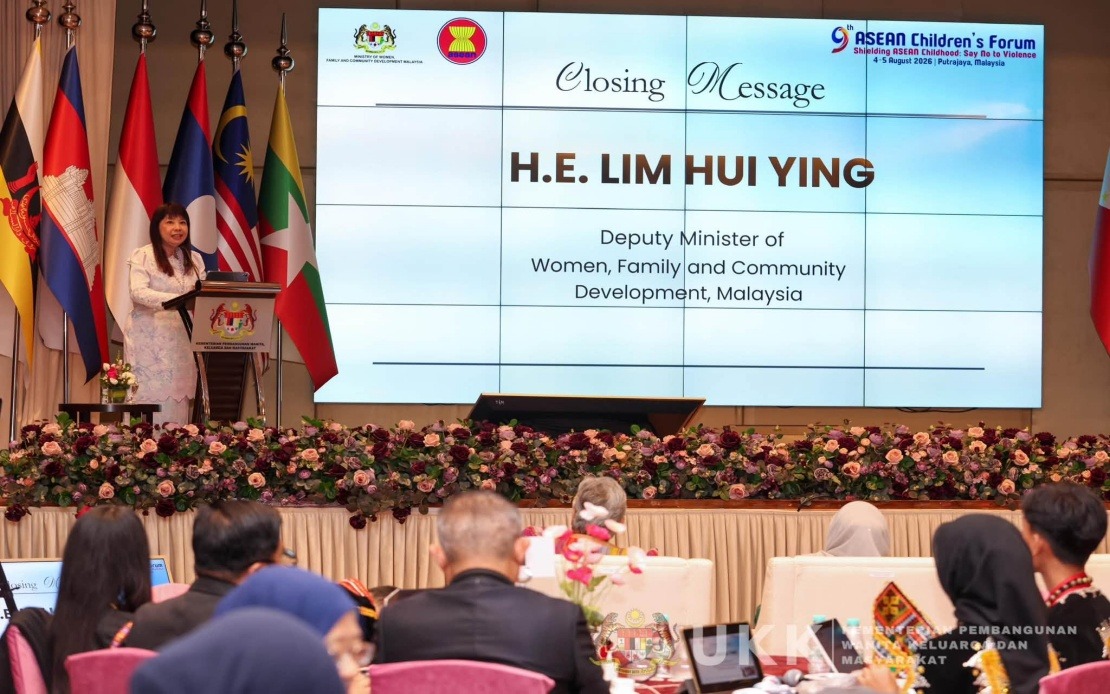
Child protection remains a critical policy priority across Southeast Asia, with a regional forum in Putrajaya bringing together young people to articulate their safety concerns and shape future governance frameworks. The 9th ASEAN Children's Forum concluded with a comprehensive set of recommendations designed to address violence against children in multiple settings, reflecting the lived experiences of participants from across the 10-member bloc and signalling a generational push for systemic reform in how governments and institutions safeguard vulnerable populations.
Deputy Minister Lim Hui Ying, representing Malaysia's Ministry of Women, Family and Community Development, stressed that the recommendations emerging from the hybrid forum carry significant weight because they originate directly from children themselves rather than being imposed through top-down policy development. This emphasis on child-centred policymaking represents a shift toward participatory governance models where young people are recognised as stakeholders in decisions affecting their welfare and safety. The minister's statement underscored that these recommendations warrant serious consideration by policymakers operating at national and regional levels, suggesting that ASEAN institutions should integrate child perspectives into their deliberative processes.
The forum identified four critical domains requiring urgent policy attention: the domestic sphere, educational institutions, digital environments, and broader community spaces. This mapping reflects contemporary understandings that child safety cannot be addressed through isolated interventions in schools or homes alone, but requires coordinated responses across all touchpoints in a young person's life. The recognition of multiple settings acknowledges that violence against children manifests differently depending on context—bullying dynamics in school differ substantially from online harassment, which again differs from domestic violence, each requiring tailored prevention and response strategies.
Strengthening legislative frameworks emerged as a cornerstone recommendation. Many ASEAN nations maintain child protection statutes that were drafted decades ago and do not adequately address contemporary threats, particularly those emerging in digital spaces. Participants advocated for modernised laws that comprehensively cover physical, emotional, psychological, and sexual violence, expanding definitional frameworks to capture evolving forms of harm. This legislative modernisation becomes particularly urgent as Southeast Asia experiences rapid digitalisation, with children increasingly vulnerable to online predation, cyberbullying, and exploitation through social media platforms and messaging applications.
Parallel to legal reform, the forum emphasised the necessity of child-friendly reporting mechanisms that lower barriers to disclosure and investigation. Many children across ASEAN remain silent about abuse because formal complaint channels seem intimidating, incomprehensible, or unresponsive. Creating accessible reporting pathways—whether through dedicated hotlines, online platforms, school-based counsellors, or community health workers—fundamentally changes whether violations come to light. The challenge for governments involves designing systems that protect child reporters from retaliation while ensuring that disclosures lead to meaningful intervention rather than bureaucratic dead-ends.
Anti-bullying policies ranked prominently among participant recommendations, reflecting the pervasiveness and psychological toll of peer violence in schools and online communities across the region. While some ASEAN nations have introduced anti-bullying legislation, enforcement remains inconsistent and definitions often remain vague. Comprehensive anti-bullying frameworks require clear definitional standards, transparent investigation procedures, proportionate sanctions for perpetrators, and restorative approaches that address underlying causes rather than simply punishing behaviour. Digital anti-bullying provisions must also address the specific dynamics of online harassment, including anonymity, permanence of posted content, and difficulty in contained response.
The forum's emphasis on psychosocial support recognises that child protection extends beyond preventing violence to encompassing trauma-informed care and mental health services. Children who experience violence—whether acute incidents or chronic exposure—often carry psychological consequences into adulthood without intervention. Southeast Asian health systems have historically underinvested in child mental health services, creating significant treatment gaps. The forum's call for broadened psychosocial support thus carries resource implications that governments must address through budget allocation and workforce development.
Recognising the roles of multiple stakeholders—parents, educators, businesses, civil society, media practitioners, and peers themselves—reflects sophisticated understanding that child protection functions as an ecosystem rather than solely a government responsibility. Parents require education about recognising and preventing abuse; teachers need training in trauma-informed pedagogy and mandatory reporting; private sector actors, especially technology companies, must implement safeguarding measures within their platforms; and media practitioners can either amplify child protection messages or inadvertently normalise harm. Peers also constitute a powerful protective factor, with programmes building peer-to-peer support networks showing effectiveness in reducing violence.
The forum's call for inclusive services addressing vulnerable subpopulations—including disabled children, ethnic minorities, children in poverty, and those with irregular migration status—highlights how violence and protection gaps are not evenly distributed. Marginalised children face compounded vulnerabilities, with intersecting disadvantages creating particular exposure to abuse and institutional barriers to accessing protective services. Generic child protection frameworks often fail these populations, requiring targeted programming that addresses specific vulnerabilities while avoiding stigmatisation.
Implementing these recommendations requires translating forum outputs into concrete government action through legislation, budget allocation, institutional development, and capacity building. The challenge lies not merely in endorsing child protection principles—which commands broad rhetorical support across ASEAN—but rather in the sustained political will and resource commitment necessary to build functioning systems. Regional cooperation mechanisms could facilitate sharing of best practices, mutual accountability, and technical assistance among member states at different stages of child protection system development.
The forum's emphasis on children fostering mutual care and respect represents an attempt to cultivate cultural shifts alongside institutional change. Child protection ultimately requires not just legal prohibitions and reporting systems, but transformation of social norms that permit violence and marginalisation. Building generational commitment to safety through youth-led initiatives and peer support networks potentially creates more durable protective cultures than external enforcement alone can achieve. As ASEAN continues pursuing regional integration and community building, child protection emerges as both a moral imperative and essential foundation for sustainable human development.

