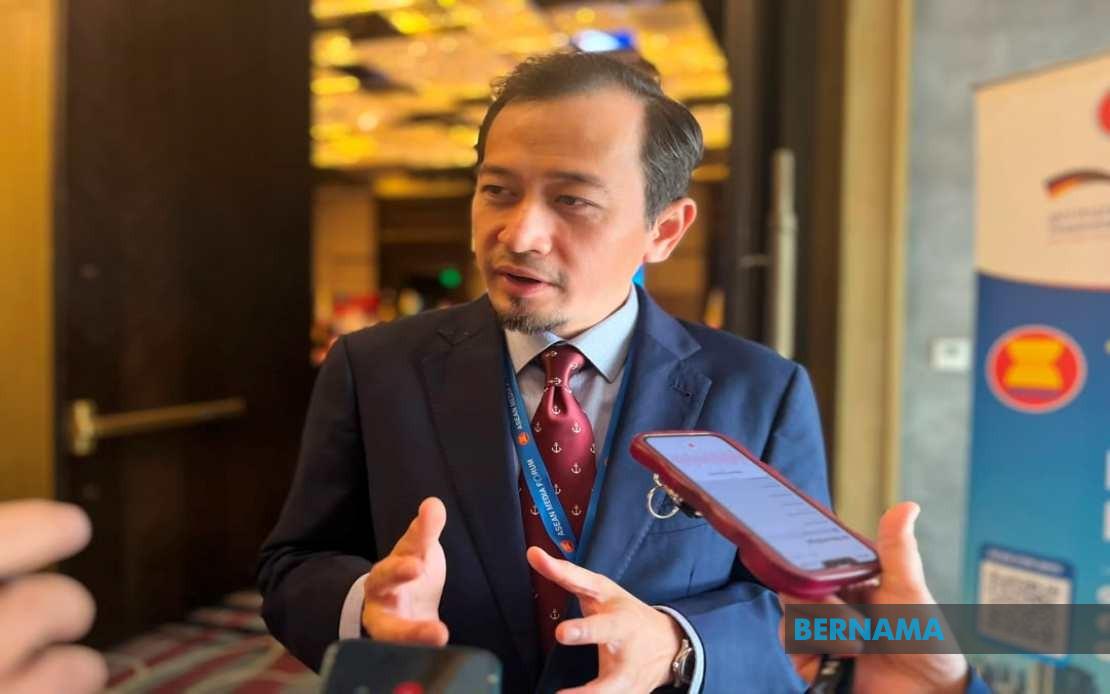
Southeast Asian shipowners are pursuing an ambitious plan to establish the region's inaugural Protection and Indemnity insurance club, a move designed to ease the financial burden of escalating maritime insurance premiums and distribute operational risks more equitably across the regional shipping sector. The Federation of ASEAN Shipowners' Associations is spearheading the initiative, which remains in early structuring phases and could take at least three years to realise, according to Mohamed Safwan Othman, FASA chairman and head of the Malaysia Shipowners' Association.
The rationale behind this regional insurance mechanism reflects a fundamental shift in how ASEAN shipping operators view their coverage needs. Currently, the vast majority of shipowners across the ten-nation bloc rely on Western insurers based primarily in Europe to underwrite their Protection and Indemnity policies, leaving them vulnerable to external market pressures and pricing decisions made outside the region. By establishing a homegrown club, ASEAN nations hope to pool maritime risks collectively and negotiate more favourable premium rates while maintaining control over their own insurance architecture.
Mohamed Safwan explained that Protection and Indemnity insurance operates as a mandatory requirement for all commercial vessels, with coverage extending primarily to seafarer welfare and cargo protection throughout transit. This differs from Hull and Machinery insurance, which addresses damage to the vessel's structural components, engines and mechanical systems. Understanding these distinctions matters for Malaysian shipping businesses, as P&I claims often prove costlier and more complex than H&M claims, affecting operational planning and budgeting.
Securing consensus among diverse shipowners operating under different national flags and regulatory frameworks presents the initiative's most formidable challenge. Each ASEAN member state maintains distinct maritime interests, vessel types and route preferences, meaning a unified insurance club must accommodate these variations while maintaining actuarial soundness. The groundwork involves extensive consultation with ship operators across the region to build confidence that a regional club can deliver genuine value without compromising claims handling or financial stability.
Geopolitical turbulence in West Asia has dramatically underscored the urgency of this regional insurance venture. The ongoing conflict has disrupted shipping corridors and forced insurers to reassess risk calculations, with some carriers withdrawing war-risk coverage entirely while others maintain such policies at substantially elevated premiums that erode shipping operators' profitability. These escalating costs trickle through supply chains directly affecting Malaysian importers and exporters dependent on maritime transport.
The human cost extends beyond commercial considerations. International Maritime Organisation data indicates approximately two thousand Southeast Asian seafarers remain stranded aboard roughly five hundred vessels transiting the Strait of Hormuz, with Filipino nationals representing approximately half of this total. The actual figure likely exceeds these estimates, as some vessel operators have disabled automatic identification systems to avoid detection while navigating high-risk zones. These stranded workers face extended deployments, heightened stress and separation from families, underscoring the maritime sector's vulnerability to regional instability.
Malaysian policymakers should note that geopolitical crises increasingly blur the lines between shipping costs and national security concerns. Food security and energy security depend substantially on uninterrupted maritime logistics, meaning insurance affordability directly affects the nation's ability to source essential commodities. A regional P&I club could buffer Malaysian importers against external market shocks by internalising risk management within ASEAN institutional structures.
Responsive support networks have begun addressing these challenges through existing frameworks. ASEAN regularly disseminates navigational guidance and safety protocols to shipowners operating through contested waters, utilising intelligence from the Information Fusion Centre established under the Regional Cooperation Agreement on Combating Piracy and Armed Robbery against Ships in Asia, commonly known as ReCAAP. Additionally, maritime cooperation with the United Kingdom and United States provides supplementary situational awareness for vessels transiting dangerous passages.
Repatriation efforts have yielded positive results, with Mohamed Safwan noting that a considerable number of stranded seafarers have successfully returned home over recent months. These coordinated evacuation operations demonstrate that ASEAN states and international partners can mobilise resources effectively when shipping crises demand urgent humanitarian intervention. However, such reactive measures prove inadequate without structural reforms addressing underlying insurance vulnerabilities.
Establishing a regional P&I club would represent a watershed moment for ASEAN maritime autonomy. Rather than remaining passive customers of European insurers, the region would develop institutional capacity to underwrite its own risks, retain premiums within ASEAN economies and build technical expertise in marine insurance markets. This aligns with broader regional integration objectives, strengthening economic interdependence and deepening cooperative frameworks.
The initiative also positions ASEAN as a more sophisticated maritime power capable of managing complex insurance schemes independently. As global shipping increasingly concentrates among Asian operators, establishing regional insurance infrastructure signals that ASEAN nations intend to capture greater value from the maritime sector and resist external dependency on Western financial institutions. This resonates with Malaysian interests in developing domestic maritime expertise and reducing reliance on foreign service providers.
Successful implementation requires not merely technical insurance expertise but sustained diplomatic coordination. ASEAN nations must reconcile varying national interests, regulatory preferences and political considerations while maintaining operational efficiency. The three-year timeline reflects this complexity, acknowledging that building institutional trust and establishing governance frameworks demands extensive consultation and consensus-building across diverse stakeholder groups.
For Malaysian shipping companies and broader commercial interests dependent on maritime logistics, the P&I club initiative offers tangible benefits beyond reduced insurance costs. Enhanced regional institutional capacity strengthens supply chain resilience, mitigates geopolitical risk exposure and positions ASEAN as a self-reliant maritime bloc capable of navigating future crises without external intervention. As geopolitical uncertainties persist, this regional insurance innovation merits close monitoring from Malaysian policymakers and business communities.

