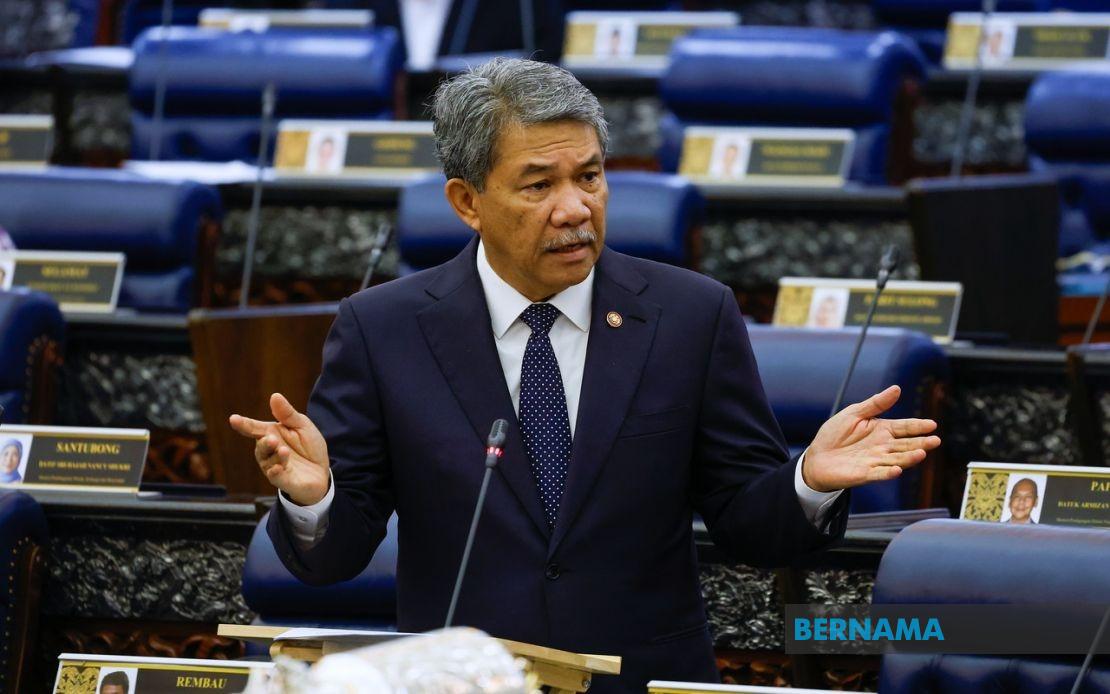
Malaysia's Foreign Minister Datuk Seri Mohamad Hasan has disclosed that ASEAN is actively considering revised approaches to accelerate progress on the Five-Point Consensus framework in Myanmar, acknowledging that the crisis-torn nation remains far from meeting the benchmarks established by regional leaders. Speaking in Parliament on June 25, Mohamad outlined how the bloc is recalibrating its diplomatic strategy after months of limited headway on the consensus measures, which have become ASEAN's cornerstone mechanism for addressing Myanmar's political and humanitarian turmoil since the military coup in February 2021.
The Five-Point Consensus, initially agreed upon by ASEAN leaders in April 2021, comprises five key pillars: immediate cessation of violence, dialogue among all parties, provision of humanitarian aid by ASEAN, facilitation of dialogue by an ASEAN envoy, and visits to Myanmar by the envoy to observe developments. Despite nearly three years of implementation, Myanmar has made scant progress across most of these components, with the military junta showing limited commitment to genuine dialogue and ceasefire arrangements repeatedly collapsing. This persistent stalling prompted regional leaders to take stock of their approach during the 48th ASEAN Summit held in Cebu, Philippines on May 8, where they decided to empower foreign ministers with a new mandate to engage Myanmar more directly on the consensus implementation strategy.
Under this revised framework, ASEAN's foreign ministers are tasked with conducting informal bilateral discussions with Myanmar to evaluate the current situation on the ground and determine what adjustments might unlock progress on the five-point framework. This shift signals that ASEAN recognizes the need for more hands-on diplomatic engagement at the ministerial level rather than relying solely on broader statements from ASEAN leadership or the special envoy mechanism. Mohamad emphasised that while the Five-Point Consensus itself remains non-negotiable and continues to serve as the basis for ASEAN's Myanmar policy, the modalities for its implementation could be refined. Any substantive changes, however, would require approval from ASEAN heads of state, ensuring that decisions remain grounded in broad regional consensus.
Among the concrete proposals Malaysia has advanced is the extension of Myanmar's six-month ceasefire arrangement, which was scheduled to expire at the end of July, into a second, more ambitious phase aimed at building towards comprehensive peace negotiations. Malaysia has also called on Myanmar to furnish a detailed roadmap outlining how the peace process would proceed, crucially including provisions for inclusive dialogue involving all stakeholders—a designation that implicitly encompasses the National Unity Government (the shadow civilian administration), the People's Defence Force (the armed resistance movement), and various ethnic armed organizations that control territories across Myanmar. This demand for clarity on the path forward reflects growing frustration within ASEAN at the junta's reluctance to commit to transparent timelines or genuine power-sharing arrangements.
Mohamad's articulation of ASEAN's strategic concerns reveals the bloc's anxiety about the broader regional implications of Myanmar's continued crisis. By emphasising the danger of Myanmar becoming "marginalised" within ASEAN's framework, he implicitly warned that prolonged failure to stabilize the country could invite intervention by major powers with competing geopolitical interests in Southeast Asia. ASEAN's founding principle of non-interference and the maintenance of regional autonomy rest upon the bloc's ability to resolve internal crises without external powers stepping in to fill vacuum spaces. The reference to preventing "third parties with vested interests" from exploiting Myanmar's instability appears directed at strategic competitors including China, which maintains significant economic and strategic interests in Myanmar, and India, which has security concerns about Myanmar's eastern border regions.
This concern about external interference carries particular weight for Malaysia and other ASEAN members navigating the complex dynamics of great power competition in Southeast Asia. Myanmar's geographic position astride major trade routes and its proximity to China's southwestern border make it a focal point for regional power dynamics. Should ASEAN be perceived as unable or unwilling to manage the crisis effectively, space would open for Beijing or other major powers to deepen their involvement in Myanmar's internal affairs, potentially undermining ASEAN's collective influence and cohesion. The bloc's anxiety about such scenarios explains why Malaysian diplomacy continues to emphasize the importance of keeping Myanmar engaged within ASEAN structures rather than ostracizing the country, despite widespread international criticism of the military junta's human rights record.
Malaysia's stated commitment to sustained engagement with all parties in Myanmar's conflict—encompassing the military regime, the National Unity Government's parallel administration, the People's Defence Force's armed resistance structures, and the numerous ethnic armed organizations—reflects Kuala Lumpur's pragmatic approach to the crisis. Rather than adopting a purely adversarial stance against the junta, Malaysia is attempting to maintain channels of communication with all significant actors, positioning itself as a potential bridge-builder if and when negotiating opportunities emerge. This multi-track approach acknowledges that any durable political settlement in Myanmar will ultimately require some form of accommodation among these competing power centers, necessitating active diplomacy with each.
The broader strategic context underscores why ASEAN's Myanmar policy occupies such importance for regional stability and organizational credibility. The bloc's handling of the crisis represents a test of its capacity to enforce its principles and resolve internal disputes without fracturing or becoming irrelevant. Some ASEAN members, particularly those with stronger relationships with Myanmar or concerns about regional stability, have resisted more punitive approaches, while others have pushed for firmer stances. The current pivot toward empowering foreign ministers to conduct more intensive informal diplomacy represents a middle path designed to show initiative without alienating any ASEAN member or pushing Myanmar further into isolation.
Looking forward, the success of this revised approach will depend substantially on Myanmar's willingness to reciprocate ASEAN's engagement with meaningful movement toward genuine dialogue and confidence-building measures. The junta's track record suggests limited appetite for substantive power-sharing or political settlement, having instead concentrated military resources on suppressing armed resistance movements and extending its administrative control. Whether additional informal diplomatic pressure from ASEAN foreign ministers will convince Myanmar's generals to change course remains an open question. Nevertheless, Malaysia's articulation of a refreshed strategy suggests that ASEAN intends to persist with efforts to manage the crisis within a regional framework, even as the Five-Point Consensus's original objectives remain frustratingly distant.

